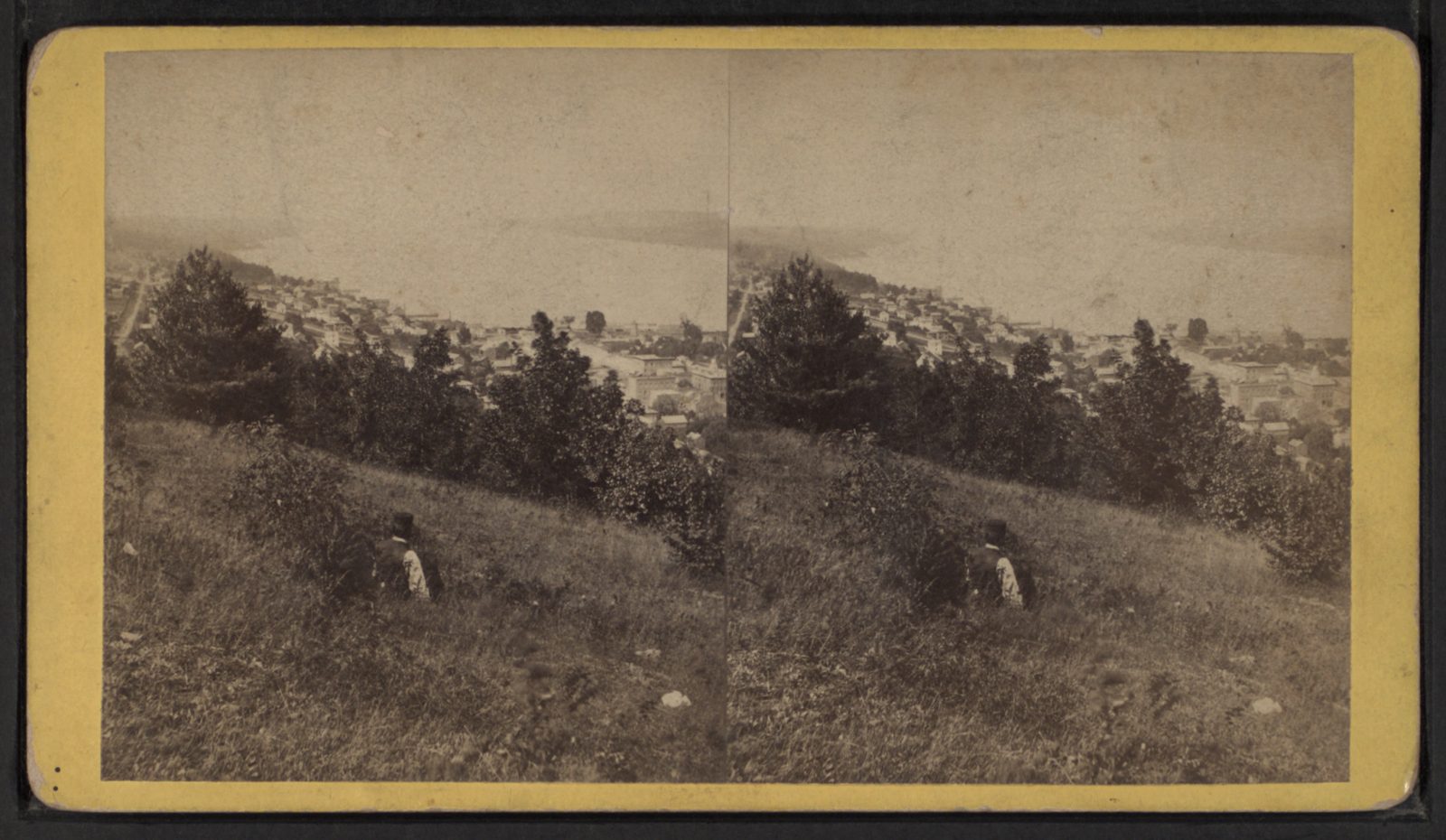
Seneca Guns: The Booms Over the Finger Lakes, and the 'Legend' Cooper Made Up
For two centuries people around New York's Seneca Lake, and later the Carolina coast, have heard deep booms like distant cannon. The USGS says many booms are human-made and some are tiny, shallow earthquakes. The famous “Seneca legend” about them comes from an 1850 James Fenimore Cooper story written as political satire.
Sources U.S. Geological Survey, Earthquake Hazards Program, “Earthquake Booms, Seneca Guns, and Other Sounds”; James Fenimore Cooper, “The Lake Gun” (in The Parthenon, New York, 1850), Project Gutenberg eBook #2328, annotated by Hugh C. MacDougall (James Fenimore Cooper Society)
Around Seneca Lake in New York’s Finger Lakes, people have long reported a deep, hollow boom, like a cannon fired somewhere over the water, with no obvious source. Locals called it the “lake gun.” The nickname “Seneca guns” later traveled to booms heard along the coasts of the Carolinas and Virginia. This file sorts what’s known from what’s literature.
What the USGS says about booms
The U.S. Geological Survey’s Earthquake Hazards Program has a page on exactly this. In summary:
- Most booms are human. Explosions, a heavy vehicle going by, nearby construction and sonic booms account for most of them.
- Some are earthquakes. Small, shallow earthquakes can produce rumbles or booms that people very close by can hear, sometimes “even when no vibrations are felt.” High-frequency vibrations from a shallow quake make the sound. From deeper quakes, those vibrations never reach the surface. The USGS gives measured examples. In 1989, seismologists working on Mammoth Mountain in California heard muffled booms and felt nothing, while seismographs recorded several small, shallow quakes, all under magnitude 2, at the same moment. In 2001, a swarm of shallow quakes, some only 1 to 2 miles deep, came with booms that “unnerved” Spokane.
- The East Coast is less certain. In the USGS’s words, East Coast booms “have not been directly studied and explained,” but based on the West Coast measurements, “at least some” of them are probably very small earthquakes.
- History backs it up. The USGS points to the 1886 Charleston earthquake, about magnitude 6.9, which came with well-documented roaring sounds, and to aftershocks over the following weeks reportedly accompanied by “loud detonations.” It also notes “artillery”-like sounds reported around the New Madrid earthquakes of 1811–12.
- Other natural causes it lists include lightning, storm and tsunami waves, meteors and even sand dunes.
The “Seneca legend” is fiction
Retellings of the Seneca guns often include a “Native American legend” behind the sound. The best-known version comes from James Fenimore Cooper. In 1850, the last full year of his life, Cooper wrote a short story called “The Lake Gun” for a gift-book anthology, The Parthenon. In it, a traveler named Fuller sails Seneca Lake looking for two local curiosities: a drifting tree trunk nicknamed the “Wandering Jew,” and the lake gun. A young Seneca man tells him a “tradition” about See-wise, a demagogue whose young followers wanted him as principal chief. He scorned the old laws, vanished into the lake, and was condemned to drift as a tree trunk. The boom is the Great Spirit calling to him. On cue, the lake fires its gun.
Hugh C. MacDougall, founder of the James Fenimore Cooper Society, explains in his annotated edition that the story is “in fact political satire” aimed at American political demagogues, and in particular at New York’s Whig senator William H. Seward. (the name “See-wise” is a play on Seward). By 1850, MacDougall writes, Cooper feared that political extremists were leading the country toward civil war. The Seneca element is “a supposed Seneca Indian legend,” a literary device. The ledger treats it as Cooper’s invention, not a Seneca or Haudenosaunee tradition. No source the ledger has read documents it as one.
Cooper’s own description of the sound, in the voice of his narrator, still holds up as reporting:
The report is deep, hollow, distant, and imposing. The lake seems to be speaking to the surrounding hills…
His narrator also says that “no satisfactory theory has ever been broached,” and dismisses talk of chasms and escaping air as “talking at random.”
Ledger status
Open. The booms are real and widely reported. The USGS has measured booms from small, shallow earthquakes elsewhere and thinks some East Coast booms are the same, but it hasn’t studied the Seneca or Carolina booms directly. Human sources explain most others. The legend is Cooper’s.
This file opens the ledger’s Booms & Skyquakes series. Frost quakes and the Charleston 1886 sounds are on the research list for later files.
Sources
- U.S. Geological Survey, Earthquake Hazards Program, “Earthquake Booms, Seneca Guns, and Other Sounds” (with references including Hill 2011, Seismological Research Letters, and Dutton 1889 on the Charleston earthquake). usgs.gov
- James Fenimore Cooper, “The Lake Gun,” in The Parthenon (New York: George E. Wood, 1850). Text and annotations by Hugh C. MacDougall, Project Gutenberg eBook #2328. Also at the James Fenimore Cooper Society.
- Holly Hartigan, “The mystery of the Seneca Drums persists,” Cornell Chronicle, 15 Dec 2025 — news.cornell.edu
Evidence ledger
Each claim in this file, the source it rests on, and how well it holds up: 2 corroborated · 1 unverified · 1 debunked. What the labels mean.
| Claim | Source | Type · date | Status |
|---|---|---|---|
| Most booms people hear are human-made: explosions, heavy vehicles, construction, sonic booms. | USGS Earthquake Hazards Program, “Earthquake Booms, Seneca Guns, and Other Sounds” | official | corroborated |
| Some booms are produced by very small, shallow earthquakes, sometimes with no shaking felt. | USGS (citing West Coast measurements, e.g. Mammoth Mountain 1989, Spokane 2001) | official | corroborated |
| East Coast booms, including “Seneca guns,” are explained.USGS: East Coast booms “have not been directly studied and explained”; it infers that at least some are small quakes. | USGS | official | unverified |
| A Seneca tradition says the lake gun is the Great Spirit calling to See-wise, a demagogue condemned to drift in the lake as a tree trunk.A fictional “supposed Seneca legend” written as political satire (MacDougall's annotation); not a documented Seneca or Haudenosaunee tradition. | James Fenimore Cooper, “The Lake Gun” (1850) | secondary · 1850 | debunked |
Updates
-
Logged 13 Oct 2026. Researchers from Cornell, SUNY-ESF and the New York State DEC sampled deep water in Seneca Lake in September 2025, inside and outside the lake-bed pockmarks, looking for methane. They found it, but at the same levels inside the pockmarks as elsewhere, so the pockmarks don't appear to leak gas continuously. Cornell's Jed Sparks said the team now suspects episodic releases, with gas building up in the sediment and escaping all at once. The Cornell Chronicle adds that the Drums 'may be' large bubbles bursting at the surface. That's a hypothesis, not a result: no booms have been recorded and matched to gas releases. Isotope work found a mix of biological and fossil methane, so the gas source is still unclear. Next steps were long-term chloride and conductivity sensors on the lake bed, due to be retrieved in May (2026), and possible seismic listening gear in the south end of the lake. We haven't found any published results from either. Status stays open.
Sources Cornell Chronicle, Holly Hartigan, “The mystery of the Seneca Drums persists,” 15 Dec 2025 (read in full 13 Oct 2026): https://news.cornell.edu/stories/2025/12/mystery-seneca-drums-persists
Discussion
Discussions activating. Per-case threads will embed here once the Giscus GitHub App is installed on the public satellite repo.
Meanwhile, join the conversation on GitHub Discussions: https://github.com/dclewis21/anomaly-ledger-community/discussions
CoS / D.C.: see Community guidelines and
SETUP.mdin the site repo for the one-click Giscus install.