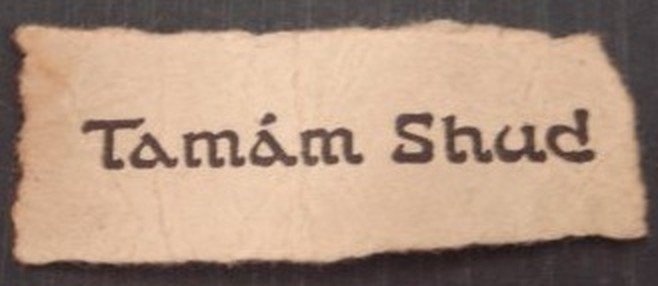
The evidence: The "Tamám Shud" scrap (police photo, low resolution)



The Somerton Man, 1948: "Tamam Shud" and a Name at Last
Last reviewed Next review
We review and update every article weekly. When the record changes, so does the article. How we review
A well-dressed man was found dead on Somerton beach in Adelaide on 1 December 1948, with no identification and a scrap reading 'Tamam Shud' sewn in his pocket.
Verdict: DNA has very likely named the man, though the identification is not formally confirmed.
Sources South Australian press 1948–49 (The Advertiser, The News), via Trove; Prof. Derek Abbott (University of Adelaide) and Colleen Fitzpatrick, identification announced July 2022; SA Police statements; Wikipedia, 'Tamam Shud case'
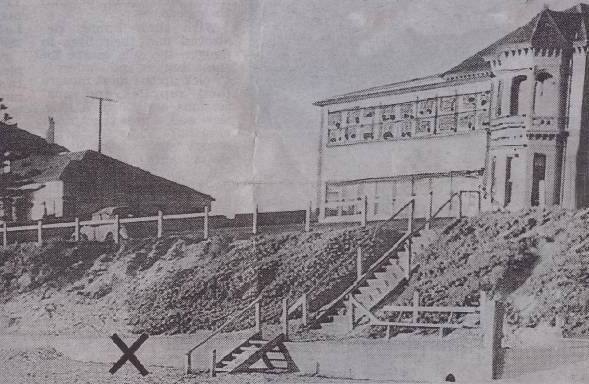
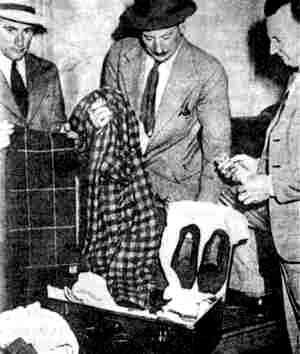
Early on 1 December 1948 a man was found dead, propped against the seawall on Somerton beach in Adelaide. He was well dressed, had no identification, and every label had been cut from his clothes. Doctors thought poison likely, but the government analyst found none. In June 1949 the coroner adjourned the inquest without a formal finding: he said death was probably from a poison “not accidentally administered”, but he could not say who gave it.
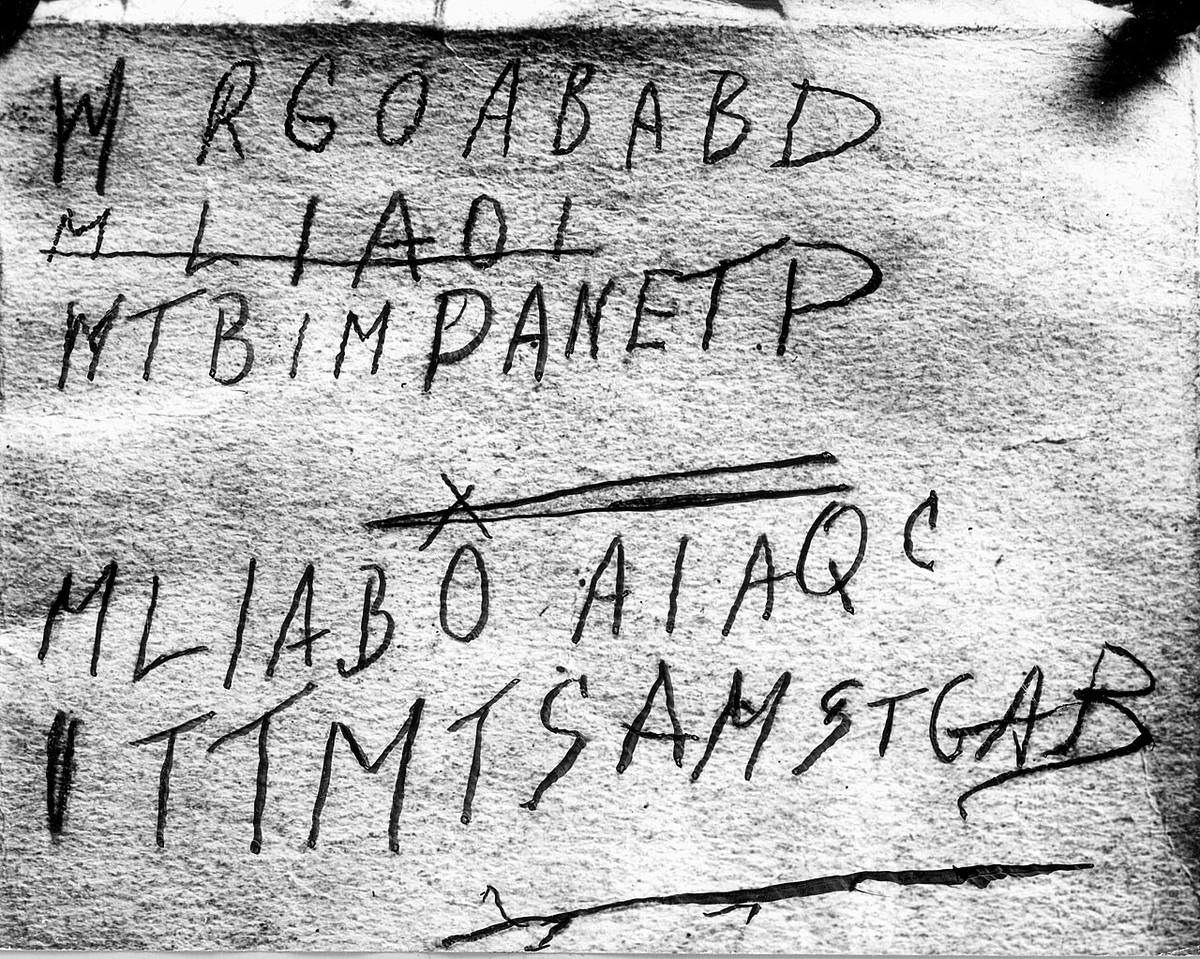
The code
Months later, police found a tiny rolled paper in a fob pocket, printed “Tamam Shud” (“ended” or “finished”), torn from a copy of Omar Khayyám’s Rubáiyát. The book itself turned up in a car, with a phone number and a few lines of letters that look like a code. Nobody has convincingly cracked it. The case became Australia’s most famous mystery.
A name
In 2021 South Australia’s attorney-general authorized exhumation. In July 2022 University of Adelaide professor Derek Abbott and US genealogist Colleen Fitzpatrick announced that DNA from his hair matched relatives of Carl “Charles” Webb, a Melbourne electrical engineer born in 1905. Police have said they are reviewing the result. Why he died, and why on that beach, is still unknown.
Sources
- Wikipedia, “Tamam Shud case”: en.wikipedia.org
- ABC News, “Somerton Man identified as Melbourne-born engineer, researcher says” (26 Jul 2022): web.archive.org
- “Somerton Beach Body Mystery,” The Advertiser (Adelaide), 4 Dec 1948, p. 3: trove.nla.gov.au
- “Tamam Shud” (editorial), The Advertiser, 10 Jun 1949, p. 2: trove.nla.gov.au
- “Poison ‘likely, but more facts wanted’,” The News (Adelaide), 21 Jun 1949, p. 2: trove.nla.gov.au
- “No Finding At Beach Body Inquest,” The Advertiser, 22 Jun 1949, p. 10: trove.nla.gov.au
Every image on this page is credited where it appears.
Weighing it
The identification is strong but not formally confirmed.
Verdict
Disputed DNA has very likely named the man, though the identification is not formally confirmed.
Evidence ledger
Each claim in this file, the source it rests on, and how well it holds up: 3 corroborated · 1 disputed · 1 unverified. What the labels mean.
| Claim | Source | Type · date | Status |
|---|---|---|---|
| An unidentified man was found dead on Somerton beach, Adelaide, on 1 Dec 1948. | The Advertiser (Adelaide), "Somerton Beach Body Mystery", 4 Dec 1948, p. 3 (Trove 43794087) | period press · 1948-12-04 | corroborated |
| A scrap reading 'Tamam Shud' torn from a copy of the Rubáiyát was found in a hidden pocket.The News describes the paper in 'a small fob pocket that was extremely difficult to find'; the Advertiser notes the words end the Rubáiyát. | The News (Adelaide), "Poison 'likely, but more facts wanted'", 21 Jun 1949, p. 2 (Trove 130197014); The Advertiser, "Tamam Shud" (editorial), 10 Jun 1949, p. 2 (Trove 36371416); Wikipedia | period press · 1949 | corroborated |
| The coroner made no formal finding. He said he could find death was from a poison 'not accidentally administered', but not whether the man or someone else gave it, and the analyst found no poison. | The Advertiser, "No Finding At Beach Body Inquest", 22 Jun 1949, p. 10 (Trove 74647022); The News (Adelaide), "Poison 'likely, but more facts wanted'", 21 Jun 1949, p. 2 (Trove 130197014) | period press · 1949-06-22 | corroborated |
| DNA genealogy identified him as Carl 'Charles' Webb, a Melbourne electrical engineer.Not yet formally confirmed by SA Police/coroner. ABC reports Abbott's claim that DNA triangulated to Charles Webb, a 43-year-old engineer and instrument maker born in 1905. | Abbott & Fitzpatrick (2022), as reported by ABC News; Wikipedia | press · 2022 | disputed |
| He was a Cold War spy. | Popular theories | secondary | unverified |
Update log
-
We added this case file.
-
Correction: we had said the cause of death 'could not be established; poison was suspected', citing the inquest generally. The coroner's words, as The Advertiser reported them on 22 Jun 1949, were that he could find the man died from a poison 'not accidentally administered', but not whether he took it himself or someone gave it, so he made no formal finding. We now say that. We also replaced the Trove search link with the four articles we read.
Sources The Advertiser (Adelaide), "Somerton Beach Body Mystery", 4 Dec 1948, p. 3 (Trove 43794087) · The Advertiser, "Tamam Shud" (editorial), 10 Jun 1949, p. 2 (Trove 36371416) · The News (Adelaide), "Poison 'likely, but more facts wanted'", 21 Jun 1949, p. 2 (Trove 130197014) · The Advertiser, "No Finding At Beach Body Inquest", 22 Jun 1949, p. 10 (Trove 74647022)
-
Weekly re-check of sources; no newer change to the record. Next check November 23, 2026.
Discussion
Discuss this case on the on-site Community board — no GitHub account required. Prefer a private tip for the editorial team? Submit a Sighting.
House rules: Community guidelines.