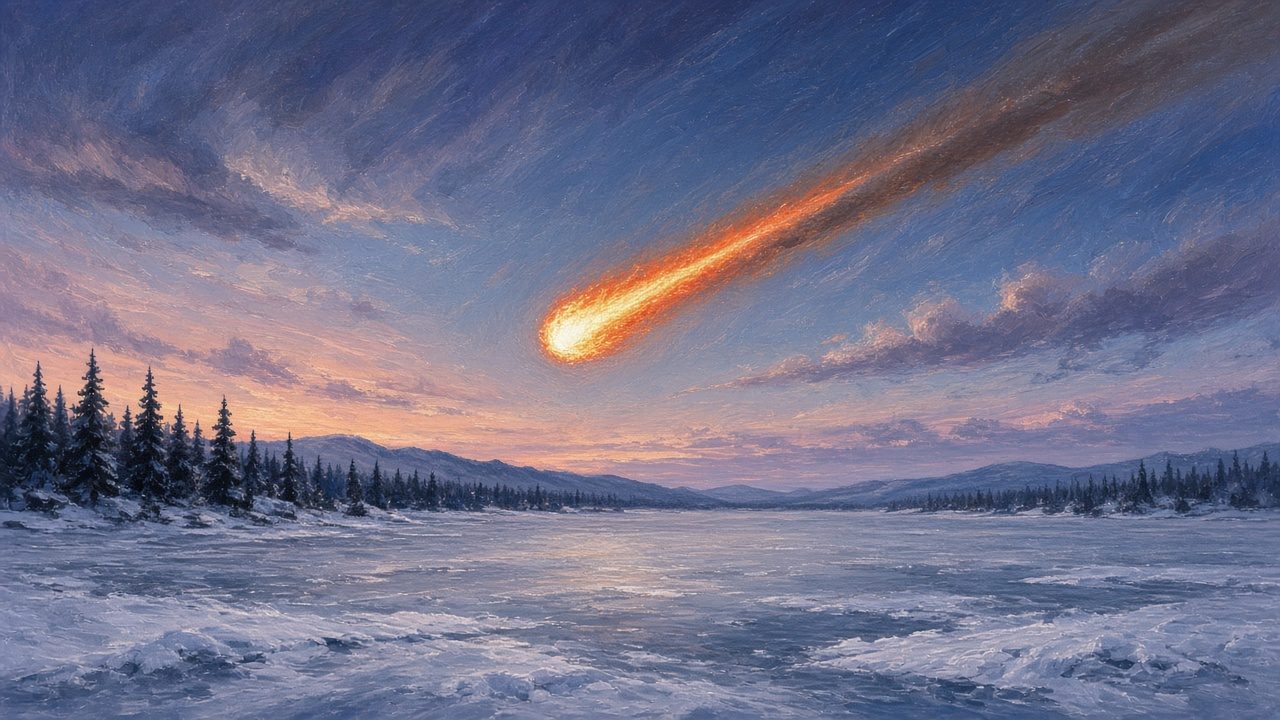


No original photo or video of this event is known.
Tagish Lake, 18 January 2000: The Meteorite That Fell on Ice
Last reviewed Next review
We review and update every article weekly. When the record changes, so does the article. How we review
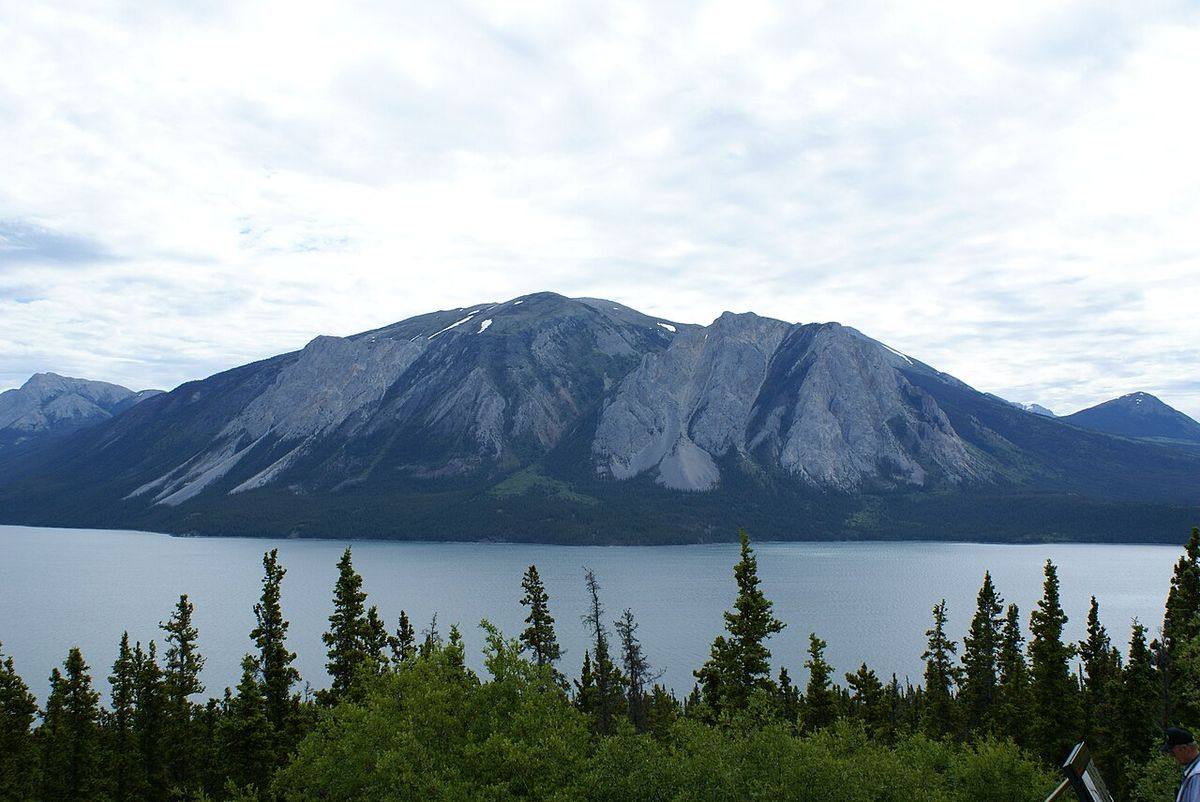
A brilliant fireball over the Yukon and northern British Columbia dropped fragments onto a frozen lake.
Verdict: A real meteorite fall, recovered from a frozen lake and studied for its rare chemistry.
Sources Brown et al., Science 290 (2000) 320 (ADS abstract); Herd et al., Science (2011), NASA Goddard copy; Planetary Science Research Discoveries (2002); Wikipedia
Just before 9 a.m. local time on 18 January 2000, a fireball brighter than the full Moon crossed the Yukon and northern British Columbia and exploded, rattling windows and leaving a dust trail seen for hundreds of kilometers. US military satellites recorded the flash.
Collected frozen
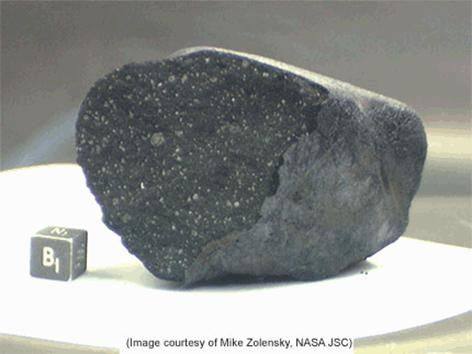
A week later Jim Brook, who lived near Tagish Lake, found dark fragments lying on the lake ice. Knowing they might matter, he picked them up in plastic bags without touching them by hand and kept them frozen. Hundreds more pieces were found when the snow melted, but Brook’s pristine samples became some of the most valuable meteorite material in the world.
Why it matters
Peter Brown and colleagues reported in Science that the fireball came from an orbit reaching the outer asteroid belt and that the rock was a new kind of carbonaceous chondrite, very primitive and rich in carbon. NASA scientists later found that different fragments held different amounts of amino acids and other organics, a record of chemistry on its parent asteroid. Nothing here is mysterious, but it is a good October-style lesson in what to do if a sky rock lands in your yard.
Sources
- Brown, P. G., et al. (2000), “The fall, recovery, orbit, and composition of the Tagish Lake meteorite,” Science 290, 320: ADS
- Herd et al., “Origin and Evolution of Prebiotic Organic Matter As Inferred from the Tagish Lake Meteorite,” Science (2011), NASA Goddard copy: science.gsfc.nasa.gov
- Planetary Science Research Discoveries, “Tagish Lake” (2002): psrd.hawaii.edu
Further reading (not yet re-checked)
These items are not cited for any claim on this page. We have not read them in this review.
- Meteoritical Bulletin Database, “Tagish Lake”: lpi.usra.edu
Verdict
Explained A real meteorite fall, recovered from a frozen lake and studied for its rare chemistry.
Evidence ledger
Each claim in this file, the source it rests on, and how well it holds up: 4 corroborated. What the labels mean.
| Claim | Source | Type · date | Status |
|---|---|---|---|
| A fireball on 18 Jan 2000 dropped meteorites onto Tagish Lake in northwestern British Columbia. | Brown et al., Science 290 (2000), ADS abstract; PSRD (2002); Wikipedia | scholarly · 2000 | corroborated |
| Fragments were collected from the lake ice without being thawed, preserving fragile organics.Herd et al.: specimens fell on a frozen lake, were collected within days and kept frozen. | PSRD (2002); Herd et al. (2011), NASA Goddard copy; Wikipedia | scholarly · 2000 | corroborated |
| The meteorite is a primitive carbonaceous chondrite unlike any previously known. | Brown et al. (2000); NASA Goddard (2011) | scholarly · 2011 | corroborated |
| The fireball's path and orbit were reconstructed from satellite and eyewitness data. | PSRD (2002), summarizing Brown et al.; Wikipedia | scholarly · 2000 | corroborated |
Update log
-
We added this case file.
-
We re-sourced the fall and recovery claims to the Brown et al. (2000) abstract, PSRD (2002), Herd et al. (2011) and Wikipedia, all read. The Meteoritical Bulletin entry is behind a bot check and is now further reading only.
Sources https://ui.adsabs.harvard.edu/abs/2000Sci...290..320B · http://www.psrd.hawaii.edu/Dec02/TagishLake.html · https://science.gsfc.nasa.gov/sed/content/uploadFiles/publication_files/Herdetal2011.pdf
-
Source review: we moved items we have not read out of Sources into a separate 'Further reading (not yet re-checked)' list. No claim on this page now cites them.
Sources
-
Weekly re-check of sources; no newer change to the record. Next check November 23, 2026.
Discussion
Discuss this case on the on-site Community board — no GitHub account required. Prefer a private tip for the editorial team? Submit a Sighting.
House rules: Community guidelines.