Feature reference (not a verified entrance)
Belogradchik Rocks
Last reviewed: not yet Next review
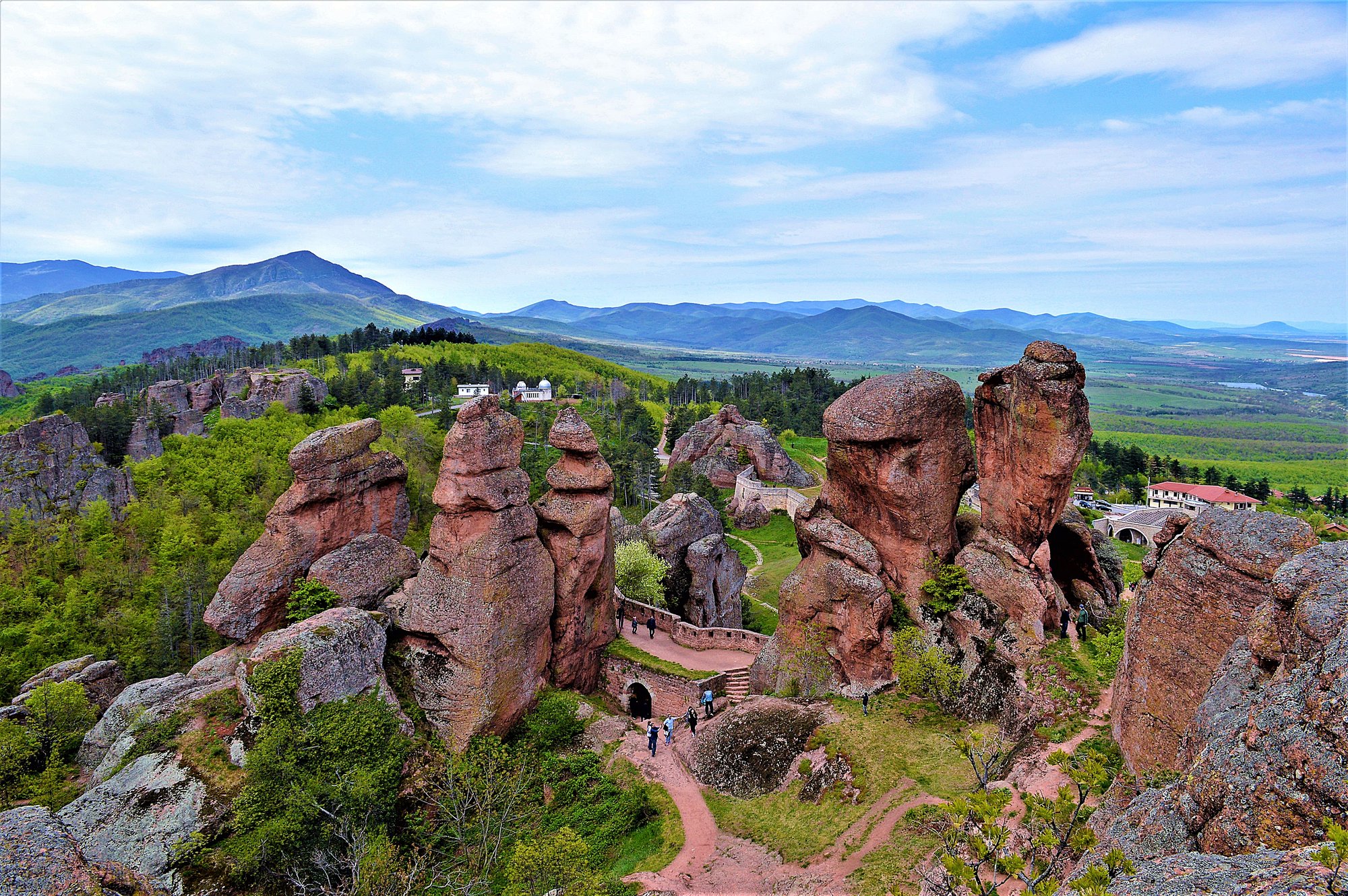
Red sandstone towers in northwest Bulgaria up to 200 m high, each with a name and a legend, from the Madonna to the Monks.
Access
We haven't checked access for this place. Check the land manager's or local tourism site for hours, fees and closures, and stay off private or closed land.
Safety & respect
Stay on marked paths and behind barriers. Ground near caves, sinkholes, geysers and cliffs can be unstable or hot.
Lore note
The Belogradchik Rocks spread over about 50 km² of the western Balkan Mountains. Red and yellow sandstone and conglomerate have weathered into towers up to 200 m tall, many named for what they resemble, such as Adam and Eve, the Monks and the Madonna. The Madonna carries the legend of a nun from a monastery among the rocks who was punished for a forbidden love, and the old fortress of Belogradchik used the rocks as walls. The area is the only home of the endemic plant Hieracium belogradcense.
Map links
Official / public map link · Approx. 43.6208, 22.6850: feature coordinate, not a checked entrance · Pin source: Wikidata Q3042478 P625, cross-checked against the OpenStreetMap protected area for the Belogradchik Rocks (within 1.1 km) · Marks the central group of rocks beside Belogradchik; the formations spread over about 50 km².
Sources
- Wikipedia, Belogradchik Rocks (CC BY-SA 4.0; read 12 Nov 2026): https://en.wikipedia.org/wiki/Belogradchik_Rocks
- Wikidata, Q3042478 (coordinate location P625, country P17; read 12 Nov 2026): https://www.wikidata.org/wiki/Q3042478
The Belogradchik Rocks spread over about 50 km² of the western Balkan Mountains. Red and yellow sandstone and conglomerate have weathered into towers up to 200 m tall, many named for what they resemble, such as Adam and Eve, the Monks and the Madonna. The Madonna carries the legend of a nun from a monastery among the rocks who was punished for a forbidden love, and the old fortress of Belogradchik used the rocks as walls. The area is the only home of the endemic plant Hieracium belogradcense.
This entry is part of our world atlas. The summary above is written in our own words from the Wikipedia article, and the map pin uses published coordinates cross-checked against Wikidata. We haven’t visited this place or checked current access.