Feature reference (not a verified entrance)
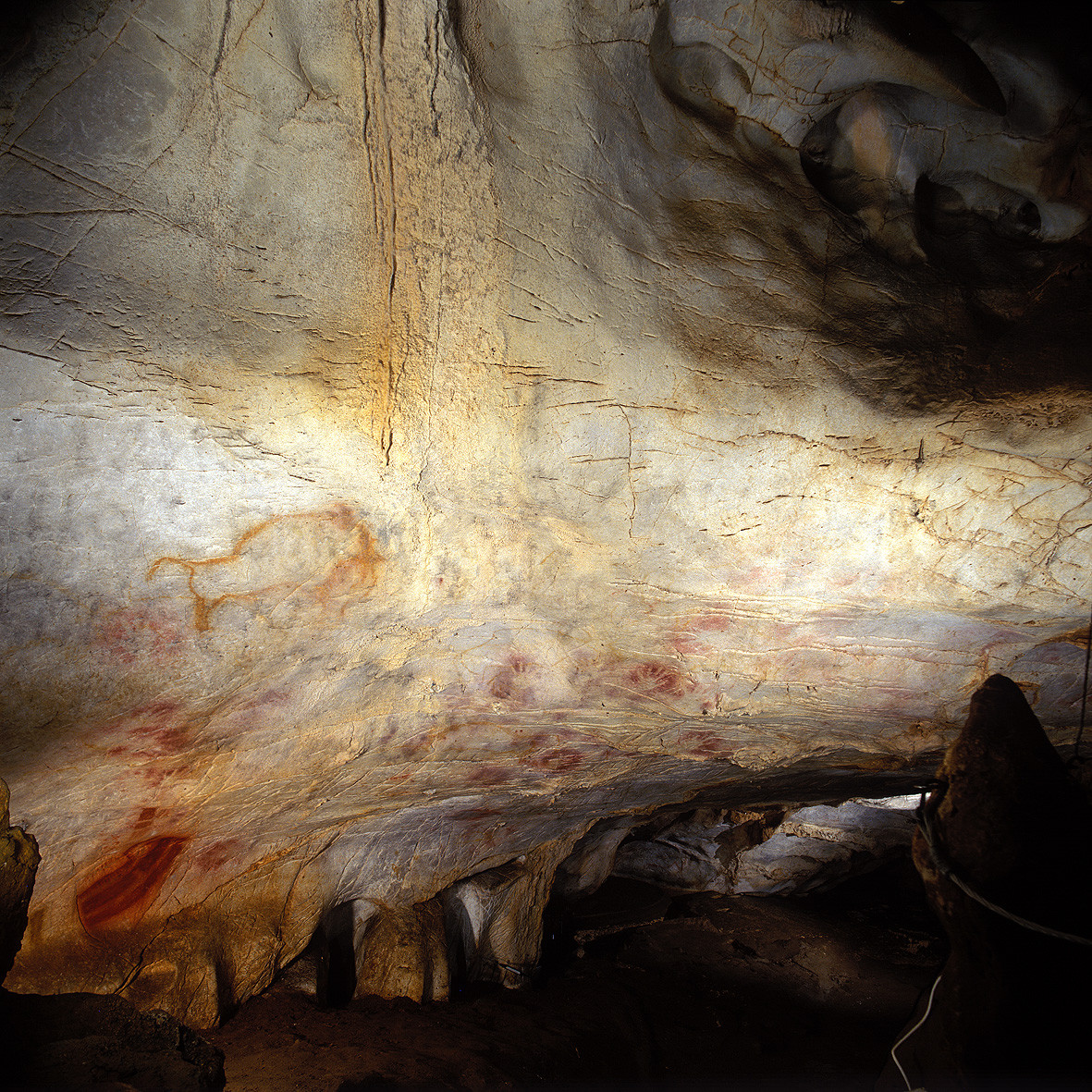
Cave of El Castillo
Last reviewed: not yet Next review
A show cave in Puente Viesgo, Spain.
Access
We haven't checked access for this place. Check the land manager's or local tourism site for hours, fees and closures, and stay off private or closed land.
Safety & respect
Stay on marked paths and behind barriers. Ground near caves, sinkholes, geysers and cliffs can be unstable or hot. Decorated archaeological cave: cultural/heritage warning; not a rights failure.
Lore note
The Cueva del Castillo contains both a decorated cave and an archaeological site, within the complex of the Caves of Monte Castillo, in Puente Viesgo, Cantabria, Spain. The archaeological stratigraphy has been divided into around 19 layers, depending on the source they slightly deviate from each other, however the overall sequence is consistent, beginning in the Proto-Aurignacian, and ending in the Bronze Age. El Castillo was discovered in 1903 by Hermilio Alcalde del Río, a Spanish archaeologist, who was one of the pioneers in the study of the earliest cave paintings of Cantabria.
Map links
Official / public map link · Approx. 43.2922, -3.9653: feature coordinate, not a checked entrance · Pin source: Wikipedia article coordinates, cross-checked against Wikidata Q770666 P625 (within 2 km)
Sources
- Wikipedia, Cave of El Castillo (CC BY-SA 4.0; read 1 Nov 2026): https://en.wikipedia.org/wiki/Cave_of_El_Castillo
- Wikidata, Q770666 (coordinate location P625, country P17; read 1 Nov 2026): https://www.wikidata.org/wiki/Q770666
The Cueva del Castillo contains both a decorated cave and an archaeological site, within the complex of the Caves of Monte Castillo, in Puente Viesgo, Cantabria, Spain. The archaeological stratigraphy has been divided into around 19 layers, depending on the source they slightly deviate from each other, however the overall sequence is consistent, beginning in the Proto-Aurignacian, and ending in the Bronze Age. El Castillo was discovered in 1903 by Hermilio Alcalde del Río, a Spanish archaeologist, who was one of the pioneers in the study of the earliest cave paintings of Cantabria.
This entry is part of our world atlas. The summary above is adapted from the Wikipedia article (CC BY-SA 4.0), and the map pin uses the coordinates published there, cross-checked against Wikidata. We haven’t visited this place or checked current access.