Feature reference (not a verified entrance)
Cueva de los Tayos
Last reviewed: not yet Next review
An oilbird cave in Ecuador's Amazon foothills, famous for a never-found library of metal plates that Neil Armstrong once joined the search for.
Access
We haven't checked access for this place. Check the land manager's or local tourism site for hours, fees and closures, and stay off private or closed land.
Safety & respect
Stay on marked paths and behind barriers. Ground near caves, sinkholes, geysers and cliffs can be unstable or hot. The cave lies on land of a Shuar community; respect local rules and permission.
Lore note
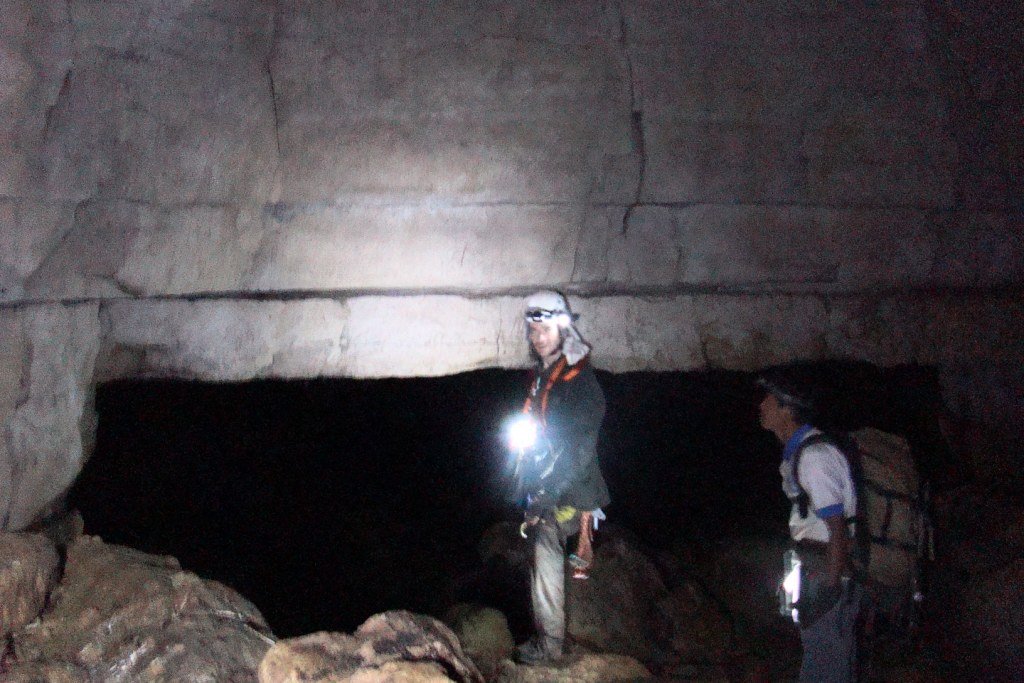
The Cave of the Oilbirds lies in rainforest on the eastern slopes of the Andes, entered by a deep shaft that opens into large passages and a chamber about 240 m long. Shuar people have long gone down into it to collect young oilbirds. Erich von Däniken popularised a story of a hidden library of inscribed golden plates left by aliens or a lost civilisation, and a 1976 expedition that included astronaut Neil Armstrong went looking. Nothing of the kind has been found, and archaeologists generally treat the library as a hoax.
Map links
Official / public map link · Approx. -3.0515, -78.2054: feature coordinate, not a checked entrance · Pin source: Wikipedia article coordinates, cross-checked against Wikidata Q5192642 P625 (within 2 km)
Sources
- Wikipedia, Cueva de los Tayos (CC BY-SA 4.0; read 12 Nov 2026): https://en.wikipedia.org/wiki/Cueva_de_los_Tayos
- Wikidata, Q5192642 (coordinate location P625, country P17; read 12 Nov 2026): https://www.wikidata.org/wiki/Q5192642
The Cave of the Oilbirds lies in rainforest on the eastern slopes of the Andes, entered by a deep shaft that opens into large passages and a chamber about 240 m long. Shuar people have long gone down into it to collect young oilbirds. Erich von Däniken popularised a story of a hidden library of inscribed golden plates left by aliens or a lost civilisation, and a 1976 expedition that included astronaut Neil Armstrong went looking. Nothing of the kind has been found, and archaeologists generally treat the library as a hoax.
This entry is part of our world atlas. The summary above is written in our own words from the Wikipedia article, and the map pin uses published coordinates cross-checked against Wikidata. We haven’t visited this place or checked current access.