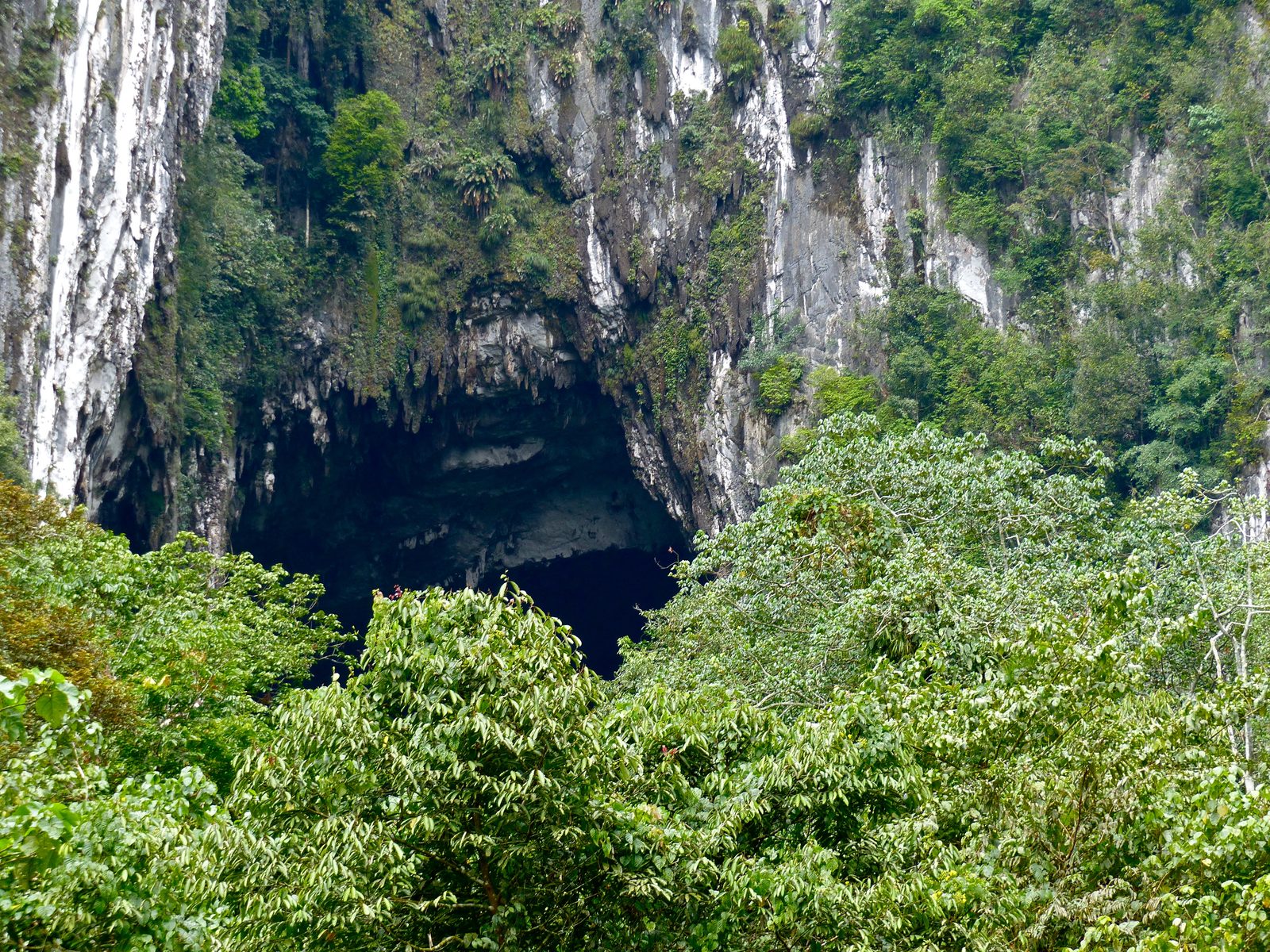
Feature reference (not a verified entrance)
Deer Cave
Last reviewed: not yet Next review
Deer Cave (Malay: Gua Rusa), located near Miri, Sarawak, Malaysia, is a show cave attraction of Gunung Mulu National Park.
Access
We haven't checked access for this place. Check the land manager's or local tourism site for hours, fees and closures, and stay off private or closed land.
Safety & respect
Stay on marked paths and behind barriers. Ground near caves, sinkholes, geysers and cliffs can be unstable or hot.
Lore note
Deer Cave (Malay: Gua Rusa), located near Miri, Sarawak, Malaysia, is a show cave attraction of Gunung Mulu National Park. It was surveyed in 1961 by G. E. Wilford of the British Borneo Geological Survey, who predicted that Mulu would yield many more caves in the future. The cave, which is also known as Gua Payau or Gua Rusa by the local Penan and Berawan people, is said to have received its name because of the deer that go there to lick salt-bearing rocks and shelter themselves.
Map links
Official / public map link · Approx. 4.1319, 114.9189: feature coordinate, not a checked entrance · Pin source: Wikipedia article coordinates, cross-checked against Wikidata Q5250695 P625 (within 2 km)
Sources
- Wikipedia, Deer Cave (CC BY-SA 4.0; read 1 Nov 2026): https://en.wikipedia.org/wiki/Deer_Cave
- Wikidata, Q5250695 (coordinate location P625, country P17; read 1 Nov 2026): https://www.wikidata.org/wiki/Q5250695
Deer Cave (Malay: Gua Rusa), located near Miri, Sarawak, Malaysia, is a show cave attraction of Gunung Mulu National Park. It was surveyed in 1961 by G. E. Wilford of the British Borneo Geological Survey, who predicted that Mulu would yield many more caves in the future. The cave, which is also known as Gua Payau or Gua Rusa by the local Penan and Berawan people, is said to have received its name because of the deer that go there to lick salt-bearing rocks and shelter themselves.
This entry is part of our world atlas. The summary above is adapted from the Wikipedia article (CC BY-SA 4.0), and the map pin uses the coordinates published there, cross-checked against Wikidata. We haven’t visited this place or checked current access.