Feature reference (not a verified entrance)
Grutas de García
Last reviewed: not yet Next review
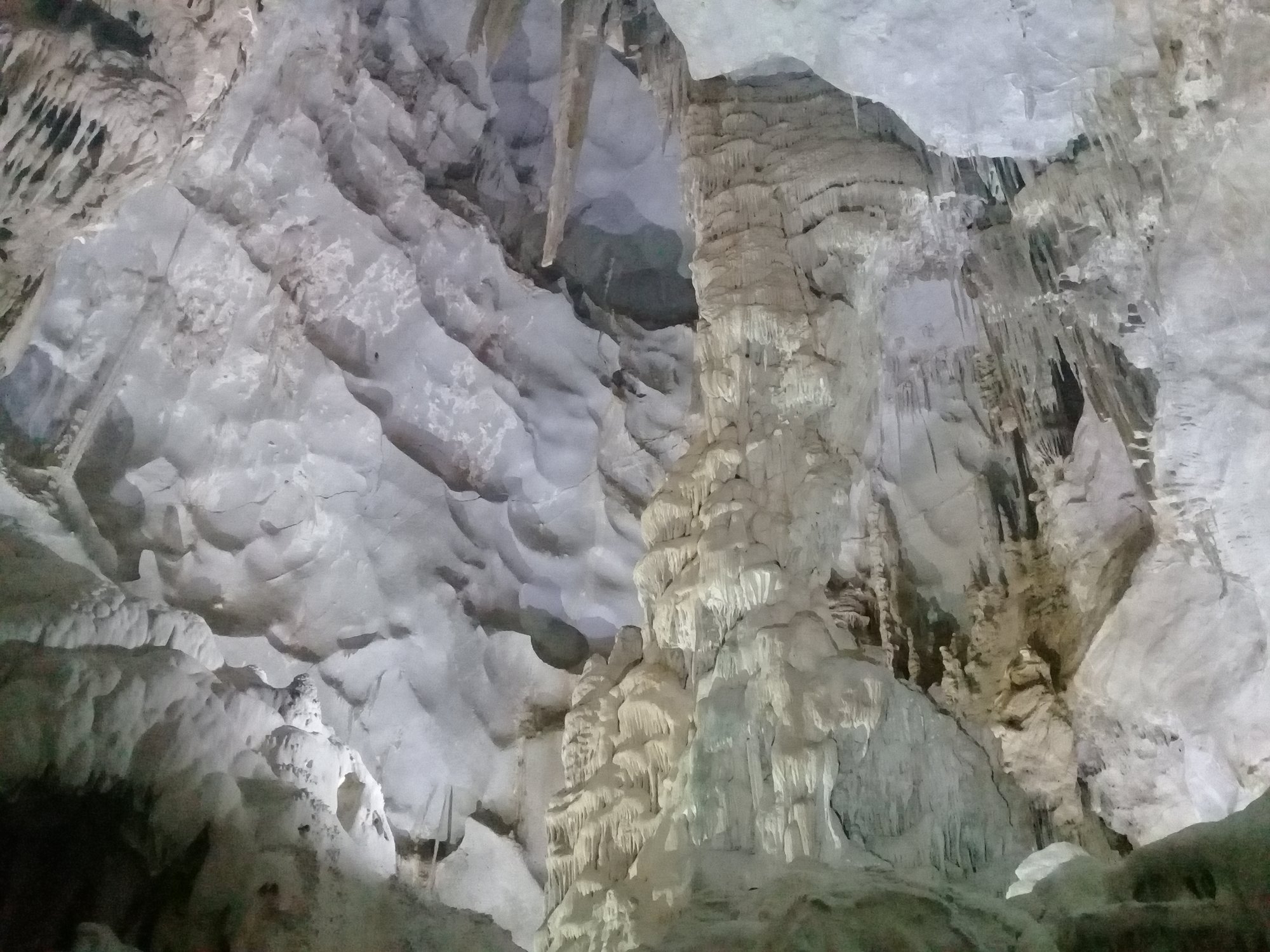
A show cave high in a mountain near Monterrey whose walls hold marine fossils from when the rock lay under the sea.
Access
We haven't checked access for this place. Check the land manager's or local tourism site for hours, fees and closures, and stay off private or closed land.
Safety & respect
Stay on marked paths and behind barriers. Ground near caves, sinkholes, geysers and cliffs can be unstable or hot.
Lore note
The García caves sit inside Sierra del Fraile and are thought to have formed 50 to 60 million years ago. Shells and snail fossils in the walls date from when the area was seabed. A friar, Juan Antonio de Sobrevilla, is credited with finding them. Two routes run through more than two dozen chambers with large stalactites and stalagmites, including a chamber where daylight seems to glow through the rock of the ceiling.
Map links
Official / public map link · Approx. 25.8493, -100.5239: feature coordinate, not a checked entrance · Pin source: Wikipedia article coordinates, cross-checked against Wikidata Q5612364 P625 (within 2 km)
Sources
- Wikipedia, Grutas de García (CC BY-SA 4.0; read 12 Nov 2026): https://en.wikipedia.org/wiki/Grutas_de_Garc%C3%ADa
- Wikidata, Q5612364 (coordinate location P625, country P17; read 12 Nov 2026): https://www.wikidata.org/wiki/Q5612364
The García caves sit inside Sierra del Fraile and are thought to have formed 50 to 60 million years ago. Shells and snail fossils in the walls date from when the area was seabed. A friar, Juan Antonio de Sobrevilla, is credited with finding them. Two routes run through more than two dozen chambers with large stalactites and stalagmites, including a chamber where daylight seems to glow through the rock of the ceiling.
This entry is part of our world atlas. The summary above is written in our own words from the Wikipedia article, and the map pin uses published coordinates cross-checked against Wikidata. We haven’t visited this place or checked current access.