Feature reference (not a verified entrance)
Hato Caves
Last reviewed: not yet Next review
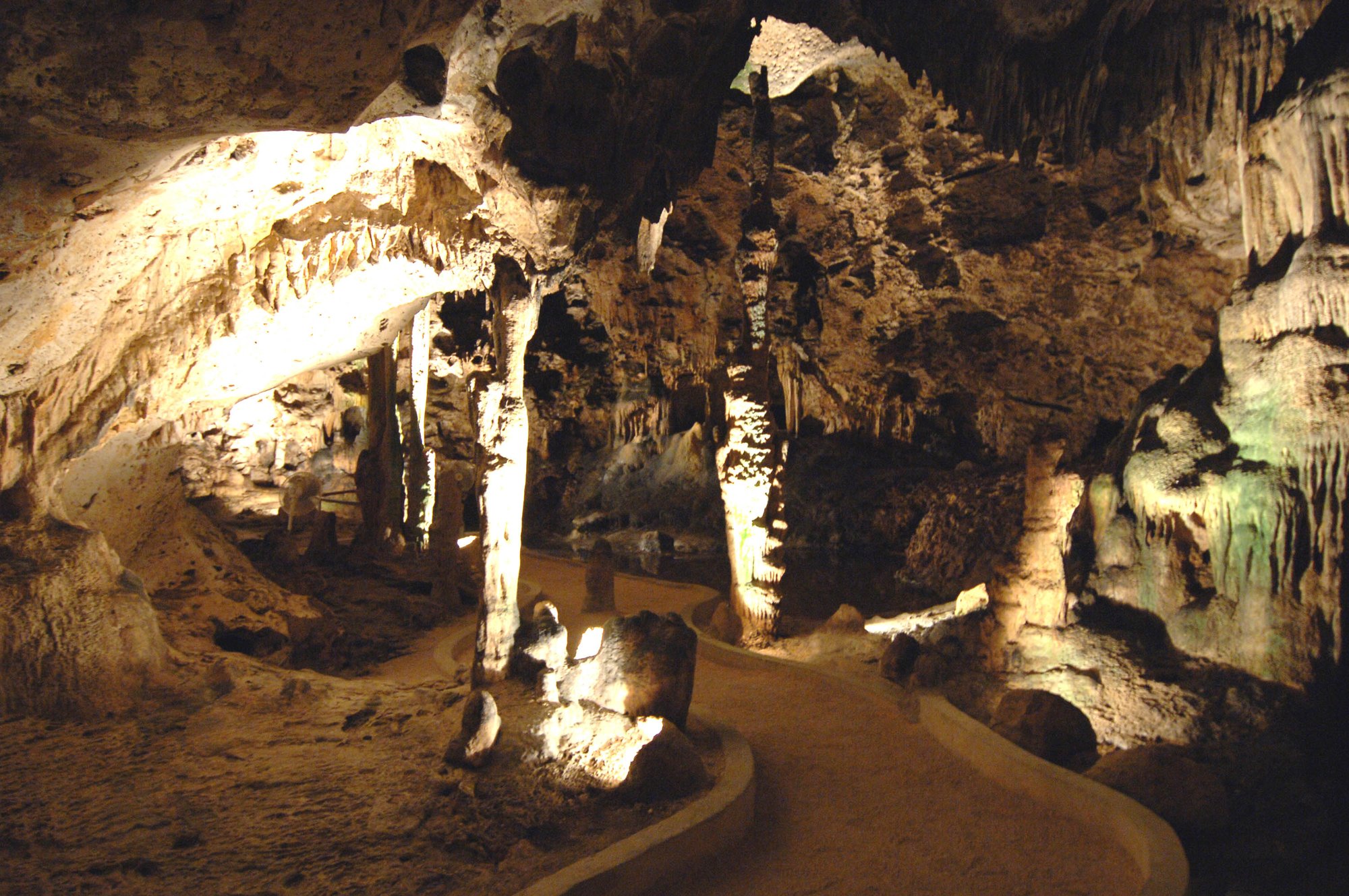
Show caves in raised coral limestone on Curaçao, with Amerindian petroglyphs and a history as a refuge for people escaping slavery.
Access
We haven't checked access for this place. Check the land manager's or local tourism site for hours, fees and closures, and stay off private or closed land.
Safety & respect
Stay on marked paths and behind barriers. Ground near caves, sinkholes, geysers and cliffs can be unstable or hot. Early inhabitants buried their dead here; treat the caves and their rock art with respect.
Lore note
The Hato Caves formed in coral limestone that built up under the sea and was later lifted and eaten away by rain. They run about 240 m on a high terrace of the island's north coast and have been open to visitors since 1991. Arawak and Caquetio people lived here about 1,500 years ago and left petroglyphs and drawings, and before slavery was abolished people who escaped used the caves to hide.
Map links
Official / public map link · Approx. 12.1793, -68.9482: feature coordinate, not a checked entrance · Pin source: Wikipedia article coordinates, cross-checked against Wikidata Q5681711 P625 (within 2 km)
Sources
- Wikipedia, Hato Caves (CC BY-SA 4.0; read 12 Nov 2026): https://en.wikipedia.org/wiki/Hato_Caves
- Wikidata, Q5681711 (coordinate location P625, country P17; read 12 Nov 2026): https://www.wikidata.org/wiki/Q5681711
The Hato Caves formed in coral limestone that built up under the sea and was later lifted and eaten away by rain. They run about 240 m on a high terrace of the island’s north coast and have been open to visitors since 1991. Arawak and Caquetio people lived here about 1,500 years ago and left petroglyphs and drawings, and before slavery was abolished people who escaped used the caves to hide.
This entry is part of our world atlas. The summary above is written in our own words from the Wikipedia article, and the map pin uses published coordinates cross-checked against Wikidata. We haven’t visited this place or checked current access.