Feature reference (not a verified entrance)
Hoba meteorite
Last reviewed: not yet Next review
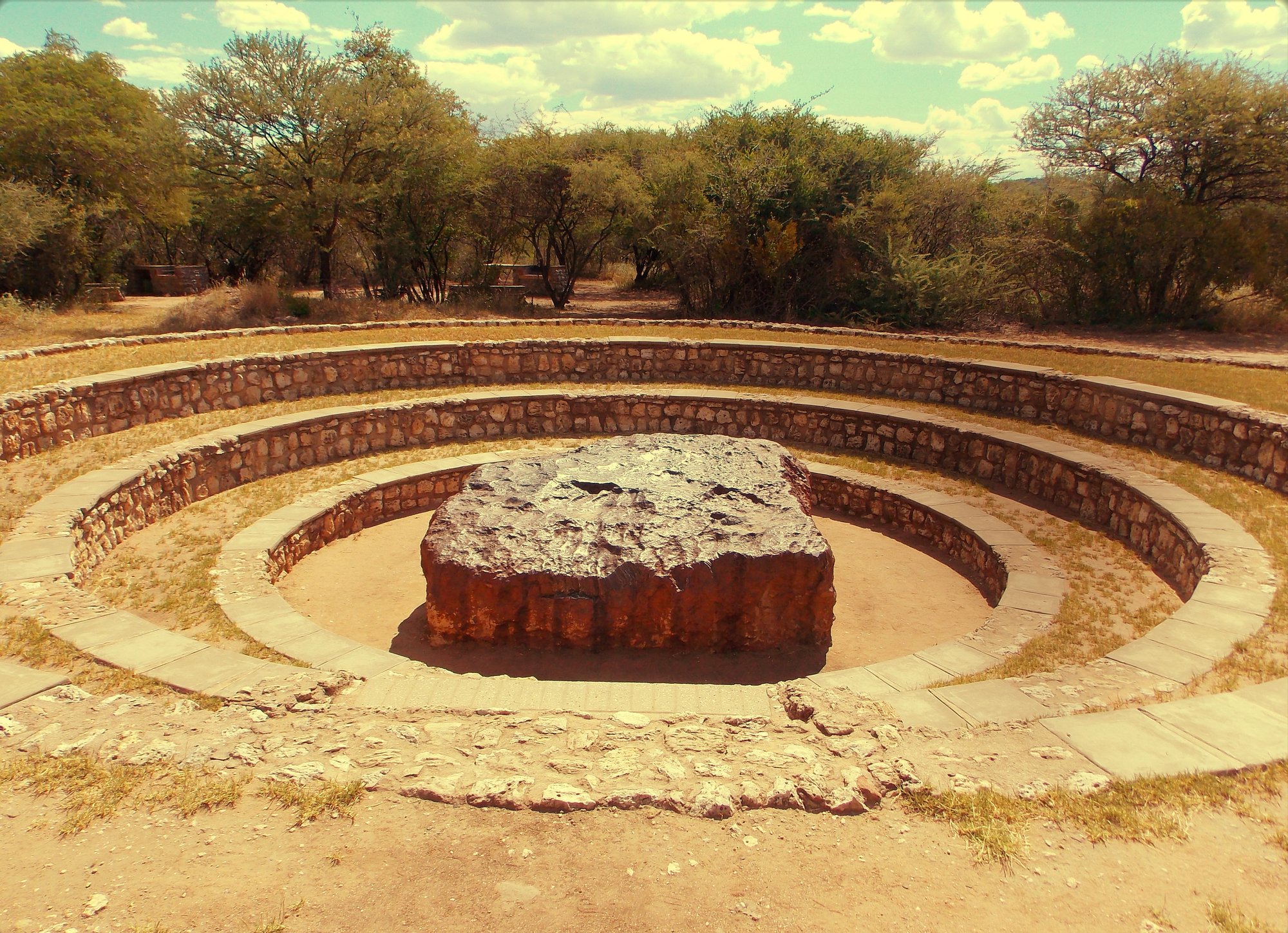
The largest known intact meteorite, a 60-tonne slab of iron that still lies where it fell in Namibia.
Access
We haven't checked access for this place. Check the land manager's or local tourism site for hours, fees and closures, and stay off private or closed land.
Safety & respect
Craters are often remote, with rough tracks and no shade or water. Tell someone your plans and don't collect rocks where it's forbidden.
Lore note
The Hoba meteorite weighs more than 60 tonnes, making it the biggest single meteorite known and the largest natural lump of iron on Earth's surface. It probably fell less than 80,000 years ago and was slowed enough by the air to land without blasting a crater. A farmer found it in 1920 when his plow struck it. It has never been moved, and stone seating now rings it.
Map links
Official / public map link · Approx. -19.5925, 17.9337: feature coordinate, not a checked entrance · Pin source: Wikipedia and Wikidata Q216876 coordinates, cross-checked against the OpenStreetMap stone node for the Hoba Meteorite (within 0.1 km)
Sources
- Wikipedia, Hoba meteorite (CC BY-SA 4.0; read 12 Nov 2026): https://en.wikipedia.org/wiki/Hoba_meteorite
- Wikidata, Q216876 (coordinate location P625, country P17; read 12 Nov 2026): https://www.wikidata.org/wiki/Q216876
The Hoba meteorite weighs more than 60 tonnes, making it the biggest single meteorite known and the largest natural lump of iron on Earth’s surface. It probably fell less than 80,000 years ago and was slowed enough by the air to land without blasting a crater. A farmer found it in 1920 when his plow struck it. It has never been moved, and stone seating now rings it.
This entry is part of our world atlas. The summary above is written in our own words from the Wikipedia article, and the map pin uses published coordinates cross-checked against Wikidata. We haven’t visited this place or checked current access.