Feature reference (not a verified entrance)
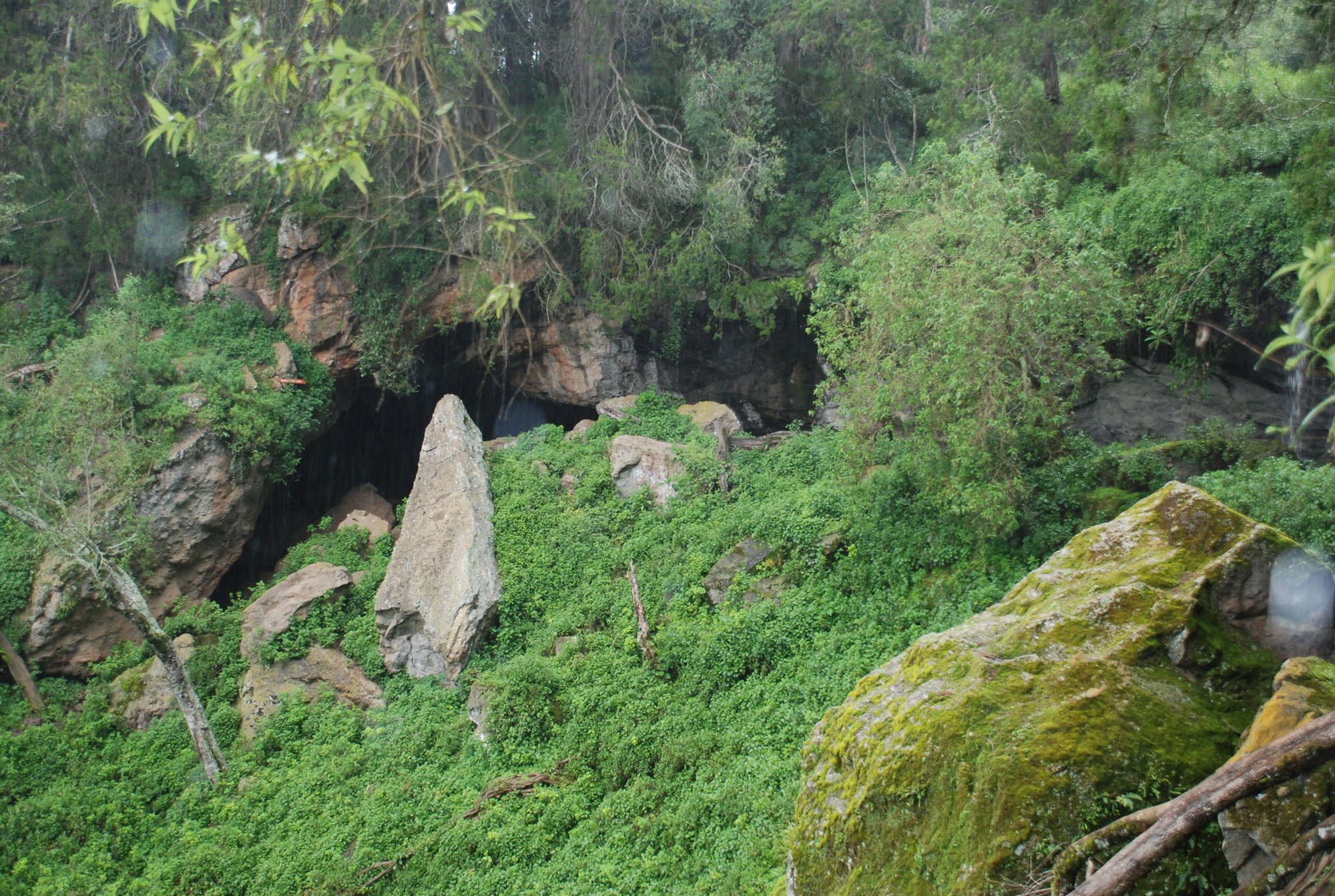
Kitum Cave
Last reviewed: not yet Next review
A salt-mined cave on Mount Elgon, Kenya, dug deeper by elephants and linked to two cases of Marburg virus.
Access
We haven't checked access for this place. Check the land manager's or local tourism site for hours, fees and closures, and stay off private or closed land.
Safety & respect
Stay on marked paths and behind barriers. Ground near caves, sinkholes, geysers and cliffs can be unstable or hot.
Lore note
Kitum Cave reaches about 200 m into the volcanic rock of Mount Elgon. Elephants have walked into it for generations to scrape salt from the walls with their tusks, and their digging has probably made the cave larger. In 1980 and 1987 two visitors died of Marburg virus disease after time in the cave, and a later US Army expedition sampled bats and other animals there without finding the virus, so its source remained a mystery.
Map links
Official / public map link · Approx. 1.0491, 34.5802: feature coordinate, not a checked entrance · Pin source: Wikipedia article coordinates, cross-checked against Wikidata Q6418650 P625 (within 2 km)
Sources
- Wikipedia, Kitum Cave (CC BY-SA 4.0; read 12 Nov 2026): https://en.wikipedia.org/wiki/Kitum_Cave
- Wikidata, Q6418650 (coordinate location P625, country P17; read 12 Nov 2026): https://www.wikidata.org/wiki/Q6418650
Kitum Cave reaches about 200 m into the volcanic rock of Mount Elgon. Elephants have walked into it for generations to scrape salt from the walls with their tusks, and their digging has probably made the cave larger. In 1980 and 1987 two visitors died of Marburg virus disease after time in the cave, and a later US Army expedition sampled bats and other animals there without finding the virus, so its source remained a mystery.
This entry is part of our world atlas. The summary above is written in our own words from the Wikipedia article, and the map pin uses published coordinates cross-checked against Wikidata. We haven’t visited this place or checked current access.