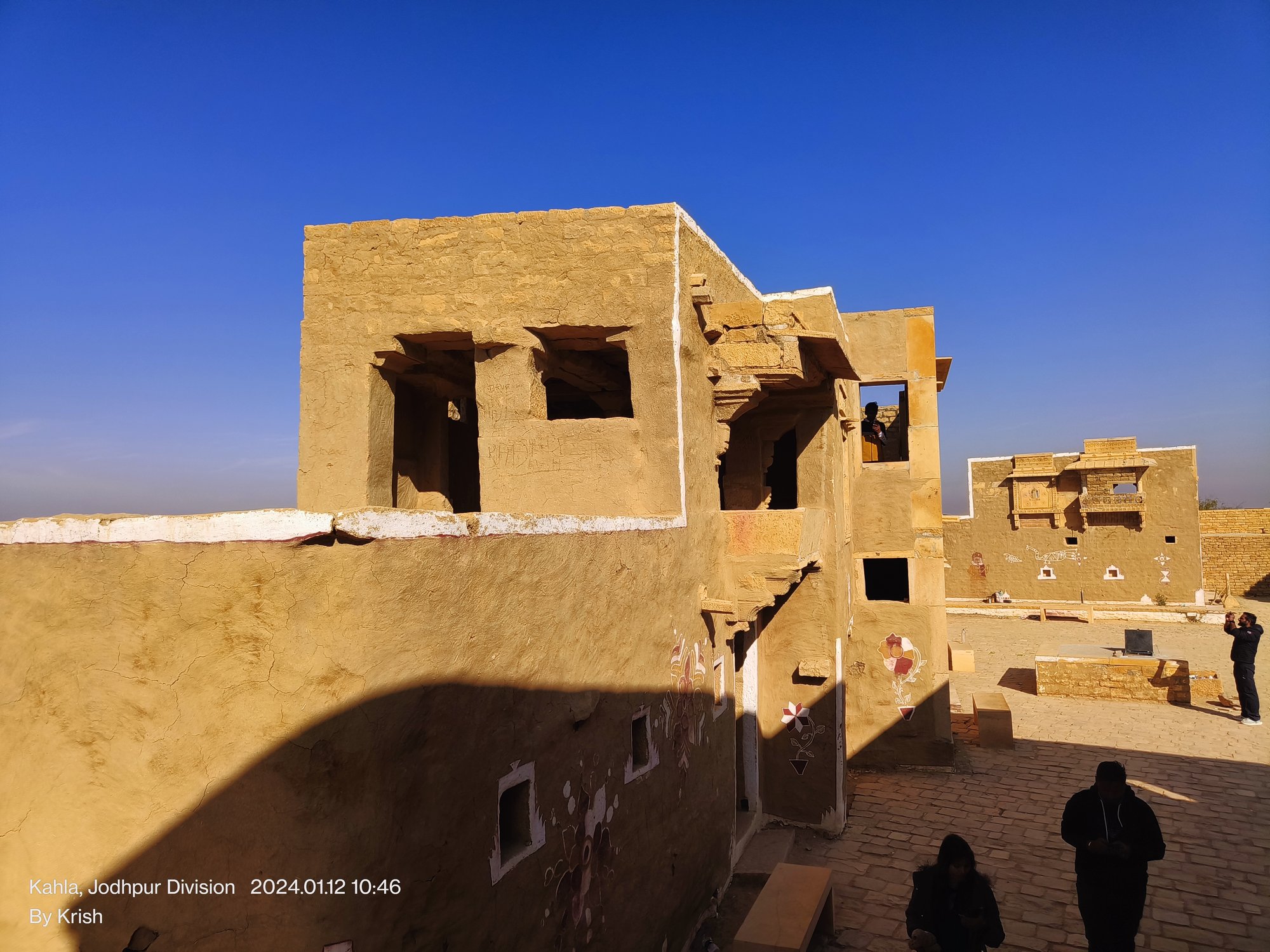
Feature reference (not a verified entrance)
Kuldhara
Last reviewed: not yet Next review
An abandoned village near Jaisalmer, Rajasthan, said to have been emptied overnight and now reputed to be haunted.
Access
We haven't checked access for this place. Check the land manager's or local tourism site for hours, fees and closures, and stay off private or closed land.
Safety & respect
Stay on marked paths and behind barriers. Ground near caves, sinkholes, geysers and cliffs can be unstable or hot.
Lore note
Kuldhara was settled by Paliwal Brahmins around the 13th century and held about 400 houses before it was abandoned by the early 19th century. Nobody is sure why: water shortage and an earthquake are suggested, while a local legend blames a cruel minister of Jaisalmer State and says the villagers cursed the place as they left. It has long been called haunted, and Rajasthan has developed it as a heritage site for visitors.
Map links
Official / public map link · Approx. 26.8700, 70.7850: feature coordinate, not a checked entrance · Pin source: Wikipedia article coordinates, cross-checked against the OpenStreetMap ruins feature for Kuldhara (within 0.1 km). Wikidata stores a rounded point about 7 km away, which we did not use
Sources
- Wikipedia, Kuldhara (CC BY-SA 4.0; read 12 Nov 2026): https://en.wikipedia.org/wiki/Kuldhara
- Wikidata, Q20826376 (coordinate location P625, country P17; read 12 Nov 2026): https://www.wikidata.org/wiki/Q20826376
Kuldhara was settled by Paliwal Brahmins around the 13th century and held about 400 houses before it was abandoned by the early 19th century. Nobody is sure why: water shortage and an earthquake are suggested, while a local legend blames a cruel minister of Jaisalmer State and says the villagers cursed the place as they left. It has long been called haunted, and Rajasthan has developed it as a heritage site for visitors.
This entry is part of our world atlas. The summary above is written in our own words from the Wikipedia article, and the map pin uses published coordinates cross-checked against Wikidata. We haven’t visited this place or checked current access.