Mount Bromo
Last reviewed: not yet Next review
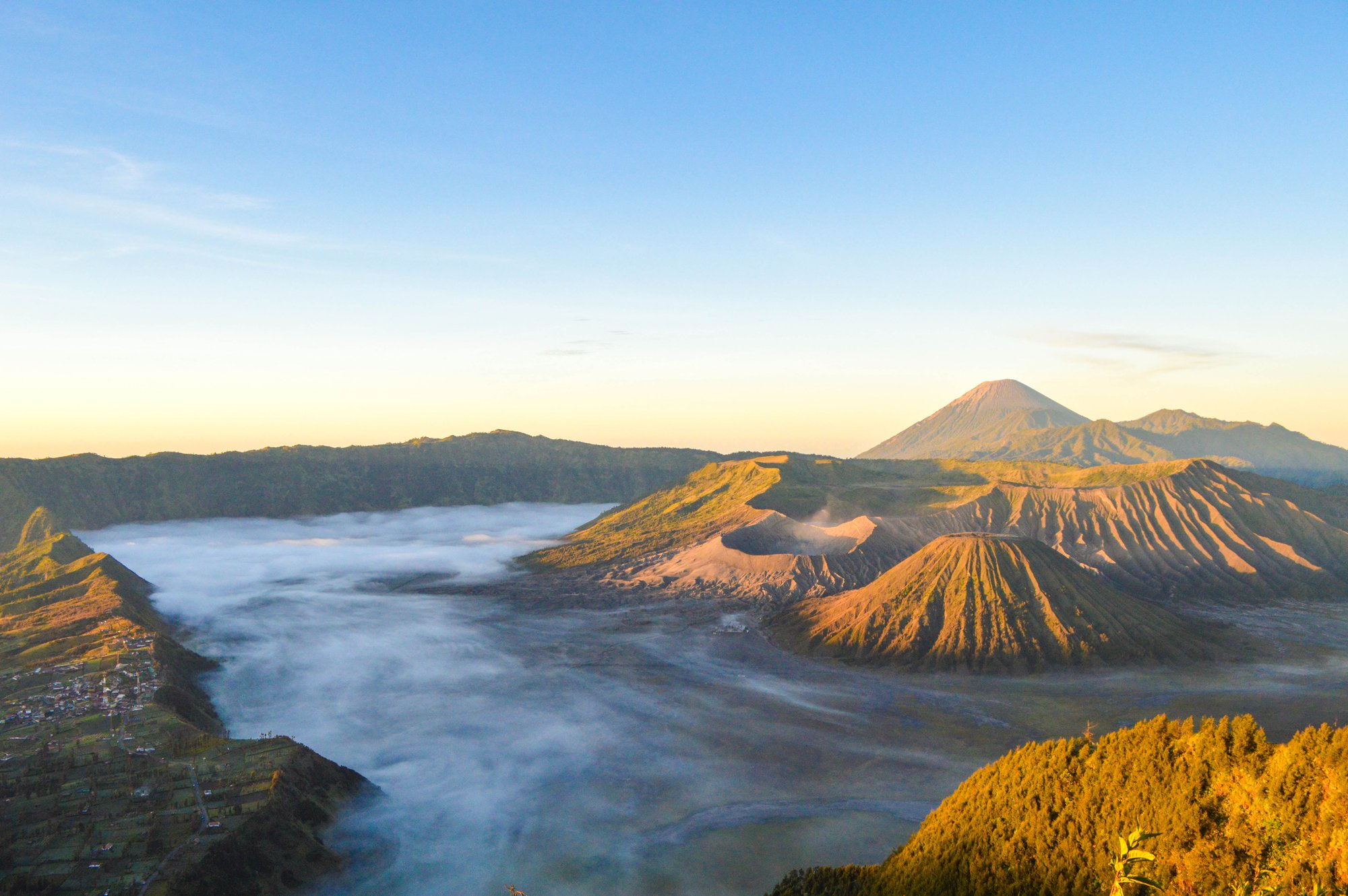
An active volcano and Hindu pilgrimage site in East Java, rising from a plain of volcanic sand called the Sea of Sand.
Access
We haven't checked access for this place. Check the land manager's or local tourism site for hours, fees and closures, and stay off private or closed land.
Safety & respect
Stay on marked paths and behind barriers. Ground near caves, sinkholes, geysers and cliffs can be unstable or hot. Sacred site: cultural warning. Respect religious use, dress and behave as local custom asks, and photograph people or rites only with permission. Volcanic gas and ash can make the crater unsafe; follow official warnings.
Lore note
Bromo is a 2,329 m somma volcano in the Tengger massif. It is not the highest peak there but it is the most active and the best known. The name is the Javanese way of saying Brahma, the Hindu god of creation, and Javanese Hindus worship a statue of Ganesha at the mouth of the crater. The cone rises from a plain of volcanic sand known as the Sea of Sand, protected as a nature reserve since 1919, and the neighboring cone of Mount Batok is often mistaken for it. Indonesia's volcanology agency sometimes warns people away when activity increases.
Sources
- Wikipedia, Mount Bromo (CC BY-SA 4.0; read 12 Nov 2026): https://en.wikipedia.org/wiki/Mount_Bromo
- Wikidata, Q679590 (coordinate location P625, country P17; read 12 Nov 2026): https://www.wikidata.org/wiki/Q679590
Bromo is a 2,329 m somma volcano in the Tengger massif. It is not the highest peak there but it is the most active and the best known. The name is the Javanese way of saying Brahma, the Hindu god of creation, and Javanese Hindus worship a statue of Ganesha at the mouth of the crater. The cone rises from a plain of volcanic sand known as the Sea of Sand, protected as a nature reserve since 1919, and the neighboring cone of Mount Batok is often mistaken for it. Indonesia’s volcanology agency sometimes warns people away when activity increases.
This entry is part of our world atlas. The summary above is written in our own words from the Wikipedia article, with details checked against Wikidata. It is not shown on the site map. Hindu pilgrimage site with a worshipped shrine at the crater: no pin, by our sacred-site convention. We haven’t visited this place or checked current access.