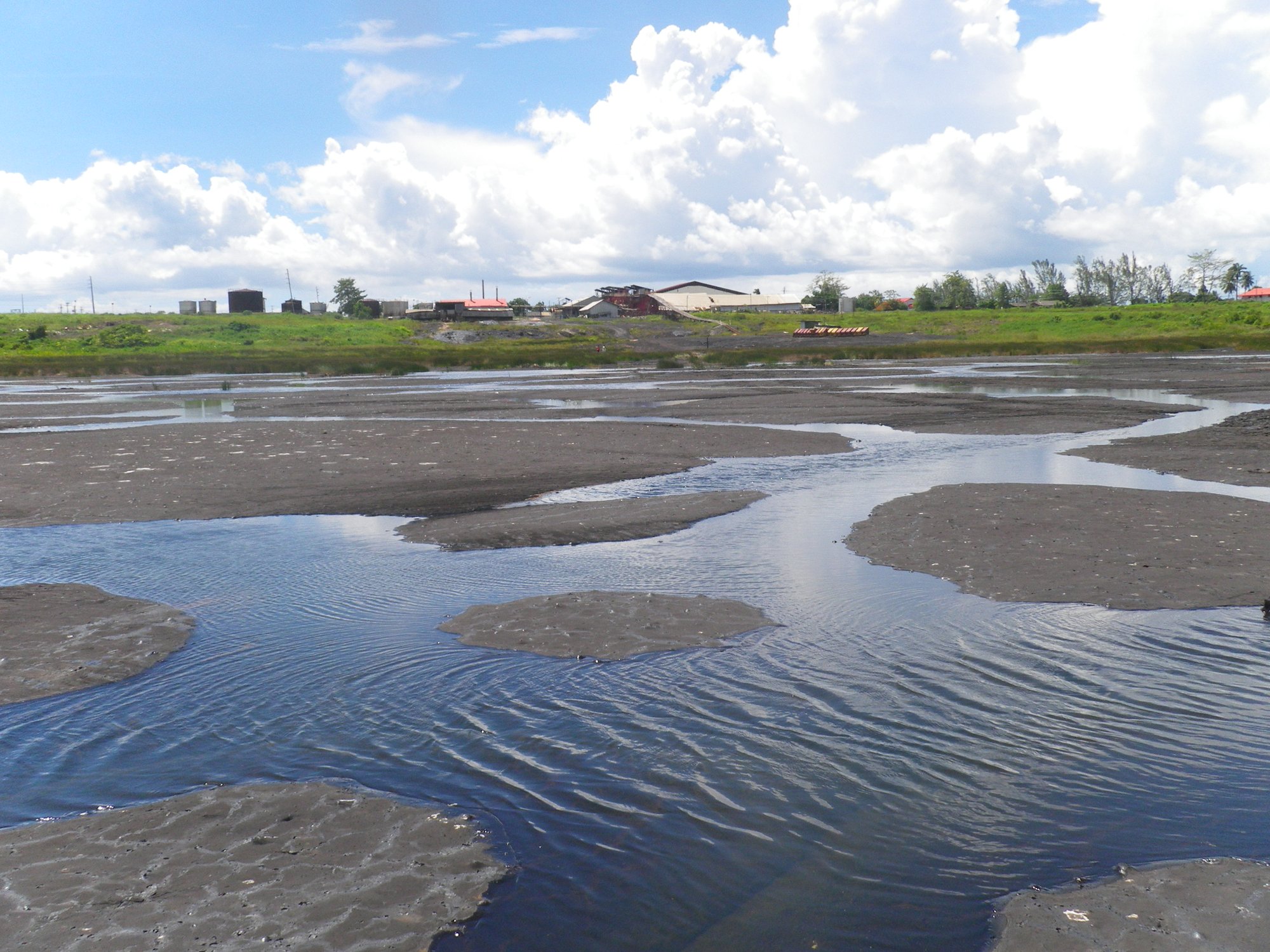
Feature reference (not a verified entrance)
Pitch Lake
Last reviewed: not yet Next review
The world's largest natural tar pit, which local legend says swallowed a village as punishment from the gods.
Access
We haven't checked access for this place. Check the land manager's or local tourism site for hours, fees and closures, and stay off private or closed land.
Safety & respect
Stay on marked paths and behind barriers. Ground near caves, sinkholes, geysers and cliffs can be unstable or hot.
Lore note
Pitch Lake covers about 40 hectares and holds an estimated 10 million tons of asphalt. Walter Raleigh used it to caulk his ships in 1595, and it was later mined to pave early city streets. Local Amerindians told how their ancestors feasted on sacred hummingbirds after a victory, and how their god opened the earth and drowned the village in pitch. Artifacts and a skull found preserved in the tar keep the story alive.
Map links
Official / public map link · Approx. 10.2325, -61.6281: feature coordinate, not a checked entrance · Pin source: Wikipedia article coordinates, cross-checked against Wikidata Q717351 P625 (within 2 km)
Sources
- Wikipedia, Pitch Lake (CC BY-SA 4.0; read 12 Nov 2026): https://en.wikipedia.org/wiki/Pitch_Lake
- Wikidata, Q717351 (coordinate location P625, country P17; read 12 Nov 2026): https://www.wikidata.org/wiki/Q717351
Pitch Lake covers about 40 hectares and holds an estimated 10 million tons of asphalt. Walter Raleigh used it to caulk his ships in 1595, and it was later mined to pave early city streets. Local Amerindians told how their ancestors feasted on sacred hummingbirds after a victory, and how their god opened the earth and drowned the village in pitch. Artifacts and a skull found preserved in the tar keep the story alive.
This entry is part of our world atlas. The summary above is written in our own words from the Wikipedia article, and the map pin uses published coordinates cross-checked against Wikidata. We haven’t visited this place or checked current access.