Feature reference (not a verified entrance)
Posillipo
Last reviewed: not yet Next review
A crater lake in Municipality 1 of Naples, Italy.
Access
We haven't checked access for this place. Check the land manager's or local tourism site for hours, fees and closures, and stay off private or closed land.
Safety & respect
Stay on marked paths and behind barriers. Ground near caves, sinkholes, geysers and cliffs can be unstable or hot.
Lore note
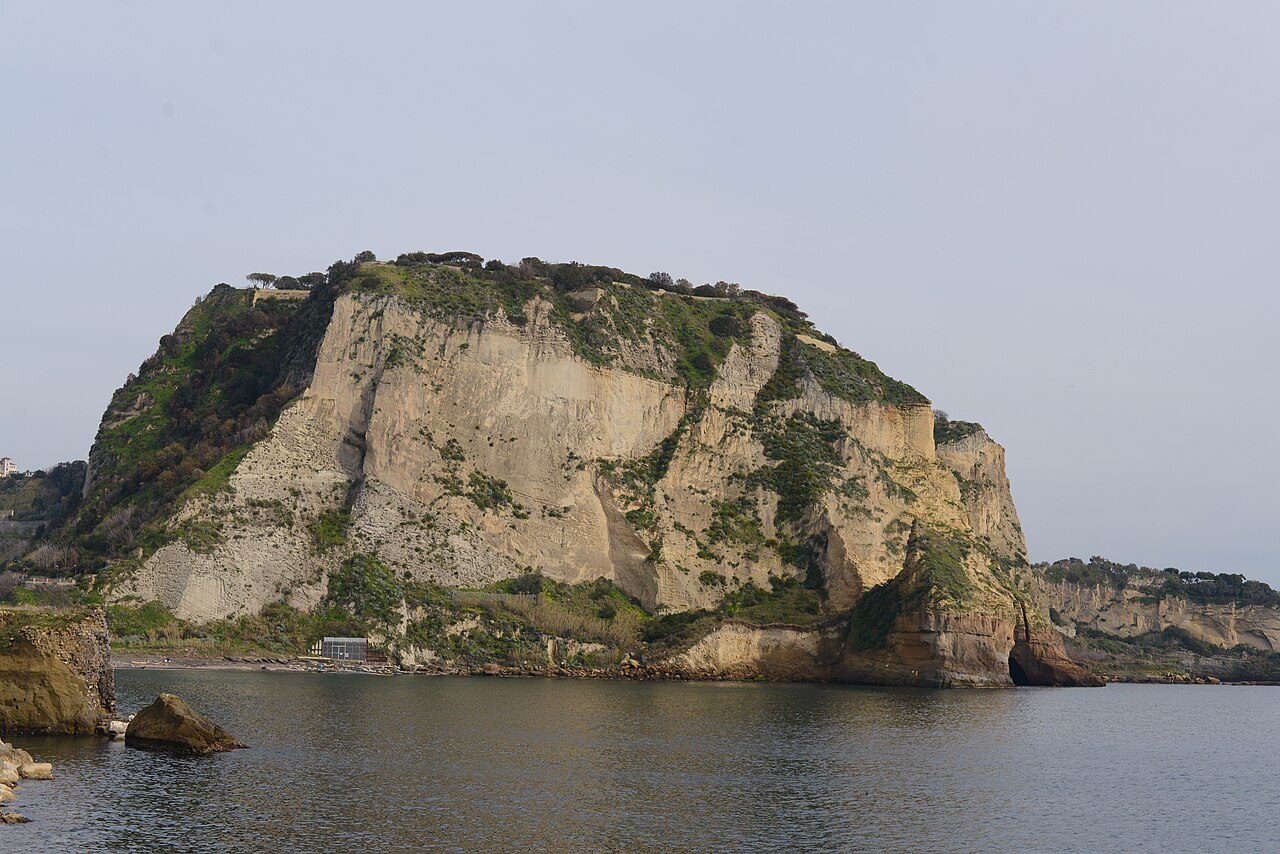
Posillipo (Italian: [poˈzillipo]; Neapolitan: Pusilleco [puˈsilləkə]) is an affluent residential quarter of Naples, southern Italy, located along the northern coast of the Gulf of Naples. From the 1st century BC the Bay of Naples witnessed the rise of villas constructed by elite Romans along the most panoramic points of the coast, who had chosen the area as a favorite vacation spot. The remains of some of these, around the imperial pleasure villa of the Roman emperors, as well as the Tunnel of Sejanus can be seen today in the Parco archeologico del Pausilypon, or Pausilypon Archaeological Park, and elsewhere.
Map links
Official / public map link · Approx. 40.8111, 14.2014: feature coordinate, not a checked entrance · Pin source: Wikipedia article coordinates, cross-checked against Wikidata Q589347 P625 (within 2 km)
Sources
- Wikipedia, Posillipo (CC BY-SA 4.0; read 1 Nov 2026): https://en.wikipedia.org/wiki/Posillipo
- Wikidata, Q589347 (coordinate location P625, country P17; read 1 Nov 2026): https://www.wikidata.org/wiki/Q589347
Posillipo (Italian: [poˈzillipo]; Neapolitan: Pusilleco [puˈsilləkə]) is an affluent residential quarter of Naples, southern Italy, located along the northern coast of the Gulf of Naples. From the 1st century BC the Bay of Naples witnessed the rise of villas constructed by elite Romans along the most panoramic points of the coast, who had chosen the area as a favorite vacation spot. The remains of some of these, around the imperial pleasure villa of the Roman emperors, as well as the Tunnel of Sejanus can be seen today in the Parco archeologico del Pausilypon, or Pausilypon Archaeological Park, and elsewhere.
This entry is part of our world atlas. The summary above is adapted from the Wikipedia article (CC BY-SA 4.0), and the map pin uses the coordinates published there, cross-checked against Wikidata. We haven’t visited this place or checked current access.