Feature reference (not a verified entrance)
Rabaul Caldera
Last reviewed: not yet Next review
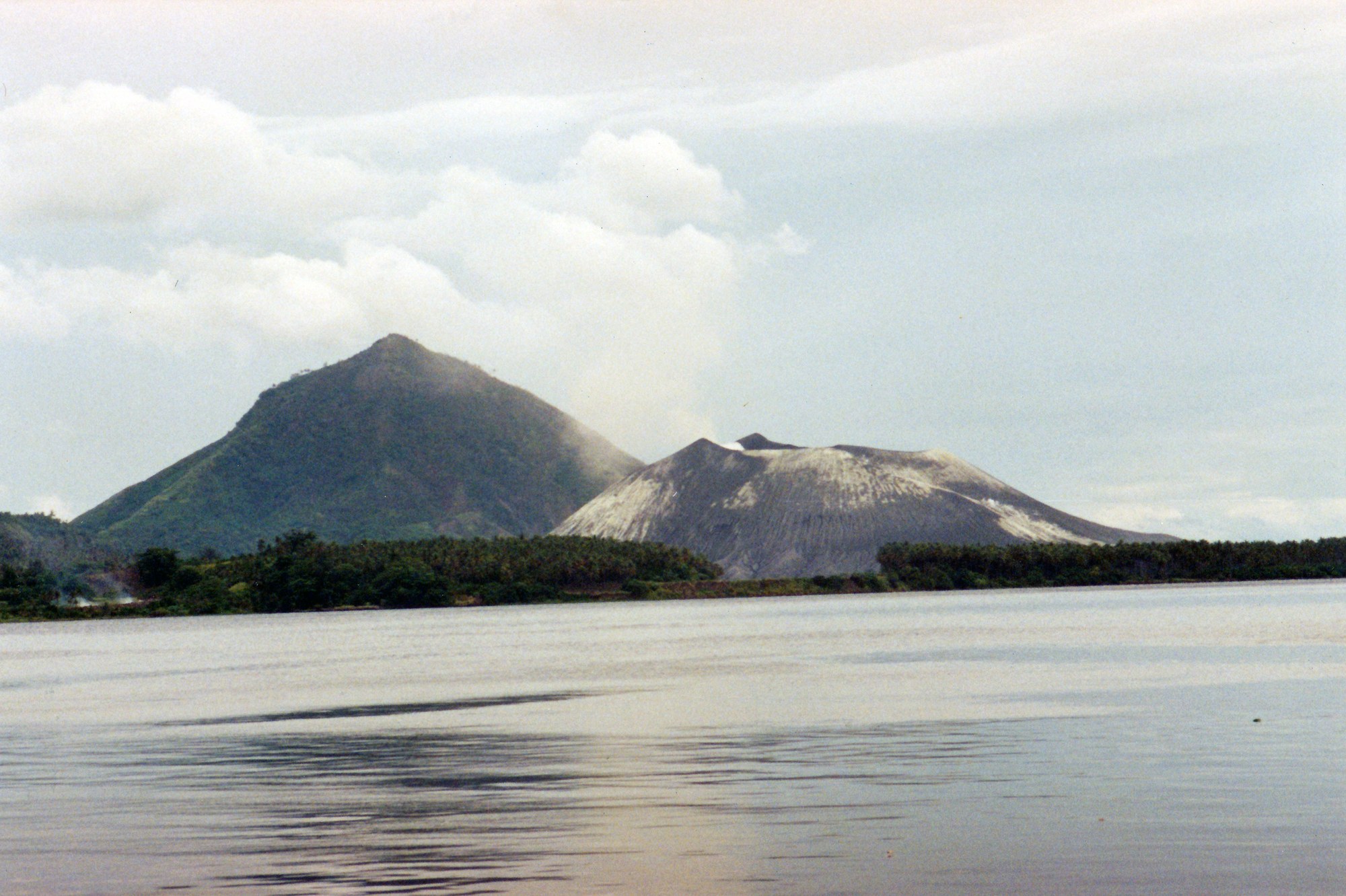
A large volcanic caldera around the town of Rabaul, whose vents Tavurvur and Vulcan devastated the town in 1994.
Access
We haven't checked access for this place. Check the land manager's or local tourism site for hours, fees and closures, and stay off private or closed land.
Safety & respect
Stay on marked paths and behind barriers. Ground near caves, sinkholes, geysers and cliffs can be unstable or hot.
Lore note
The Rabaul caldera, at the tip of the Gazelle Peninsula, is named after the town built inside it. Its most visibly active vent, the stratovolcano Tavurvur, often throws out ash. In 1937 Vulcan and Tavurvur erupted at the same time and killed 507 people, which led to the founding of the Rabaul Volcano Observatory. When the two erupted again in 1994 they devastated Rabaul, but because the town had planned for it only five people died, one of them struck by lightning from the ash cloud. Some researchers link a large eruption here around AD 535 to the climate disaster recorded under the emperor Justinian, though that is not certain.
Map links
Official / public map link · Approx. -4.2708, 152.2028: feature coordinate, not a checked entrance · Pin source: Wikipedia article coordinates, cross-checked against Wikidata Q1320298 P625 (within 2 km) · Marks the caldera as a whole, not a particular vent.
Sources
- Wikipedia, Rabaul caldera (CC BY-SA 4.0; read 12 Nov 2026): https://en.wikipedia.org/wiki/Rabaul_caldera
- Wikidata, Q1320298 (coordinate location P625, country P17; read 12 Nov 2026): https://www.wikidata.org/wiki/Q1320298
The Rabaul caldera, at the tip of the Gazelle Peninsula, is named after the town built inside it. Its most visibly active vent, the stratovolcano Tavurvur, often throws out ash. In 1937 Vulcan and Tavurvur erupted at the same time and killed 507 people, which led to the founding of the Rabaul Volcano Observatory. When the two erupted again in 1994 they devastated Rabaul, but because the town had planned for it only five people died, one of them struck by lightning from the ash cloud. Some researchers link a large eruption here around AD 535 to the climate disaster recorded under the emperor Justinian, though that is not certain.
This entry is part of our world atlas. The summary above is written in our own words from the Wikipedia article, and the map pin uses published coordinates cross-checked against Wikidata. We haven’t visited this place or checked current access.