The evidence: The two drawings of the prints published in the Illustrated London News in 1855
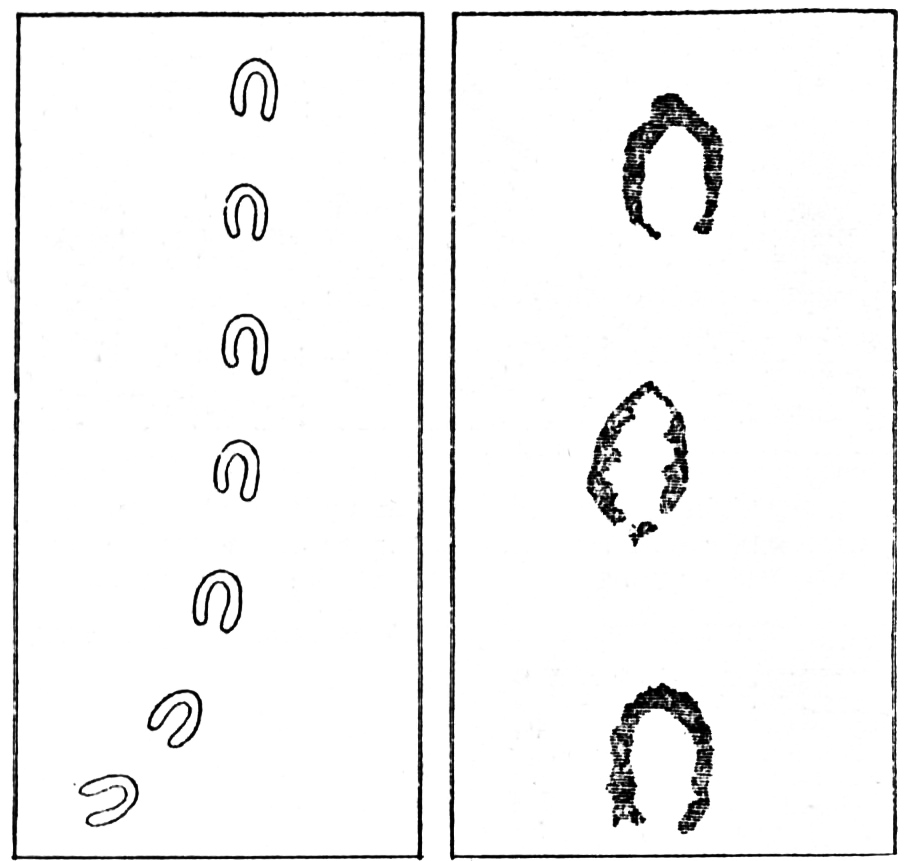

The Devil's Footprints, Devon 1855: Hoof Marks in the Snow on Both Sides of the Exe
Last reviewed Next review
We review and update every article weekly. When the record changes, so does the article. How we review
After a snowy night in February 1855, Devon villages woke to lines of hoof-shaped prints over walls and roofs. We read the letters and papers of that winter.
Verdict: The prints were real and widespread, but no one tracked one trail beyond about five miles; small animals such as wood mice and a few hoaxers probably made many of them, and no single answer fits every report.
Original sources: Illustrated London News, 24 February 1855, 'Foot-Marks on the Snow, in Devon' (Internet Archive) · Illustrated London News, 3 March 1855, Richard Owen and other correspondents on the foot-marks (Internet Archive) · Mike Dash, 'The Devil's Hoofmarks: Source Material on the Great Devon Mystery of 1855', Fortean Studies 1 (1994), PDF on the author's site
Sources 'Foot-Marks on the Snow, in Devon' (from a correspondent), Illustrated London News, 24 February 1855, p. 187; Richard Owen, 'Professor Owen on the Foot-Marks in the Snow in Devon', and letters from G. M. Musgrave and others, Illustrated London News, 3 March 1855, p. 214; The Times, 16 February 1855, Woolmer's Exeter & Plymouth Gazette, 17 February 1855, and Western Luminary, 13 February 1855, as transcribed in Mike Dash, 'The Devil's Hoofmarks: Source Material on the Great Devon Mystery of 1855', Fortean Studies 1 (1994), with afterword from Fortean Studies 3 (1996); Rupert T. Gould, Oddities (1928), map
On the night of Thursday 8 February 1855, in one of the hardest winters anyone in south Devon could remember, snow fell over the villages around the estuary of the river Exe. On Friday morning people in Topsham, Lympstone, Exmouth, Dawlish, Teignmouth and a string of smaller places went outside and found lines of small prints shaped like a hoof crossing their gardens, lanes and churchyards. Within a week the national papers were calling it an extraordinary occurrence, and the prints have been known ever since as the Devil’s Footprints.
We read the reports as they appeared that February, in the Illustrated London News scans on the Internet Archive, and the local and London newspaper items that the researcher Mike Dash transcribed and analyzed in his 1994 source study for Fortean Studies. The drawings at the top are the only pictures published at the time. Nobody photographed the prints.
What people found
The Times of 16 February told readers that “considerable sensation” had spread through Topsham, Lympstone, Exmouth, Teignmouth and Dawlish after the discovery of a vast number of strange tracks. “The superstitious go so far as to believe that they are the marks of Satan himself,” it said, and added that the matter had been preached about from the pulpit. Its correspondent described steps about eight inches apart, sometimes twelve or fourteen, each mark about an inch and a half to two and a half inches across and shaped like a donkey’s shoe, in places looking split like a cloven hoof.
The earliest item Dash found, in the Exeter paper the Western Luminary on 13 February, reported prints over walls twelve feet high and all over the Dawlish churchyard, and said several parties had traced them “for miles” without solving anything. Some of the superstitious, it said, blamed the Devil; others guessed at a monkey escaped from a traveling show. In Dawlish, according to the Exeter and Plymouth Gazette, a party of tradesmen “armed themselves with guns and bludgeons” and followed prints from the churchyard out through the grounds of Luscombe to Oaklands before giving up.
The letter that made it famous
On 24 February the Illustrated London News printed a long account from a correspondent who signed himself South Devon. Dash, working from papers kept by the vicar of Clyst St George, Henry Ellacombe, identifies him as a 19-year-old named D’Urban, of Newport House at Countess Wear, who later became the first curator of Exeter’s Royal Albert Memorial Museum.
His letter set out almost every detail that later retellings repeat. He wrote that the prints were four inches long by two and three-quarter inches wide, and that instead of falling left and right like an animal’s feet, “foot had followed foot, in a single line.” He said they were the same size and spacing in every parish, that they passed over roofs, hayricks and a wall fourteen feet high without disturbing the snow on either side, and that each mark removed the snow “as if cut with a diamond or branded with a hot iron.” Adding up the gardens, doorsteps, woods and farms, he concluded that “the actual progress must have exceeded a hundred miles,” and that “No known animal could have traversed this extent of country in one night.” He pointed out that the same snow showed the ordinary tracks of cats, dogs, rabbits, birds and men, all easy to read.
The answers that came back
A week later, on 3 March, the paper printed a reply from Richard Owen, the leading anatomist of the day. A friend had sent him a careful drawing of one of the clearest prints, from Luscombe, and his verdict was short: “It was of the hind-foot of a Badger.” He explained that a badger’s front and back feet often land in the same spot and blur into what looks like one line of single steps. He also rejected the idea of one animal on one long route: “The onus of the proof that one creature made them in one night rests with the assertor.”
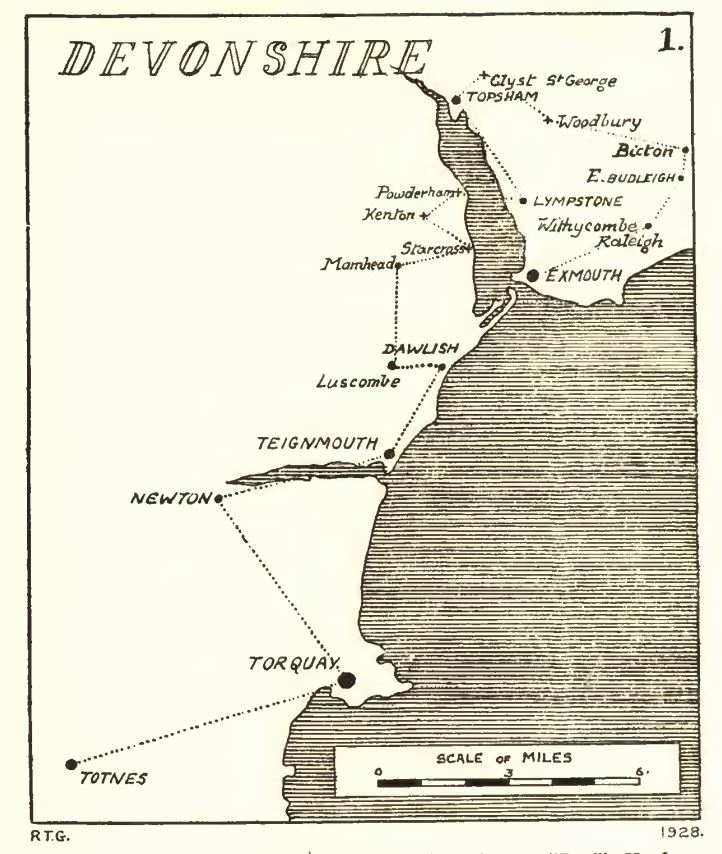
The same issue carried a letter from the Reverend G. M. Musgrave of Withycombe Raleigh, near Exmouth. He had told his congregation the prints might be a kangaroo’s, and explained why. Villagers, he wrote, were “dreading to stir out after sunset,” convinced this was the Devil’s walk, and he was glad to give them something less frightening to think about. He did not believe it himself. He had written to the British Museum, the Zoological Society and the keepers at the Regent’s Park menagerie, and none could say what the prints were. He listed places on both sides of the two-mile-wide estuary where marks were found, including Starcross, Powderham, Kenton, Dawlish, Exmouth, Lympstone, Woodbury and Topsham. In the weeks and years that followed, people suggested otters, rats, hares, cats, herons, swans, a toad and the Great Bustard.
What the record really supports
Dash’s study is the most careful look at the evidence, and it cuts the story down in several places. The prints were reported from more than 30 places, but no one followed a single line from one end to the other. “The greatest distance we can say with confidence that a set of tracks was followed was about five miles,” he writes, and nothing shows that anyone tracked a trail onto the ice at one shore of the estuary and off it at the other. The hundred-mile figure is South Devon’s sum of everywhere marks were seen, not a measured route.
The prints were also not identical. The measurements in the different reports range from about three and a half to four inches long and from an inch and a half to two and three-quarter inches wide, with a stride from eight to sixteen inches. Some witnesses saw claw marks; others insisted there were none. Contemporaries described lines that wandered across gardens, not one straight track across the county. Some marks were reported on later nights, including at Topsham around 13 February.
Dash weighs the main explanations. A few trails were probably made by people. Badgers, cats, rats and other common animals can account for some. A hopping wood mouse leaves a V- or U-shaped mark that can look like a small hoof, can go through a pipe or a gap in a hedge, and climbs well. But he also notes that if the 1855 reports are accurate, even the wood mouse cannot explain all of them, and that a common animal ought to have caused similar scares in other hard winters. His closing line is “The mystery remains.”
Sources
- “Foot-Marks on the Snow, in Devon” (from a correspondent signing South Devon), Illustrated London News, 24 February 1855, p. 187, Internet Archive scan (read 13 Nov 2026)
- Richard Owen, “Professor Owen on the Foot-Marks in the Snow in Devon”, with a letter from G. M. Musgrave and other correspondents, Illustrated London News, 3 March 1855, p. 214, Internet Archive scan (read 13 Nov 2026)
- Mike Dash, “The Devil’s Hoofmarks: Source Material on the Great Devon Mystery of 1855”, Fortean Studies 1 (1994), with the afterword from Fortean Studies 3 (1996). We used its transcriptions of the Western Luminary (13 February 1855), The Times (16 February 1855) and Woolmer’s Exeter & Plymouth Gazette (17 February 1855), and its analysis (read 13 Nov 2026)
- Rupert T. Gould, map of the reported locations, from Oddities (1928), Wikimedia Commons
Weighing it
We are confident that something left many lines of small hoof-shaped marks around the Exe estuary after the snow of 8 to 9 February 1855. Two clergymen, a doctor and a young naturalist described them firsthand, and the local papers show real alarm. What we cannot accept is the version in most retellings: one creature walking a hundred miles in a straight line over every obstacle in a single night. That comes from adding up separate sightings, and nobody in 1855 tested it. The best explanation is a mix of small animals, especially hopping rodents, thaw and refreeze blurring ordinary tracks, and a few pranksters, but the record is too thin to prove which made which. We leave it open.
Verdict
Open The prints were real and widespread, but no one tracked one trail beyond about five miles; small animals such as wood mice and a few hoaxers probably made many of them, and no single answer fits every report.
Update log
-
We added this case file.
-
Added Rupert T. Gould's 1928 map of the reported print locations to the gallery so it appears on the page, with its public-domain credit.
Sources https://commons.wikimedia.org/wiki/File:Devil%27s_Footprints_in_Devon_%E2%80%93_Map_by_Rupert_T._Gould_(1928).jpg
-
Weekly re-check of sources; no newer change to the record. Next check November 23, 2026.
Discussion
Discuss this case on the on-site Community board — no GitHub account required. Prefer a private tip for the editorial team? Submit a Sighting.
House rules: Community guidelines.