


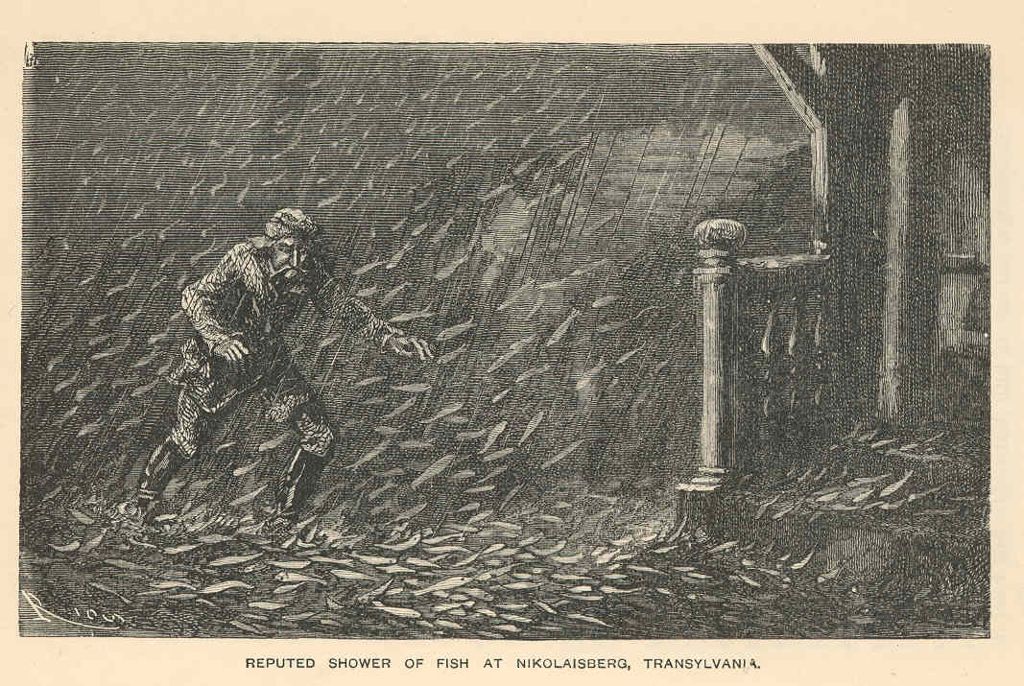

No original photo or video of this event is known.
The Marksville Fish Fall, 1947: A Fish Biologist at Breakfast When the Sky Rained Bass
Last reviewed Next review
We review and update every article weekly. When the record changes, so does the article. How we review
On a calm, foggy morning in 1947, bass and shad fell on a Louisiana town while a fish biologist ate breakfast nearby. We read his report and the weather record.
Verdict: Fresh local fish really did fall on Marksville that morning, and a waterspout or whirlwind lifting them from the nearby bayous is the best explanation, but nobody saw the whirlwind that did it.
Original sources: A. D. Bajkov, 'Do Fish Fall from the Sky?', Science 109 (1949): 402, DOI 10.1126/science.109.2834.402.a · Lola T. Dees, Rains of Fishes, U.S. Fish and Wildlife Service Fishery Leaflet 513 (1961), NOAA Fisheries PDF · Robin Miller, 'A fishy mystery in Marksville: Fish rained down on the city in 1947, but what caused it?', The Advocate (2025) · Jim Bradshaw, 'C'est Vrai: Fish from the sky', Ville Platte Gazette via EvangelineToday.com · Library of Congress, 'Can it rain frogs, fish, and other objects?', Everyday Mysteries · Ben Hollingum, 'It's Raining Fish! Anomalous precipitation and falling fish in Louisiana', Guinness World Records (2026) · Manitoba Historical Society, 'Memorable Manitobans: Alexander Dimitrivitch Bajkov (1894-1955)'
Sources A. D. Bajkov, 'Do Fish Fall from the Sky?', Science 109, no. 2834 (22 April 1949): 402; Lola T. Dees, Rains of Fishes, U.S. Fish and Wildlife Service Fishery Leaflet 513 (April 1961); Robin Miller, 'A fishy mystery in Marksville', The Advocate (Baton Rouge), 28 Dec 2025; Jim Bradshaw, 'C'est Vrai: Fish from the sky', Ville Platte Gazette (2012); Library of Congress, 'Can it rain frogs, fish, and other objects?', Everyday Mysteries; Ben Hollingum, 'It's Raining Fish!', Guinness World Records (9 Oct 2026); Manitoba Historical Society, 'Memorable Manitobans: Alexander Dimitrivitch Bajkov'
Most stories of fish falling from the sky come to us third-hand, years later, from people nobody can find again. The Marksville fall is different because of who happened to be eating breakfast in town. On the morning of 23 October 1947, Alexander Bajkov, a Russian-born fisheries biologist who had studied lakes from Manitoba to the Gulf Coast, was sitting in a restaurant in Marksville, the seat of Avoyelles Parish in central Louisiana, when the waitress told him and his wife that fish were falling outside.
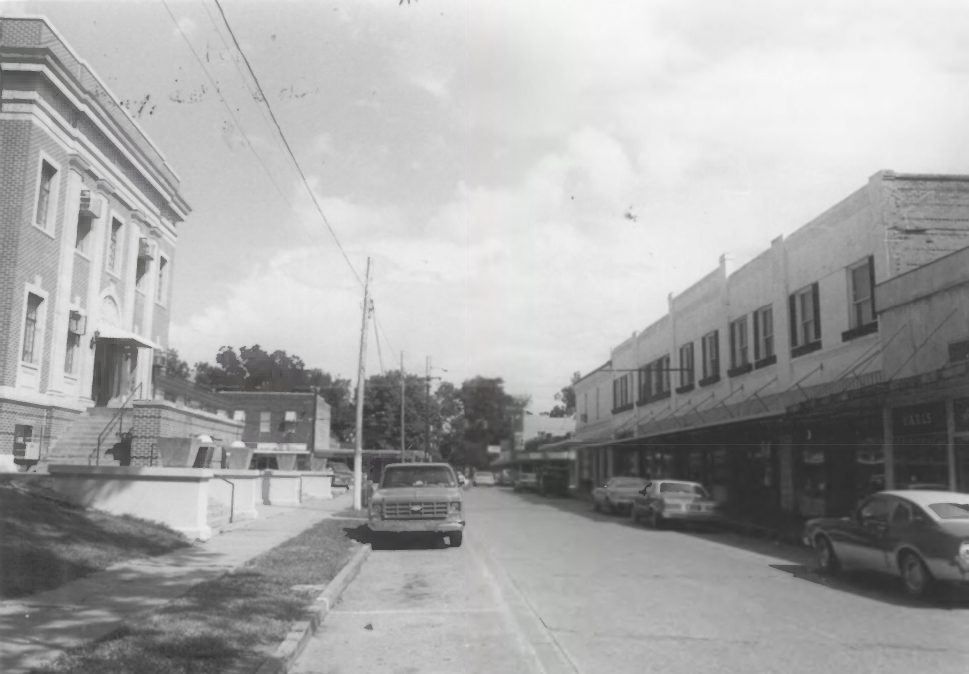
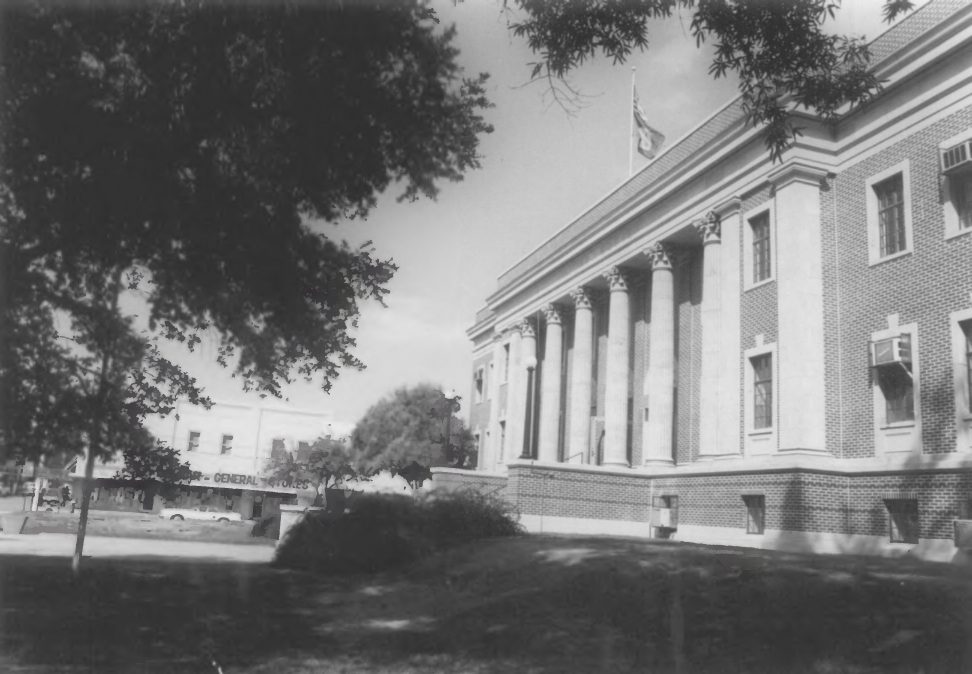
He went out, collected specimens, talked to the people who had been hit, and in April 1949 published a short note about it in Science under the title “Do Fish Fall from the Sky?” We read that note as it is quoted at length by the Library of Congress and the Louisiana columnist Jim Bradshaw, because the journal page itself is behind a paywall. We checked it against a 1961 U.S. Fish and Wildlife Service leaflet that summarizes the same report, a 2025 newspaper piece built on a local witness’s interviews, and a 2026 write-up by Guinness World Records. There is no photograph of the fall that we know of, so the scene at the top is an AI painting. The two street photos below show the same downtown in 1981, 34 years later.
What Bajkov reported
Between 7 and 8 o’clock that morning, Bajkov wrote, fish from 2 to 9 inches long fell on the streets and in the yards of Marksville. The director of the bank, J. M. Barham, told him fish had fallen by the hundreds in his yard and in the yard next door. The bank’s cashier, J. E. Gremillion, and two merchants, E. A. Blanchard and J. M. Brouillette, said they were struck by falling fish as they walked to work at about 7:45. On parts of the main street near the bank, Bajkov counted roughly one fish per square yard, and cars and trucks were running over them. Fish also landed on roofs.
He identified them as freshwater fish native to the local waters: largemouth bass, goggle-eye (the warmouth), two kinds of sunfish, several kinds of minnows, and hickory shad, which were the most common. He filled a large jar with good specimens from the main street and from yards on Monroe Street and preserved them in formalin to send to museums. One man who had been hit told him the fish were frozen. Bajkov said the ones he picked up were cold but not frozen, and fresh enough to eat. The fish lay in a strip about 1,000 feet long and 75 to 80 feet wide, running roughly north and south.
The weather that morning
This is what makes the case strange. Fish falls are usually reported in violent thunderstorms, and the Fish and Wildlife Service leaflet of 1961 says so plainly. Marksville had no storm. Bajkov described the fish coming down at short intervals in fog and fairly calm air, with the ground wind no stronger than 8 miles an hour. The U.S. Weather Bureau office in New Orleans had no report of a large tornado or updraft near the town.
According to The Advocate, the Weather Bureau still told The Times-Picayune a few days later that a “tornado, dust devil or other updraft of wind” had probably picked the fish up from a pond, lake or stream and dropped them when it died. The bureau offered that as a likely cause while also saying none of its people had reported such a wind near Marksville.
Bajkov had one clue of his own. The 1961 leaflet, summarizing his note, says numerous small tornadoes occurred the day before, and Guinness reports that he and his colleague James Gowanloch had seen waterspouts and dust devils while working in the bayous that day.
A witness in the yard
The best-known local witness came forward much later. Eleanor Gremillion, who went on to lead the Marksville Chamber of Commerce and died in 2019, told interviewers for decades that she was hanging out laundry for her mother when a fish hit her on the left shoulder. The Advocate’s 2025 piece, drawing on a video interview, quotes her saying the fish fell in a line toward the neighboring town of Mansura, that people gathered and fried them, and that she was not amazed, because nearby Spring Bayou and several lakes were full of fish. She also said a film crew from England came a month later and re-staged the scene by throwing fish at residents.
Her memory of a catfish or a crappie (sac-a-lait in Louisiana French) does not match Bajkov’s species list, which has neither. We give his list more weight, since he wrote it down from the jar.
Small things that don’t line up
The sources disagree on a few details. Bradshaw’s long quotation gives Bajkov’s largest bass as 9¼ inches, while the Guinness article gives 9½. Guinness names the bank director and the neighbors with full first names that we did not find in the other sources, so we kept the initials Bajkov used. Guinness also describes Bajkov’s employer as the Fish and Wildlife Service, while the Library of Congress calls him a biologist with the Louisiana Department of Wildlife. Science listed his address as the Oyster Laboratory in Biloxi, Mississippi, and the Manitoba Historical Society says he worked at several posts in the United States, Mississippi among them. None of this changes what happened in the street.
How fish get into the sky
The usual explanation is a waterspout or whirlwind passing over shallow water, pulling up water and small fish, carrying them some distance and letting them go when it weakens. The Library of Congress page lays out that mechanism and notes that objects of similar size and weight tend to come down together, which fits a fall of only small fish. The 1961 leaflet says fishery scientists agree the falls are caused by strong winds. Bajkov ended his note by asking why, if people accept that wind can carry heavy objects, fish could not be lifted with water and carried by a whirlwind.
Marksville sits on higher ground between wetlands, with Spring Bayou to the east and the Red River a few miles north, so there was no shortage of shallow water and small fish close by.
Sources
- A. D. Bajkov, “Do Fish Fall from the Sky?”, Science 109, no. 2834 (22 April 1949): 402, DOI 10.1126/science.109.2834.402.a (paywalled; read through the quotations below, 10 Nov 2026)
- Lola T. Dees, Rains of Fishes, U.S. Fish and Wildlife Service, Bureau of Commercial Fisheries, Fishery Leaflet 513 (April 1961): NOAA Fisheries PDF (read 10 Nov 2026)
- Robin Miller, “A fishy mystery in Marksville: Fish rained down on the city in 1947, but what caused it?”, The Advocate (28 Dec 2025), citing The Times-Picayune of October 1947 and Eleanor Gremillion’s interviews (read 10 Nov 2026)
- Jim Bradshaw, “C’est Vrai: Fish from the sky”, Ville Platte Gazette, EvangelineToday.com archive (2012), with a long quotation of Bajkov’s note (read 10 Nov 2026)
- Library of Congress, “Can it rain frogs, fish, and other objects?”, Everyday Mysteries (read 10 Nov 2026)
- Ben Hollingum, “It’s Raining Fish! Anomalous precipitation and falling fish in Louisiana”, Guinness World Records (9 Oct 2026) (read 10 Nov 2026)
- Manitoba Historical Society, “Memorable Manitobans: Alexander Dimitrivitch Bajkov (1894-1955)” (read 10 Nov 2026)
Weighing it
We have no reason to doubt the fall itself. A trained fish biologist saw the fish on the ground within minutes, named the species, kept specimens and printed names of townspeople who were hit, and the Weather Bureau treated it as real. The fish were all local freshwater kinds, which points to nearby bayous and lakes rather than anywhere exotic. What stays open is the lift. The air in town was calm and foggy, no one reported a spout or tornado that morning, and the whirlwinds Bajkov saw were the day before. A waterspout over Spring Bayou or one of the lakes, out of sight in the fog, is the most likely answer, but it is an inference, not an observation.
Verdict
Open Fresh local fish really did fall on Marksville that morning, and a waterspout or whirlwind lifting them from the nearby bayous is the best explanation, but nobody saw the whirlwind that did it.
Update log
-
We added this case file.
-
Weekly re-check of sources; no change to the record since filing. Next check November 23, 2026.
Discussion
Discuss this case on the on-site Community board — no GitHub account required. Prefer a private tip for the editorial team? Submit a Sighting.
House rules: Community guidelines.