


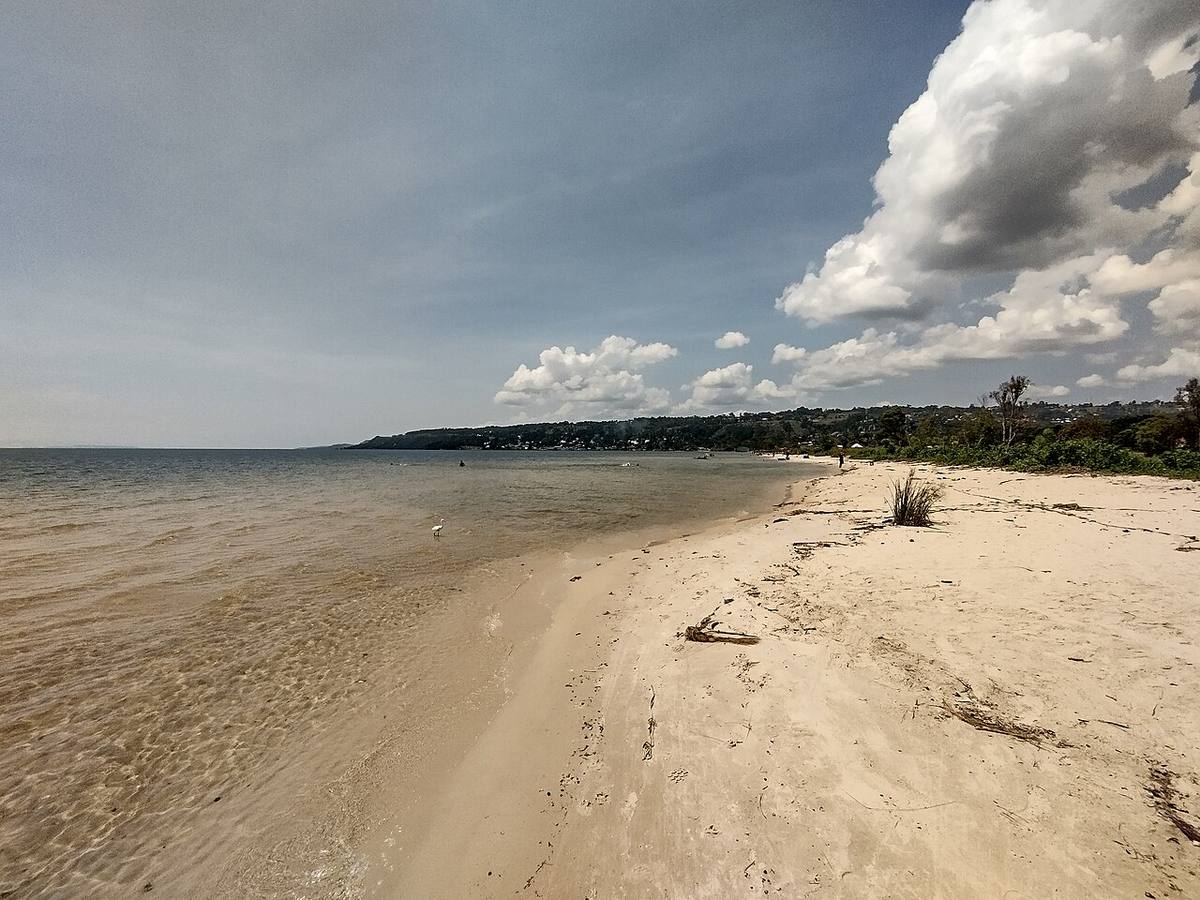

No original photo or video of this event is known.
Kashasha, 1962: The Laughter That Closed Schools
Last reviewed Next review
We review and update every article weekly. When the record changes, so does the article. How we review
In January 1962 girls at a mission boarding school in what is now Tanzania began laughing uncontrollably.
Verdict: A real outbreak of mass psychogenic illness that closed schools.
Sources Wikipedia, 'Tanganyika laughter epidemic' (citing Rankin & Philip 1963 and Hempelmann 2007)
On 30 January 1962, at a girls’ mission boarding school in Kashasha near Lake Victoria, three pupils began laughing and could not stop. It spread through the school until 95 of the 159 pupils, aged 12 to 18, were affected. Symptoms lasted from a few hours to 16 days, and the school closed on 18 March.
Spreading
The girls carried it to their villages. Over the following 18 months the outbreak appeared in nearby communities and other schools within about 100 miles of Bukoba. In all, 14 schools closed and about 1,000 people were affected. Physicians A. M. Rankin and P. J. Philip described it in the Central African Journal of Medicine in 1963.
The explanation
The episode is now a textbook example of mass psychogenic illness, in which real symptoms spread through a group under stress. Tanganyika had become independent only weeks earlier, and the linguist Christian Hempelmann and others have pointed to the strain of strict boarding schools and social change. The laughing was not joy; many sufferers were distressed.
Sources
- Wikipedia, “Tanganyika laughter epidemic”: en.wikipedia.org
Further reading (not yet re-checked)
These items are not cited for any claim on this page. We have not read them in this review.
- Further reading, not read by us (PubMed has no abstract): Rankin, A. M. & Philip, P. J. (1963), Central African Journal of Medicine: PubMed 13973013
Verdict
Explained A real outbreak of mass psychogenic illness that closed schools.
Evidence ledger
Each claim in this file, the source it rests on, and how well it holds up: 3 corroborated · 1 disputed. What the labels mean.
| Claim | Source | Type · date | Status |
|---|---|---|---|
| An outbreak of laughing, crying and restlessness began at a girls' school in Kashasha on 30 Jan 1962. | Wikipedia, citing Rankin & Philip (1963) | secondary | corroborated |
| The outbreak spread to nearby villages and schools, affecting about 1,000 people.About 1,000 is the commonly given figure. | Wikipedia, citing Bartholomew & Evans (2014) | secondary | corroborated |
| Fourteen schools were closed. | Wikipedia, citing contemporary reports | secondary | corroborated |
| The cause was mass psychogenic illness amid the stress of independence and strict schooling.No toxin or infection is reported; the stress explanation is Hempelmann's theory. | Wikipedia, summarizing Christian Hempelmann (2007) | secondary · 2007 | disputed |
Update log
-
We added this case file.
-
We corrected details from Wikipedia's account, which we have read: symptoms lasted from a few hours to 16 days (not minutes to hours), and the Kashasha school closed on 18 March. We removed "no fever, no toxic cause, no deaths," which we had attributed to Rankin and Philip without reading their paper, and moved that paper to further reading.
Sources https://en.wikipedia.org/wiki/Tanganyika_laughter_epidemic
-
Source review: we moved items we have not read out of Sources into a separate 'Further reading (not yet re-checked)' list. No claim on this page now cites them.
Sources
-
Weekly re-check of sources; no newer change to the record. Next check November 23, 2026.
Discussion
Discuss this case on the on-site Community board — no GitHub account required. Prefer a private tip for the editorial team? Submit a Sighting.
House rules: Community guidelines.