The evidence: The Kaimanawa 'wall' formation itself


The Kaimanawa Wall: A "Pyramid" That Is Rock
Last reviewed Next review
We review and update every article weekly. When the record changes, so does the article. How we review
A block-like outcrop in New Zealand's central North Island was promoted in the 1990s as the remains of a pre-Māori pyramid.
Verdict: The 'wall' is natural rock that fractured into blocks, not a built structure.
Sources Te Ara – the Encyclopedia of New Zealand, 'The Kaimanawa wall' (Manatū Taonga); Wikipedia, 'Kaimanawa wall'
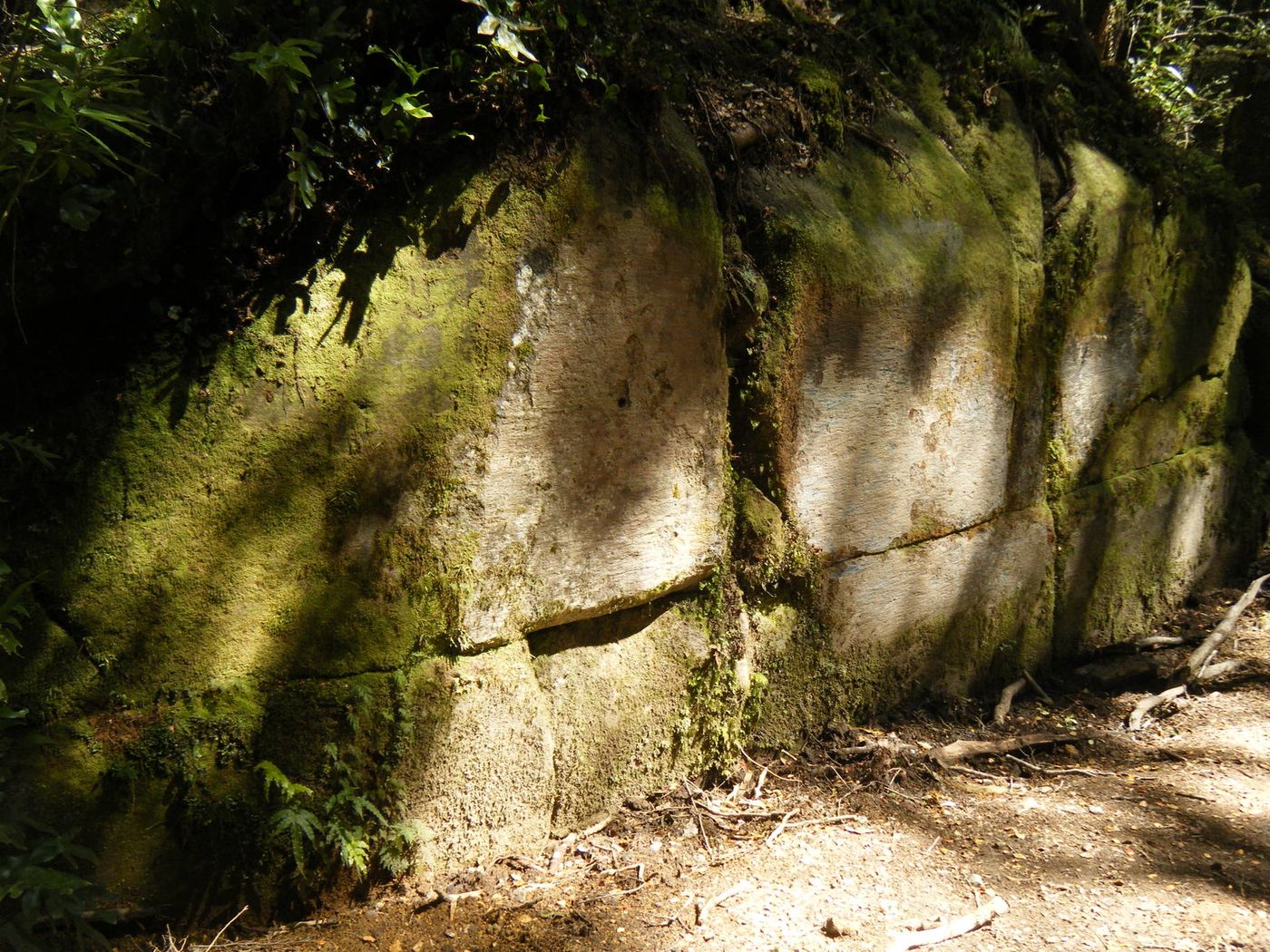
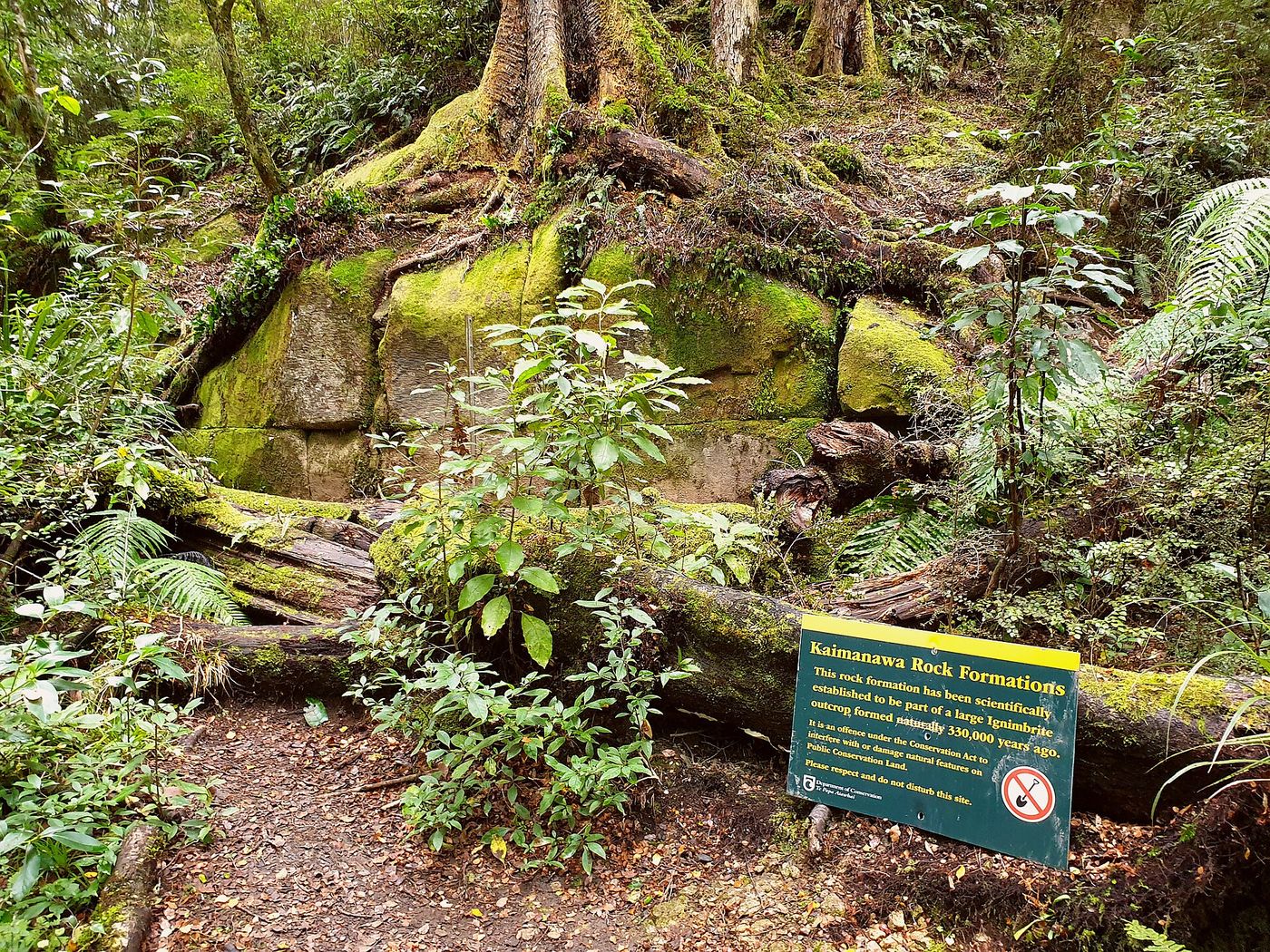
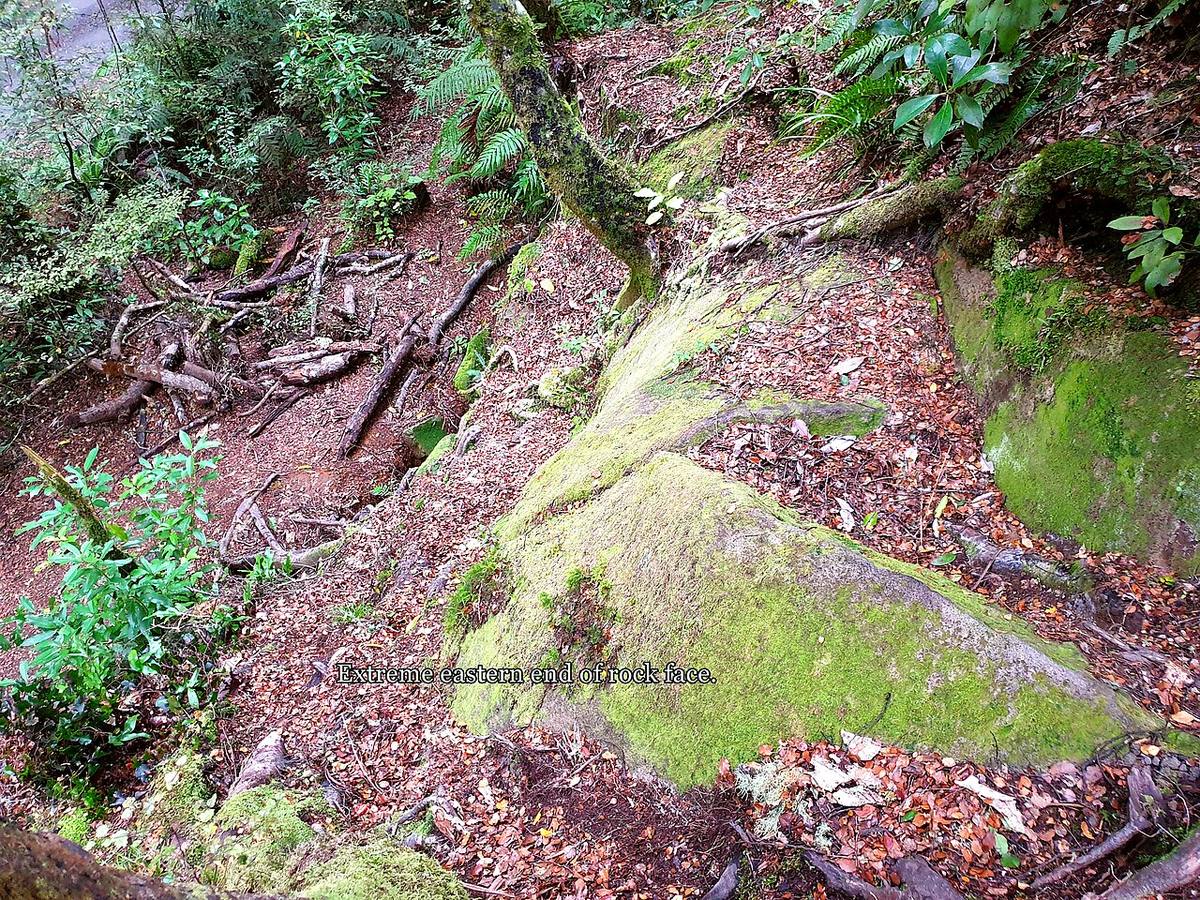
A set of large, squared blocks in the bush south of Lake Taupō has been promoted as the Kaimanawa wall: the remains of a pyramid or structure built before Māori arrived. Te Ara, the government’s encyclopedia, says that “some theorists who claimed there were pre-Māori civilisations in New Zealand believed this stone wall in the Kaimanawa State Forest provided evidence for their ideas.”
What it is
Wikipedia names the people who inspected it: Peter Wood, a geologist at the Institute of Geological and Nuclear Sciences, and Neville Ritchie, an archaeologist with the Department of Conservation. Wood concluded the blocks are “jointed Rangitaiki ignimbrite, a 330,000 year old volcanic rock that is common in the Taupō Volcanic Zone.” Ignimbrite is a rock formed from hot volcanic ash that settled and welded. As it cools it often cracks along regular joints, producing surprisingly square blocks. Wikipedia, still following the geological account, says the fractures formed when the rock “cooled and contracted after flowing into place during an eruption.”
Why it matters
Te Ara says the wall is “a natural phenomenon” and that “the blocks are fractures that appeared as the rock cooled, over 330,000 years ago.” The rocks are interesting for their geology, not for a lost civilization.
Sources
- Te Ara, “The Kaimanawa wall”: teara.govt.nz · Wayback Machine copy
- Wikipedia, “Kaimanawa wall”: en.wikipedia.org
Every image on this page is credited where it appears.
Verdict
Hoax The 'wall' is natural rock that fractured into blocks, not a built structure.
Evidence ledger
Each claim in this file, the source it rests on, and how well it holds up: 2 corroborated · 1 debunked. What the labels mean.
| Claim | Source | Type · date | Status |
|---|---|---|---|
| An outcrop of large, regular blocks in the Kaimanawa Forest Park was promoted in 1996 as a man-made wall. | Te Ara; Wikipedia | official | corroborated |
| The 'wall' is naturally jointed Rangitaiki ignimbrite, about 330,000 years old.Te Ara confirms natural cooling fractures over 330,000 years old. Wikipedia quotes GNS's geologist naming the rock as jointed Rangitaiki ignimbrite. | Te Ara; Wikipedia, quoting GNS Science | scholarly | corroborated |
| It was built by a pre-Māori civilization. | Fringe authors, as noted by Te Ara and Wikipedia | secondary · 1996 | debunked |
Update log
-
We added this case file.
-
Weekly re-check of sources; no change to the record since filing. Next check November 23, 2026.
Discussion
Discuss this case on the on-site Community board — no GitHub account required. Prefer a private tip for the editorial team? Submit a Sighting.
House rules: Community guidelines.