The evidence: A Klerksdorp sphere from Ottosdal
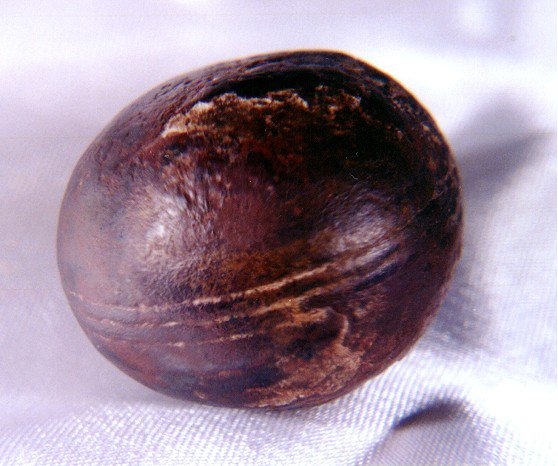
The Klerksdorp Spheres: Grooved Balls From Ancient Rock
Last reviewed Next review
We review and update every article weekly. When the record changes, so does the article. How we review
Small grooved spheres found in pyrophyllite mines near Ottosdal, South Africa, have been promoted as 3-billion-year-old manufactured objects.
Verdict: The spheres are natural mineral concretions, not ancient manufactured objects.
Sources Paul V. Heinrich, 'The South African Grooved Sphere Controversy' (TalkOrigins, 1996) and 'The Mysterious Spheres of Ottosdal, South Africa' (NCSE, 2008); Bruce Cairncross, as cited by Heinrich and Wikipedia; Wikipedia, 'Klerksdorp spheres'
Miners working pyrophyllite deposits near Ottosdal, west of Klerksdorp in South Africa’s North West province, have long turned up small, roughly round objects, some with one or more grooves around their middles. In the 1980s articles in popular and fringe magazines presented them as manufactured artifacts from rocks about 3 billion years old, sometimes adding that one spun by itself in a museum case.
What geologists say
The rock they come from is volcanic ash and sediment that was altered by heat and fluids. Paul Heinrich and geologist Bruce Cairncross have explained that the spheres are concretions, mineral growths that form around a nucleus. Heinrich’s 2008 NCSE paper, and Wikipedia following it, say the original concretions were pyrite, which oxidizes to hematite (with goethite as a minor component), and some specimens are wollastonite with minor hematite and goethite. As Cairncross explained, in Heinrich’s wording, the grooves “were caused by sediment laminations”: the concretion “grew at a slightly slower rate within these laminae than in adjacent layers.” Cut open, they show natural mineral structure, not machining.
Heinrich, citing later correspondence with Roelf Marx, the Klerksdorp Museum curator, says Marx reported he had been misquoted: the objects had moved in their cases because of vibrations from underground blasting in local gold mines, not because they spun on their own.
Sources
- Paul V. Heinrich, “The South African Grooved Sphere Controversy” (1996): talkorigins.org
- Paul V. Heinrich, “The Mysterious “Spheres” of Ottosdal, South Africa,” NCSE Reports 28, no. 1 (2008): ncse.ngo
- Wikipedia, “Klerksdorp spheres”: en.wikipedia.org
Every image on this page is credited where it appears.
Verdict
Hoax The spheres are natural mineral concretions, not ancient manufactured objects.
Evidence ledger
Each claim in this file, the source it rests on, and how well it holds up: 2 corroborated · 2 debunked. What the labels mean.
| Claim | Source | Type · date | Status |
|---|---|---|---|
| Grooved spheroids occur in pyrophyllite deposits near Ottosdal, South Africa. | Heinrich; Cairncross | scholarly | corroborated |
| The spheres are made by intelligent beings 3 billion years ago. | Popular OOPArt claims | social | debunked |
| They are natural concretions of pyrite, hematite where oxidized, or wollastonite with minor hematite and goethite, formed in volcanic sediment. | Heinrich 2008 (NCSE); Wikipedia; Cairncross as cited there | scholarly | corroborated |
| The spheres are 'perfectly balanced' or rotate on their own in museum cases.Not supported by measurement. | Popular claims | social | debunked |
Update log
-
We added this case file.
-
Weekly re-check of sources; no change to the record since filing. Next check November 23, 2026.
Discussion
Discuss this case on the on-site Community board — no GitHub account required. Prefer a private tip for the editorial team? Submit a Sighting.
House rules: Community guidelines.