The evidence: A page of the Voynich manuscript
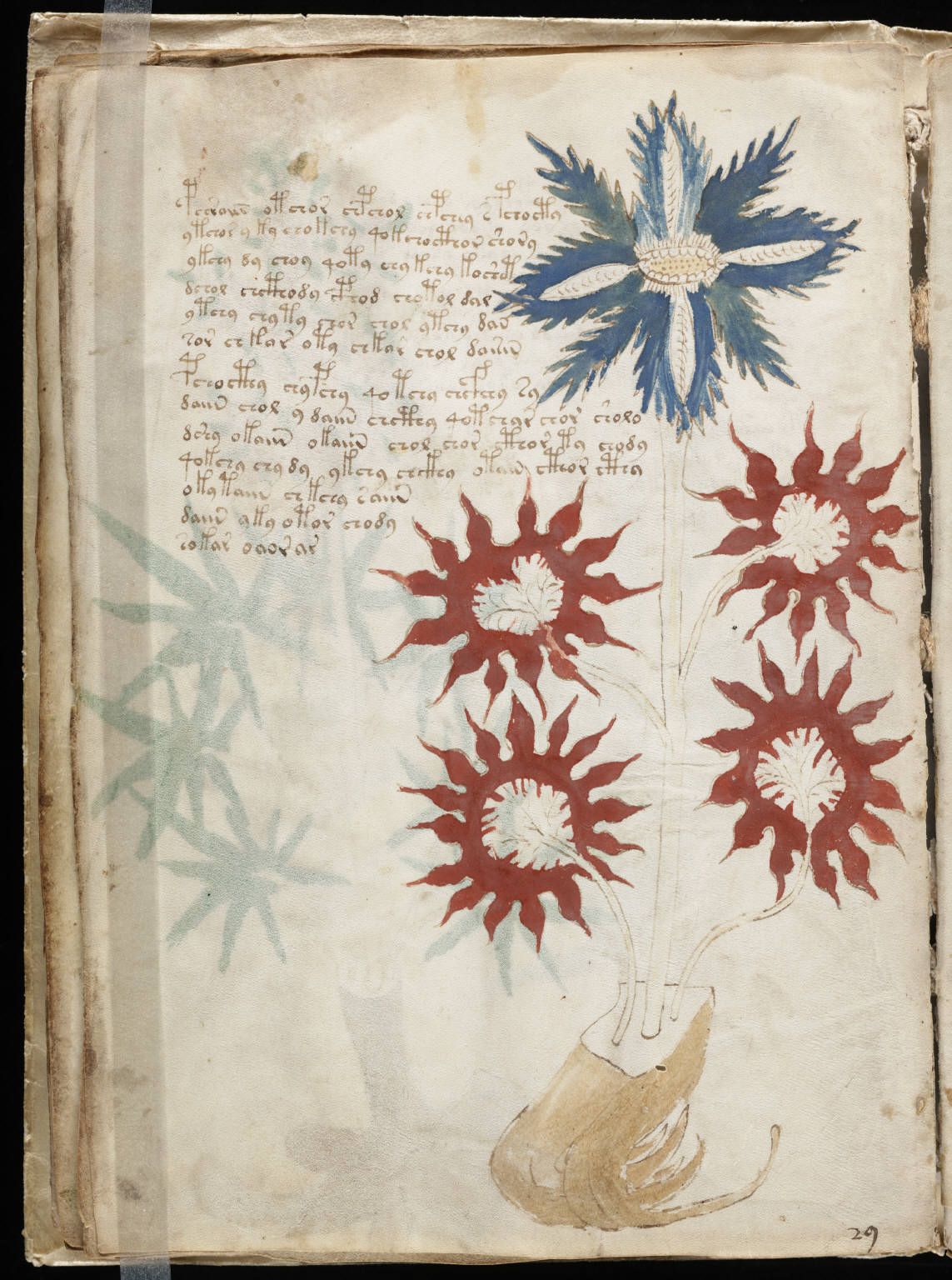
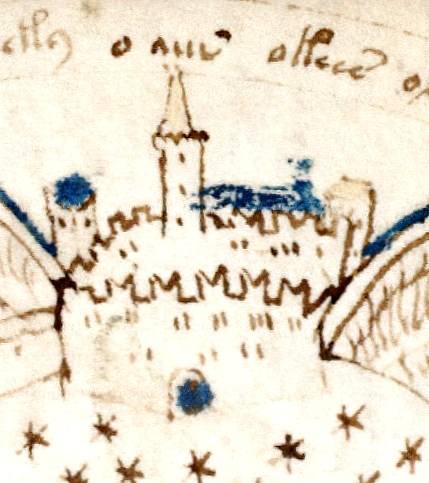

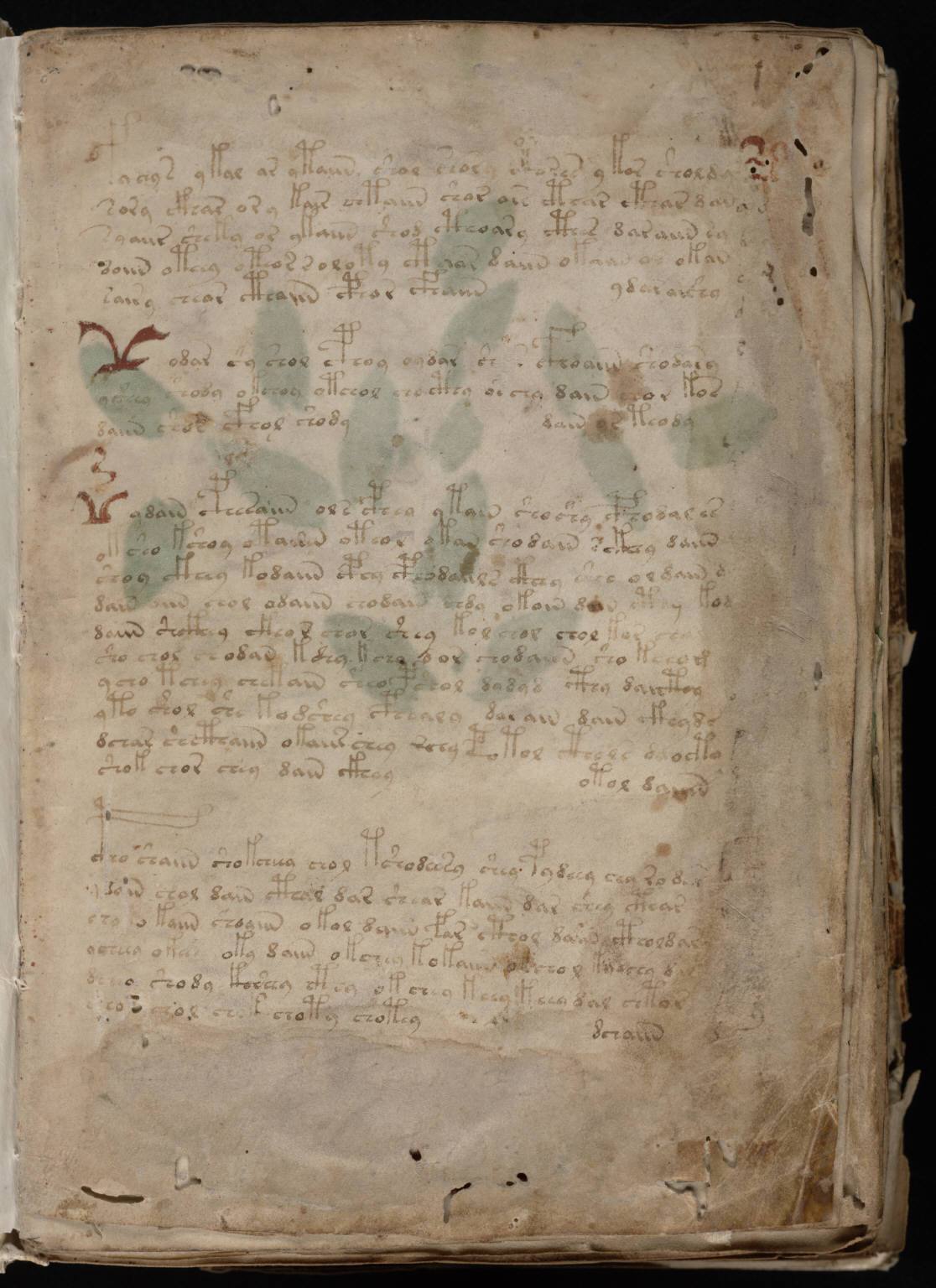

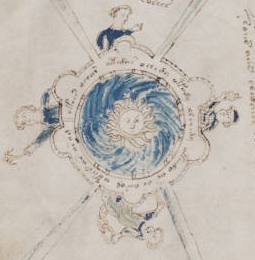

Voynich Manuscript: Beinecke MS 408
Last reviewed Next review
We review and update every article weekly. When the record changes, so does the article. How we review
Yale’s undeciphered illustrated codex: the library dates it to the late 15th or 16th century and does not endorse decipherment claims.
Verdict: A real 15th-century manuscript whose text has never been convincingly read.
Sources Beinecke Rare Book & Manuscript Library, ‘The Beinecke Cipher (Voynich) Manuscript’ (beinecke.library.yale.edu, checked 3 Oct 2026); pre1600ms.beinecke.library.yale.edu MS 408; Wikimedia Commons Voynich scans (public domain manuscript)
Yale’s Beinecke Library holds Beinecke MS 408 (the Voynich Manuscript), an illustrated codex in an undeciphered script. The library dates it to Central Europe at the end of the fifteenth century or during the sixteenth, and says scientific testing shows its materials are consistent with fifteenth-century manuscripts. It does not evaluate or endorse decipherment announcements.
Open script, closed hype
Status open on linguistic meaning; custody and imaging are cited. Pair with the Cardiff Giant the same week for a classroom contrast: cipher-in-custody versus known carved hoax.
Sources
- Beinecke Rare Book & Manuscript Library, “The Beinecke Cipher (Voynich) Manuscript”: beinecke.library.yale.edu (checked 3 Oct 2026)
- Beinecke MS 408 digital facsimile: pre1600ms.beinecke.library.yale.edu
- Philip Oltermann, report on the Layfield–Davis binding study, The Guardian, 6 Oct 2026: theguardian.com
- Colin Layfield and Lisa Fagin Davis, “Singulion Structure and the Voynich Manuscript,” Digital Medievalist (2026): journals.openedition.org
- Kristina Killgrove, “Undeciphered Voynich manuscript may have been bound out of order, study finds,” Live Science, 20 Oct 2026: livescience.com
- Carlos Rodríguez Morales, “Does page similarity reveal quire structure? A controlled test of the reordering procedure proposed for the Voynich manuscript,” preprint, not peer reviewed (Zenodo, 27 Oct 2026): zenodo.org
- Torsten Timm, “The challenge of analyzing a dynamic text: why the Voynich manuscript resists conventional interpretation,” Cryptologia (online 7 Sep 2026): tandfonline.com
Verdict
Open A real 15th-century manuscript whose text has never been convincingly read.
Evidence ledger
Each claim in this file, the source it rests on, and how well it holds up: 3 corroborated · 2 unverified. What the labels mean.
| Claim | Source | Type · date | Status |
|---|---|---|---|
| Yale's Beinecke Library holds the Voynich Manuscript as Beinecke MS 408. | Beinecke Library Voynich pages; pre1600ms.beinecke.library.yale.edu | museum / archive | corroborated |
| The manuscript was produced in Central Europe at the end of the 15th century or during the 16th.This is the library's own dating. The timeline places it at the start of that range. | Beinecke Library, ‘The Beinecke Cipher (Voynich) Manuscript’ collection page | museum / archive · checked 3 Oct 2026 | corroborated |
| Scientific testing shows the materials are consistent with 15th-century manuscripts.That dates the materials, not when the text was written. | Beinecke Library, ‘The Beinecke Cipher (Voynich) Manuscript’ collection page | museum / archive · checked 3 Oct 2026 | corroborated |
| The script has been deciphered.The library doesn't evaluate individual decipherment claims. | Beinecke Library, ‘The Beinecke Cipher (Voynich) Manuscript’ collection page (‘cryptographic approaches have failed to decipher the text’) | museum / archive · checked 3 Oct 2026 | unverified |
| The pages are bound out of their original order (loose singulions later nested into quires).A new peer-reviewed proposal; we have read the Guardian report and an index abstract, not the full article. It concerns binding order only, not meaning. | Layfield & Davis, Digital Medievalist (2026), as reported by The Guardian, 6 Oct 2026 | scholarly · Oct 2026 | unverified |
Update log
-
We added this case file.
-
New codicology, not a decipherment. In “Singulion Structure and the Voynich Manuscript” (Digital Medievalist, reported 6 Oct 2026), Colin Layfield (University of Malta) and Lisa Fagin Davis propose that the folded sheets were first kept as a loose stack of single bifolia (“singulions”) and were later bound in the usual nested quires, probably in the mid-to-late 15th century, which would scramble the reading order. Their case rests on a Latent Semantic Analysis of how closely the text on separated pages matches, and on drawings of streams and pipes that run into the gutter and only join up once the sheets are re-stacked. The paper doesn't read the script. Davis links it to paleographic work suggesting up to five scribes, and floats a reading of the book as communal women's folk knowledge, while saying herself that “you cannot prove that yet.” A separate paper points the other way: Torsten Timm, in Cryptologia (online 7 Sep 2026), argues that the text's gradual drift in vocabulary fits his self-citation hypothesis, under which the text need not carry linguistic meaning. Status stays open.
Sources The Guardian, Philip Oltermann, 6 Oct 2026: https://www.theguardian.com/culture/2026/oct/06/voynich-manuscript-research-pages-wrongly-bound · Layfield & Davis, “Singulion Structure and the Voynich Manuscript,” Digital Medievalist (article page not readable from our box; abstract confirmed via an index listing): https://journals.openedition.org/digitalmedievalist/2331 · Torsten Timm, “The challenge of analyzing a dynamic text: why the Voynich manuscript resists conventional interpretation,” Cryptologia, online 7 Sep 2026 (abstract only): https://www.tandfonline.com/doi/full/10.1080/01611194.2026.2693462
-
Two follow-ups on the binding-order study. Live Science reports the Layfield and Davis paper formally appeared in Digital Medievalist on 19 Oct 2026. Then on 27 Oct a preprint by Carlos Rodríguez Morales, submitted to the same journal and not yet peer reviewed, rebuilt their page-similarity reordering method and ran it on two medieval books whose page order is already known. Where text runs straight across pages, the method found the right order. But the similarity gains the study used to pick its proposed Voynich orders (+12.1% and +20%) turned out to be ordinary when tested against shuffled pages, so on their own they don't single out those orders. The preprint measured nothing on the Voynich itself and does not test the binding idea directly. Status stays open.
Sources Kristina Killgrove, 'Undeciphered Voynich manuscript may have been bound out of order, study finds,' Live Science (20 Oct 2026): https://www.livescience.com/archaeology/undeciphered-voynich-manuscript-may-have-been-bound-out-of-order-study-finds · Carlos Rodríguez Morales, 'Does page similarity reveal quire structure? A controlled test of the reordering procedure proposed for the Voynich manuscript,' Zenodo preprint (27 Oct 2026), abstract read: https://zenodo.org/records/23688173
-
A new statistical preprint, not a decipherment. Xin Zhang and Victor S. Sheng (Texas Tech University) built programs for both main ideas, a scribe copying and tweaking earlier words versus a real language hidden by a cipher, and tested them on texts whose answer is known. They report that copying fits better than any one-key cipher, but two-key ciphers fit about as well; that word pairs recur across lines in the manuscript at only half the strength of the weakest of 28 real texts; and that their solvers read nothing in it. One code type, a two-key nomenclator with heavy miscopying, survives their tests only for Arabic and Hebrew. Not yet peer reviewed. Status stays open.
Sources Zhang & Sheng, 'Can Statistics Tell Whether an Undeciphered Text Is Language? Calibrated Tests on the Voynich Manuscript', arXiv preprint, Oct 2026: https://arxiv.org/abs/2610.34499
-
Weekly re-check of sources; no newer change to the record. Next check November 23, 2026.
Discussion
Discuss this case on the on-site Community board — no GitHub account required. Prefer a private tip for the editorial team? Submit a Sighting.
House rules: Community guidelines.