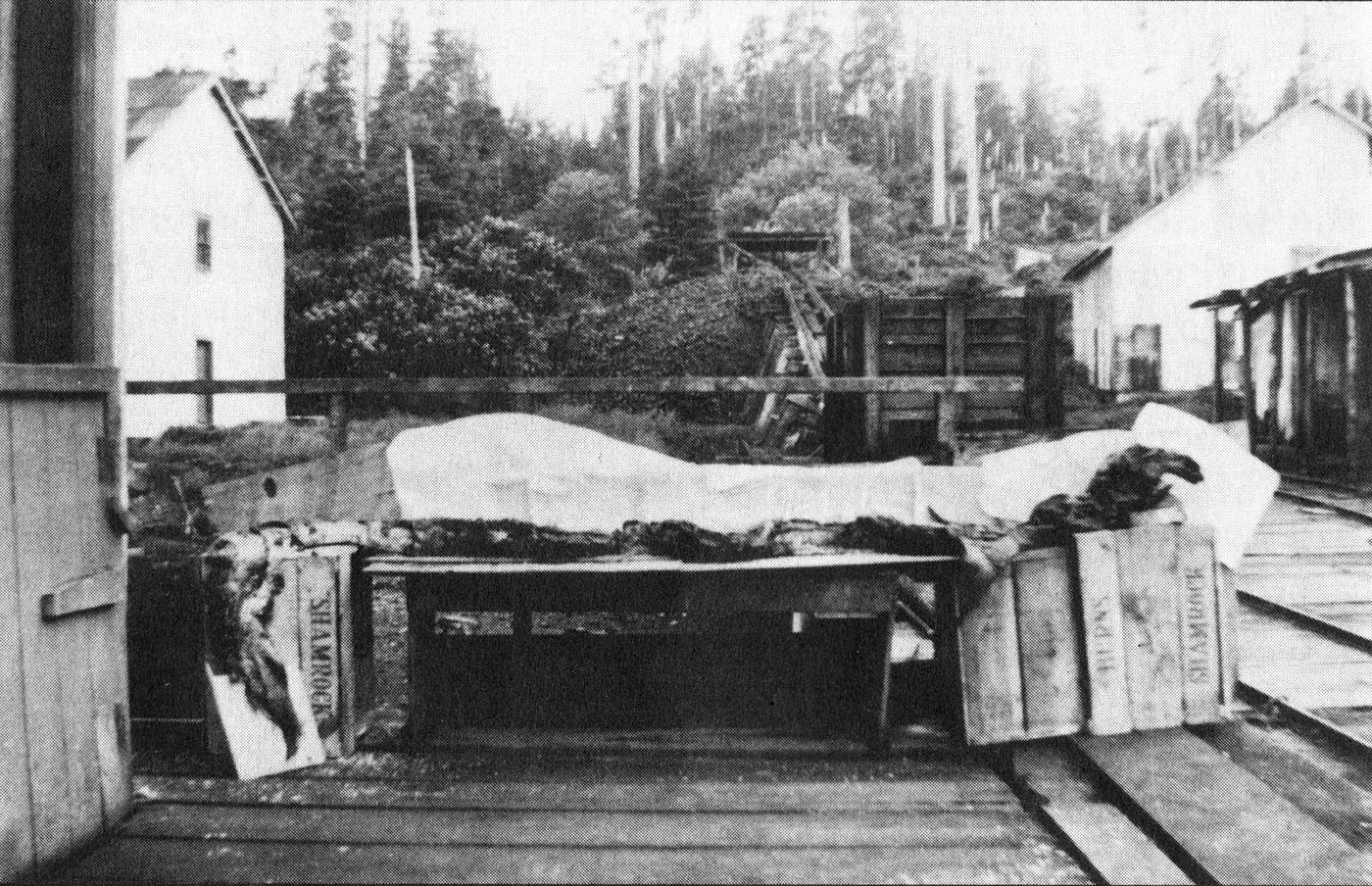
The evidence: The 1937 Naden Harbour carcass photo
Cadborosaurus: The Sea Serpent of Victoria
Last reviewed Next review
We review and update every article weekly. When the record changes, so does the article. How we review
Since the 1930s, people around Victoria, British Columbia, have reported a long, horse-headed sea serpent called 'Caddy'.
Verdict: A long-running sea-serpent tradition whose one 'specimen' photo has never been tested.
Sources Darren Naish, 'The Cadborosaurus wars', Scientific American Blogs (Tetrapod Zoology); The Guardian (7 May 2026); Bousfield & LeBlond, Amphipacifica (1995), as cited by Naish and Wikipedia; Saanich Archives newsletter (Fall 2022); Library and Archives Canada; Wikipedia, 'Cadborosaurus'
In October 1933 the Victoria Daily Times ran reports of a long sea creature seen off Victoria. Editor Archie Wills promoted the story, and on 11 October the paper announced the name “Cadborosaurus,” after Cadboro Bay, chosen from reader suggestions. LeBlond and Bousfield later said they had collected more than 200 sightings over a century.
The carcass
In 1937 whalers at Naden Harbour on Haida Gwaii cut open a sperm whale and found a three-meter carcass with a long body and a head that looked, in the famous photo, like a camel’s. It was claimed as a Caddy, but a sample sent to a museum in Victoria was disposed of after the museum’s director suggested it came from a fetal baleen whale.
Scientists divide
In 1995 zoologist Edward Bousfield and oceanographer Paul LeBlond argued for a real unknown animal and gave it a scientific name. They acknowledged that conger eels, humpback whales, elephant seals, oarfish, basking sharks and sea lions have all been suggested, but said no known animal fits. Zoologist Darren Naish calls their work “terrible science” and argues they wrongly treat conflicting eyewitness reports as one animal. Decomposing basking sharks lose their gill-basket and can be left with a long “neck” and small head. In May 2026 the Guardian revisited the case: marine biologist Ben Speers-Roesch explained how a decaying basking shark collapses into a long “neck” and small head, while cryptozoologist John Kirk insisted it was an unknown mammal. With no samples left, it cannot be settled.
Sources
- Darren Naish, “The Cadborosaurus wars,” Scientific American Blogs: blogs.scientificamerican.com
- The Guardian, “Shark or sea monster? The Canadian marine mystery that still intrigues experts 90 years on” (7 May 2026): theguardian.com
- Saanich Archives, newsletter (Fall 2022): saanich.ca
- Library and Archives Canada (archived site), “Cadboro Bay Sea Serpent”: epe.lac-bac.gc.ca
- Wikipedia, “Cadborosaurus” (cites Bousfield & LeBlond 1995 and their sighting count): en.wikipedia.org
Every image on this page is credited where it appears.
Verdict
Folklore A long-running sea-serpent tradition whose one 'specimen' photo has never been tested.
Evidence ledger
Each claim in this file, the source it rests on, and how well it holds up: 2 corroborated · 2 disputed. What the labels mean.
| Claim | Source | Type · date | Status |
|---|---|---|---|
| The name 'Cadborosaurus', after Cadboro Bay, was chosen by the Victoria Daily Times in October 1933, after editor Archie Wills began promoting local sea-serpent reports. | Saanich Archives newsletter (Fall 2022); Library and Archives Canada, 'Cadboro Bay Sea Serpent' | museum / archive | corroborated |
| A carcass found in a sperm whale's stomach at Naden Harbour in 1937 was claimed to be a juvenile Caddy. | Guardian (2026) | press · 2026 | corroborated |
| Bousfield and LeBlond formally described 'Cadborosaurus willsi' as a new genus and species.Darren Naish calls the work 'terrible science' and notes that the holotype they named was one of the photographs of the Naden Harbour carcass, not a specimen. | Naish, 'The Cadborosaurus wars'; Wikipedia (both citing Bousfield & LeBlond 1995, Amphipacifica 1 Suppl. 1) | secondary · 1995 | disputed |
| The Naden Harbour carcass was a decomposing basking shark. | Guardian (2026), quoting marine biologist Ben Speers-Roesch | press · 2026 | disputed |
Update log
-
We added this case file.
-
We replaced an unsourced note that no type specimen exists with what Darren Naish, whom we have read, actually says: Bousfield and LeBlond named one of the carcass photographs as the holotype.
Sources https://blogs.scientificamerican.com/tetrapod-zoology/the-cadborosaurus-wars/
-
Weekly re-check of sources; no newer change to the record. Next check November 23, 2026.
Discussion
Discuss this case on the on-site Community board — no GitHub account required. Prefer a private tip for the editorial team? Submit a Sighting.
House rules: Community guidelines.