The evidence: Project Hessdalen station photos and recordings
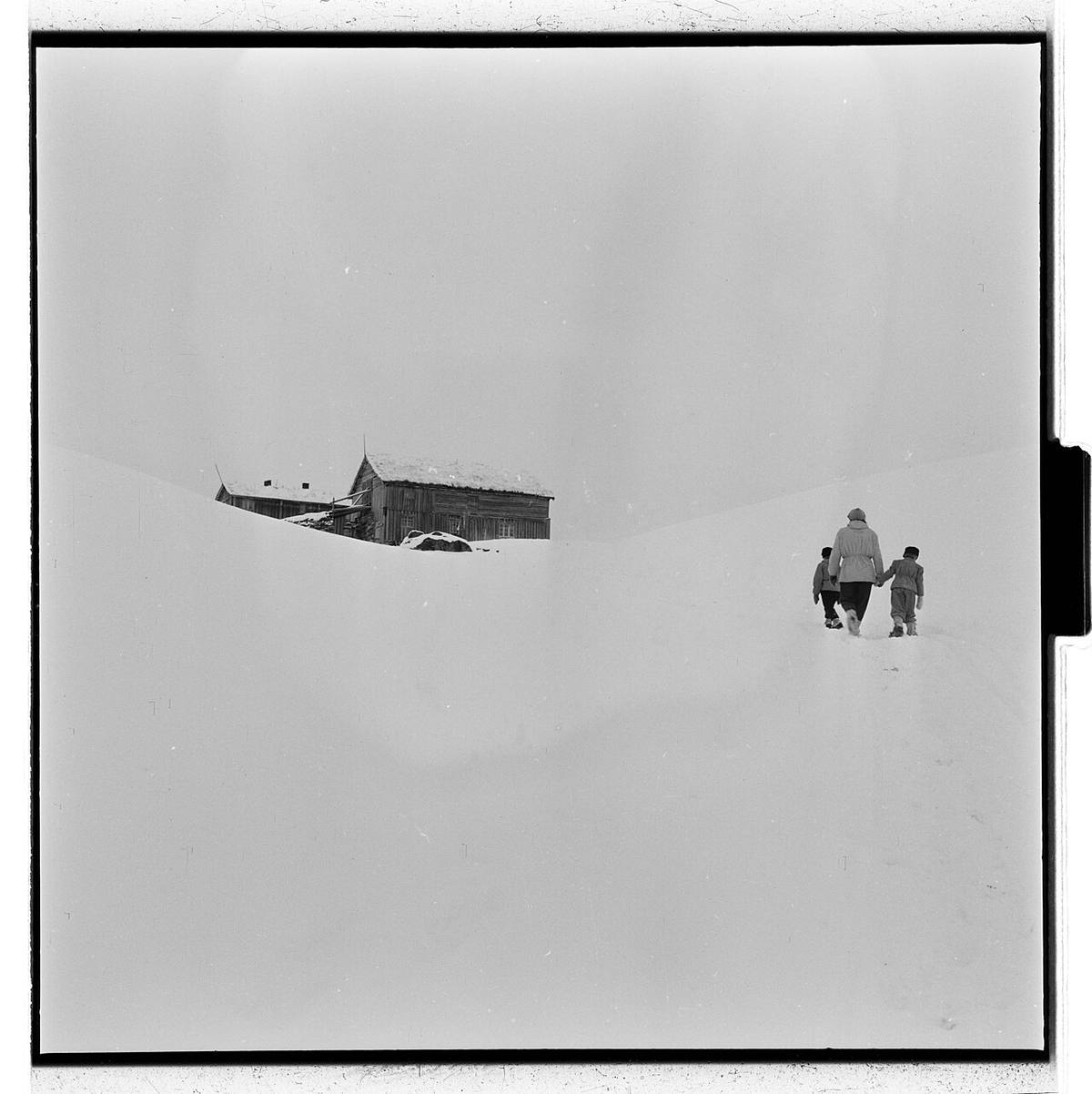
▶ See the original photo at Project Hessdalen ↗ (not reproduced here: Project Hessdalen copyright)

The Hessdalen Lights: A Norwegian Valley With Its Own Light Show
Last reviewed Next review
We review and update every article weekly. When the record changes, so does the article. How we review
Since at least the 1930s, and in a burst in the early 1980s, people in the Hessdalen valley of central Norway have seen lights that hover, drift and flare.
Verdict: The lights are real and measured, but what causes them is not yet known.
Sources Project Hessdalen (hessdalen.org); M. Teodorani, 'A long-term scientific survey of the Hessdalen phenomenon', Journal of Scientific Exploration 18 (2004); Paiva & Taft, Journal of Atmospheric and Solar-Terrestrial Physics (2010); Wikipedia, 'Hessdalen lights'
Hessdalen is a sparsely populated valley in Trøndelag, central Norway. Residents have described lights there since at least the 1930s, but from December 1981 the reports came several times a week: white and yellow balls that hovered for long periods, drifted slowly, or shot along the valley.
Watching with instruments
In 1983 Norwegian and Swedish researchers started Project Hessdalen, one of the few long-running attempts to study a mystery light with equipment rather than anecdotes. An automated station has watched the valley since the late 1990s, and visiting teams, including Italian astrophysicist Massimo Teodorani, have monitored the lights with optical, radio and radar instruments. The sightings dropped sharply after the mid-1980s, but still occur.
What they might be
Proposals in the scientific literature include burning dust or combustion of gases, a plasma formed in air charged by the valley’s rocks and mine tailings, and more exotic dusty-plasma models. None has been confirmed, and the lights remain a rare case where a recurring phenomenon is both real and unexplained.
Sources
- Project Hessdalen: hessdalen.org
- M. Teodorani, “A long-term scientific survey of the Hessdalen phenomenon,” Journal of Scientific Exploration 18 (2004) (abstract read via an archived ADS copy): ADS
- G. S. Paiva & C. A. Taft, “A hypothetical dusty plasma mechanism of Hessdalen lights,” J. Atmos. Sol.-Terr. Phys. 72 (2010), pp. 1200–1203 (abstract read via Semantic Scholar; full text paywalled): doi:10.1016/j.jastp.2010.07.022
- Wikipedia, “Hessdalen lights”: en.wikipedia.org
Every image on this page is credited where it appears.
Weighing it
The lights are instrumented and real; their mechanism is not established.
Verdict
Open The lights are real and measured, but what causes them is not yet known.
Evidence ledger
Each claim in this file, the source it rests on, and how well it holds up: 3 corroborated · 1 disputed · 1 unverified. What the labels mean.
| Claim | Source | Type · date | Status |
|---|---|---|---|
| Unidentified lights have been reported in a 12 km stretch of the Hessdalen valley since at least the 1930s. | Wikipedia; Project Hessdalen | secondary | corroborated |
| Reports peaked from late 1981 to 1984, prompting Project Hessdalen fieldwork from 1983. | Project Hessdalen | primary record · 1983– | corroborated |
| An automated measurement station has recorded the lights with cameras and other instruments. | Project Hessdalen; Teodorani (JSE 2004) | scholarly · 2004 | corroborated |
| The lights are a natural plasma phenomenon, possibly involving dust from the valley's rocks.Several competing physical models; none confirmed. We read the paper's abstract (ResearchGate/Semantic Scholar): Coulomb crystals in a plasma from air and dust ionized by alpha particles during radon decay. The full text is paywalled; the claim rests on the abstract and Wikipedia's summary. | Paiva & Taft, ‘A hypothetical dusty plasma mechanism of Hessdalen lights’ (JASTP 2010), as summarized by Wikipedia; other proposals | scholarly · 2010 | disputed |
| The lights are craft. | Popular claims | secondary | unverified |
Update log
-
We added this case file.
-
We read Teodorani's 2004 abstract (archived ADS copy): it describes optical, radio and radar monitoring, so we changed ‘spectra and video’ to match. We confirmed the Paiva & Taft 2010 title and DOI via Crossref, replaced the ADS link with the DOI, and now cite the dust-plasma claim via Wikipedia's summary.
Sources Teodorani, JSE 18 (2004), abstract: https://web.archive.org/web/2024/https://ui.adsabs.harvard.edu/abs/2004JSE....18..217T/abstract · Crossref record, doi:10.1016/j.jastp.2010.07.022 · Wikipedia, ‘Hessdalen lights’
-
Source review: the 25 Oct check date was withdrawn because a claim cites Paiva & Taft, whose full text we have not read. The last full check stays 19 Oct 2026.
Sources
-
Source re-check: we read the Paiva & Taft (2010) abstract, which supports the dusty-plasma claim (dust and air ionized by alpha particles during radon decay). The case does not attribute a battery or piezoelectric idea to that paper, so nothing needed correcting. Full text remains paywalled.
Sources https://www.semanticscholar.org/paper/A-hypothetical-dusty-plasma-mechanism-of-Hessdalen-Paiva-Taft/b265267a1a54df4f7e7cabe86bbaf4d75fb7250f · https://www.researchgate.net/publication/222751827
-
We removed the long-exposure photo of a Hessdalen light from our gallery. Wikimedia Commons deleted that file on 7 Nov 2026 as a likely copyright violation, so its CC BY-SA license could not be relied on. The valley archive photo and our labeled AI rendition stay.
Sources Wikimedia Commons deletion log, File:Hessdalen lights.png, 7 Nov 2026
-
Weekly re-check of sources; no newer change to the record. Next check November 23, 2026.
Discussion
Discuss this case on the on-site Community board — no GitHub account required. Prefer a private tip for the editorial team? Submit a Sighting.
House rules: Community guidelines.