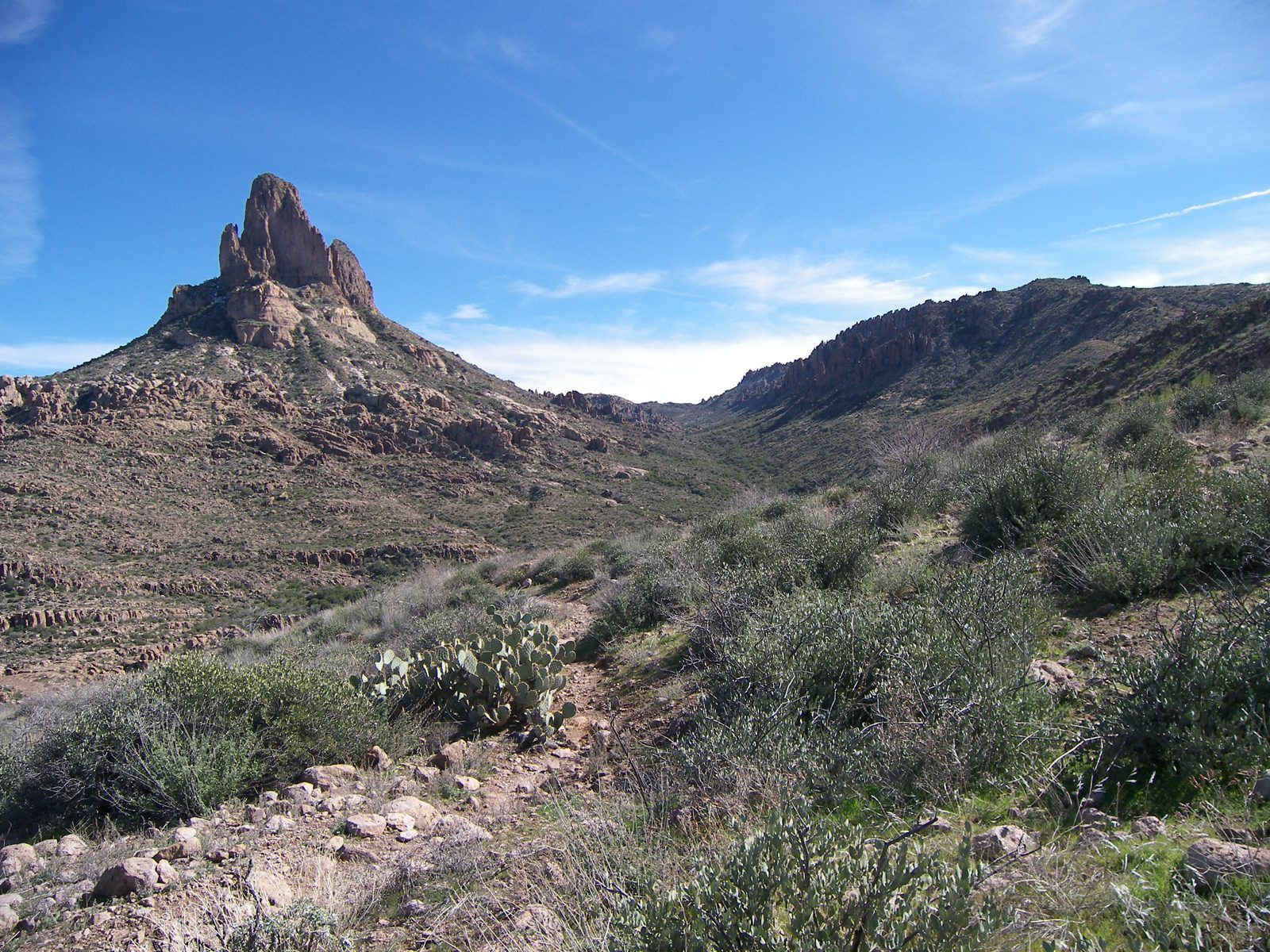
Adolph Ruth and the Superstitions, 1931
A 66-year-old Washington retiree walked into the Superstition Mountains in June 1931 to look for the Lost Dutchman mine and did not come out. Three wire services and a local weekly reported his death three different ways, and none of them recorded a verdict that we can find.
Sources Washington Daily News (26–27 Jun 1931); Evening Star, Washington (26 Jun, 11 Jul, 16 Jul, 22 Jul, 22 Dec 1931); Coolidge Examiner (17 Jul 1931; 15 Jan and 11 Nov 1932); Douglas Daily Dispatch (19 Jul, 15 Dec 1931); Washington Times (21 and 22 Dec 1931; 18 Feb 1932); Imperial Valley Press (21 Dec 1931), all via Library of Congress, Chronicling America
Locale map
Adolph Ruth was a real man with a family on Thirty-seventh Street in Washington, D.C. He had worked for about two decades in the Agriculture Department’s Bureau of Animal Industry, though the papers disagree on when he left it (more on that below). In the spring of 1931, aged 66 by most accounts, he went west for what his family described as a vacation. He stayed at the W. A. “Tex” Barkley ranch from 10 May, picked up local stories of lost mines, and in mid-June walked into the Superstition Mountains east of Phoenix to look for the Lost Dutchman. He did not come back. This file is about how his death was reported. It is not about the gold.
The search, summer 1931
The dates in the papers already disagree. One Associated Press dispatch says Ruth entered the range on 13 June; another, a week earlier, calls him “missing since June 15.” The International News Service later had him going into the mountains “last May.” The diary his son later brought to Phoenix ends with an entry dated 15 June 1931, followed by blank pages. His camp was found undisturbed.
When packers came to meet him and he wasn’t there, deputies and local riders went in. By 26–27 June the Washington papers were reporting that heat of about 110°F had driven the posse out, with searchers suffering badly in the canyons. In mid-July an airplane paid for by the Phoenix Gazette spent two hours over the range and saw, as the AP put it, a wild horse and nothing else. On Saturday, 18 July, Deputy Sheriff Jeff Adams and Barkley went back in planning a week’s search. Within days they sent up a smoke signal for help and had to be brought out nearly exhausted. The search was called off until fall. His son, Dr. Erwin C. Ruth (the papers also spell him Edwin and Ervin), went home to Washington.
The United Press coverage of that first week also claimed that “Indian guides” refused to enter the canyons because of a legend. That line is the 1931 wire’s framing. The sources don’t name any guide or tribe or say what the belief was, so the ledger reports it as press color and nothing more.
The skull and the skeleton
In early December 1931 an archaeological party out of Phoenix found part of a human skull in a canyon in the range. The United Press named Halseth as the finder. The skull went to the Smithsonian’s National Museum, where the anthropologist Aleš Hrdlička reported that it was an elderly white man’s and that death had probably been caused by a gunshot. Ruth’s son examined it and said it might be his father’s.
The wire services then went in different directions. On 21 December the International News Service story in the Washington Times described a large hole in the left side of the skull, said the man had been “shot at close range,” and called him the “sixty-first” victim of the mine. The United Press story the same day reported “a bullet hole” and said it was “generally believed” that someone had followed Ruth and killed him for his map. The AP’s version of 22 December stayed with Hrdlička’s more cautious “probability.”
On Friday, 8 January 1932, a posse found the rest of the remains, scattered over an open stretch of ground. The Coolidge Examiner, a Pinal County weekly, printed the most detailed account. His penknife, jackknife, watch, matches, compass and hand lens were still in his pockets. His gun had not been fired. His thermos lay nearby, empty. The only map found was a government topographic sheet, not the Spanish mine map he had supposedly carried. The paper reported that officers had dropped the murder theory and now believed he had died of thirst, starvation or exhaustion in the summer heat.
About six weeks later the story flipped back. On 18 February 1932 an INS dispatch reported that a dispute over whether the remains lay in Maricopa or Pinal County was holding up the “suspected murder” inquiry. The inquest was moved to Florence, and the skull was now said to have “two bullet holes.” We have not found the result of that inquest.
What the papers couldn’t agree on
Even Ruth’s own biography shifts between stories. The family-sourced Evening Star piece of 26 June 1931 says he retired from the Bureau of Animal Industry in July 1924 after 21 years. An INS dispatch in the Washington Times of 22 December 1931 says he retired “last spring,” just before the trip. His age moves between 65 and 66, the finder’s name comes out as Halseth (UP) or Salseath (INS), and the son appears as Erwin, Edwin and Ervin. None of that changes what happened in the mountains, but it’s a fair warning about how carefully any single 1931 detail was checked.
The papers also couldn’t agree on how many people the legend had killed. In July 1931 an AP roundup called Ruth the mine’s “ninth victim.” The Washington Times in December made him the “sixty-first.” A November 1932 tour notice in the Coolidge Examiner went back to “ninth,” along “the old Peralta trail, on which Adolph Ruth lost his life.” No reliable count exists, and the ledger isn’t adding one.
Competing explanations
- Heat, thirst or a fall. The searchers listed this first in July 1931. It fits the conditions, which were brutal enough to send the posse out, and it fits the January 1932 scene of untouched valuables, an unfired gun and an empty thermos. Officers adopted it, briefly at least.
- Murder for his map. This was the United Press’s favorite and depends on the skull damage. Hrdlička gave it as a probability, and the wire accounts escalate from “probability” to “a bullet hole” to “two bullet holes” as the weeks go by. Untouched valuables cut against robbery but don’t rule out a shooting.
- Memory loss and wandering. This was the third theory in July 1931. The remains ended it.
- A curse or “Indian legend.” Newspaper framing from 1931. It isn’t evidence, and it shouldn’t be read as an account of any tribe’s beliefs.
Ledger status
Marked disputed. A man died alone in hard country, and his family spent months waiting on telegrams. The record shows a skull with damage that a Smithsonian expert thought was probably a gunshot, beside a scene that looked to the officers on it like death from exposure. Contemporary papers argued both ways, and we haven’t found an inquest verdict. Calling it a solved murder, or a curse, says more than the documents do.
Next checks: the Pinal County inquest outcome (spring 1932); Arizona State Library or Superstition Mountain Museum holdings for a second institutional source; the page images for name spellings (finder; son).
Visiting the Superstitions
The public trailheads closest to this story are First Water, where the July 1931 search dispatches were datelined, and Peralta, the trail the 1932 Coolidge Examiner tied to Ruth. Both are part of the Superstition Mountains day loop. This file gives no location for the remains and no route to them.
Heat and search-and-rescue risk: the Superstition Wilderness is steep, rocky and short on reliable water, and summer heat can pass 110°F. That heat stopped the 1931 search, and heat-related rescues in the range are still common. Carry far more water than you expect to need, tell someone your plan, stay on marked trails, and check Tonto National Forest alerts before you go. Prospecting and digging are not permitted in the wilderness. The legend is a story to carry, not a reason to leave the trail.
Sources
Library of Congress, Chronicling America:
- Washington Daily News, 26 Jun 1931, p.1 (United Press: search begins; “Indian guides” framing) — loc.gov
- Washington Daily News, 27 Jun 1931, p.1 and p.19 (heat halts posse; family details) — p.1 · p.19
- Evening Star (Washington), 26 Jun 1931, p.24 (family statement; Barkley ranch from 10 May) — loc.gov
- Evening Star, 11 Jul 1931, p.3 (AP: diary ends 15 Jun 1931) — loc.gov
- Evening Star, 16 Jul 1931, p.2 (AP: air search) — loc.gov
- Coolidge Examiner, 17 Jul 1931, p.1 (air search; “three theories”) — loc.gov
- Douglas Daily Dispatch, 19 Jul 1931, p.1 (AP legend roundup, “ninth victim”) — loc.gov
- Evening Star, 22 Jul 1931, p.28 (AP, First Water Ranch: search off until fall; “entered June 13”) — loc.gov
- Douglas Daily Dispatch, 15 Dec 1931, p.1 (AP: skull found by archaeological expedition) — loc.gov
- Washington Times, 21 Dec 1931, p.1 (INS: “shot at close range,” “sixty-first”) — loc.gov
- Washington Times, 22 Dec 1931, p.3 (INS: posse rides in; retired “last spring”; finder spelled “Salseath”) — loc.gov
- Imperial Valley Press (El Centro, Calif.), 21 Dec 1931, p.7 (UP: “bullet hole,” murder-for-map theory) — loc.gov
- Evening Star, 22 Dec 1931, p.6 (AP: Hrdlička, gunshot “probability”; son’s statement) — loc.gov
- Coolidge Examiner, 15 Jan 1932, p.4 (skeleton found Friday 8 Jan; belongings intact; gun unfired; murder theory dropped) — loc.gov
- Washington Times, 18 Feb 1932, p.9 (INS: county-line dispute; inquest to Florence; “two bullet holes”) — loc.gov
- Coolidge Examiner, 11 Nov 1932, p.1 (tour notice: “old Peralta trail”; “ninth man”) — loc.gov
Land manager:
- USDA Forest Service, Tonto National Forest, First Water Trailhead — fs.usda.gov
Method note: texts were read from Library of Congress OCR, which garbles names. Spellings above follow the most consistent readings.
Evidence ledger
Each claim in this file, the source it rests on, and how well it holds up: 3 corroborated · 4 disputed · 2 unverified. What the labels mean.
| Claim | Source | Type · date | Status |
|---|---|---|---|
| Adolph Ruth went into the Superstition Mountains in mid-June 1931 to look for the Lost Dutchman and didn't come back. | Evening Star (26 Jun 1931); Washington Daily News (26–27 Jun 1931) | period press · 1931 | corroborated |
| He entered the range on 13 June 1931.His diary ends 15 June 1931. | AP dispatches (13 Jun vs. ‘missing since June 15’); INS (‘last May’) | period press · 1931 | disputed |
| Heat of about 110°F drove the first posse out. | Washington Daily News; Evening Star (26–27 Jun 1931) | period press · Jun 1931 | corroborated |
| A Smithsonian anthropologist, Aleš Hrdlička, judged that the skull's owner had probably died of a gunshot.Reported finding, phrased as a probability. | AP (22 Dec 1931), as carried in 1931 papers | period press · Dec 1931 | corroborated |
| Ruth was shot at close range and murdered for his map.Coolidge Examiner (15 Jan 1932): officers dropped the murder theory. | Washington Times (INS) and UP, 21 Dec 1931; Washington Times, 18 Feb 1932 | period press · 1931–32 | disputed |
| He died of thirst, starvation or exhaustion. | Coolidge Examiner, 15 Jan 1932 | period press · 1932 | disputed |
| A Pinal County inquest reached a verdict.No result found yet. | Washington Times, 18 Feb 1932 (inquest moved to Florence) | period press · 1932 | unverified |
| Ruth was the Lost Dutchman's ninth (or sixty-first) victim.No reliable count exists. | AP roundup (Jul 1931); Washington Times (Dec 1931); Coolidge Examiner (11 Nov 1932) | period press · 1931–32 | disputed |
| ‘Indian guides’ refused to enter the canyons because of a legend.No guide or tribe named; press color. | United Press, June 1931 | period press · 1931 | unverified |
Discussion
Discussions activating. Per-case threads will embed here once the Giscus GitHub App is installed on the public satellite repo.
Meanwhile, join the conversation on GitHub Discussions: https://github.com/dclewis21/anomaly-ledger-community/discussions
CoS / D.C.: see Community guidelines and
SETUP.mdin the site repo for the one-click Giscus install.