Fisher's Ghost: the Campbelltown Murder (1826) and the Ghost That Arrived in 1832
Australia's most famous ghost story says Frederick Fisher's spirit sat on a fence rail and pointed to his own grave. The 1826–27 newspapers report the murder, the search, an Aboriginal tracker and a trial, but no ghost. The apparition first appears in print in an anonymous poem in 1832, and in 1841 the man said to have seen it denied it.
Sources The Monitor (Sydney), 3 Nov 1826; Sydney Gazette, 5 Feb 1827 (trial report); Sydney Herald, 26 Jul 1841 (letter, John Hurley), all via Trove, National Library of Australia; C. Vening, “Harry Dashboard and Fisher's Ghost,” Script & Print 39:3 (2015)
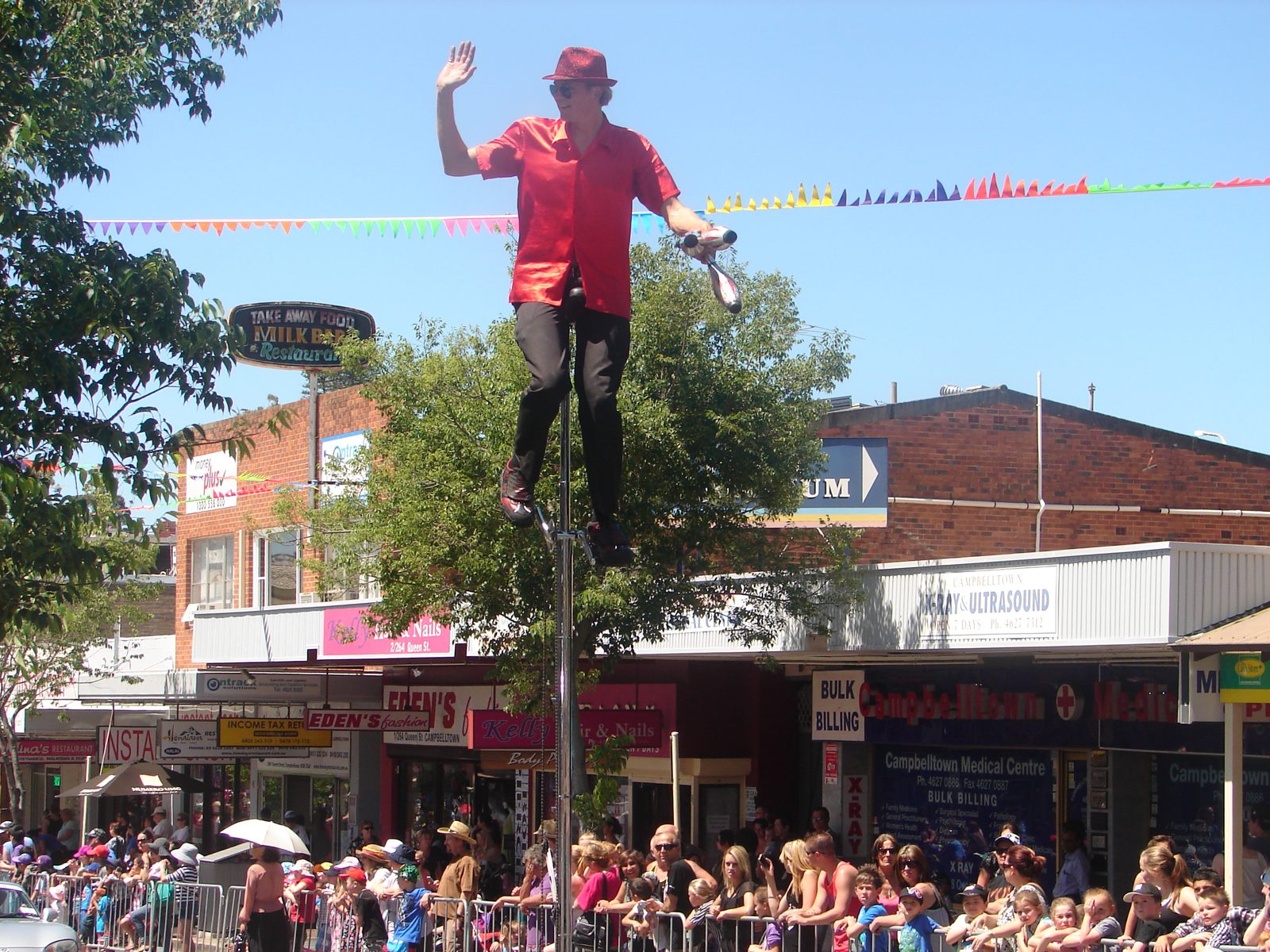
Campbelltown, south-west of Sydney, has a festival named after a ghost. In the story, a settler walking home at night sees Frederick Fisher sitting on a fence rail, months after he vanished. The figure points towards the creek, and that is where Fisher’s body is found. It’s one of the best-known ghost stories in Australia. The ledger went back to the court and newspaper record to see when the ghost first shows up in it.
The murder, as reported at the time
On 3 November 1826 the Sydney Monitor reported “an extraordinary discovery of murder” near Campbell Town. A government notice had offered a reward of twenty pounds for finding a “respectable house-keeper, named Fisher,” who had been missing for almost four months. On the Tuesday, “by the aid of some black natives” (the paper’s wording), his body had been found in a field, buried about three feet down. A neighbour he’d quarrelled with had told people Fisher had left for England. The neighbour had also produced a forged receipt to explain why he had Fisher’s horse. The paper said he was in custody.
The trial
The Sydney Gazette of 5 February 1827 reported the trial at length. It took place on Friday 2 February before the Chief Justice:
- The charge. George Worrall was indicted for murdering Frederick Fisher at Campbell Town “on the 16th day of July last.” A witness said Fisher had disappeared in June. Worrall’s own statement put the night at 17 June. The ledger leaves the mismatch as the record has it.
- The horses. Worrall had sold Fisher’s horses, claiming he’d bought them. The receipt he produced was sworn not to be in Fisher’s handwriting.
- The search. Constable George Looland testified that he started searching for the body on 20 October, by order of the bench of magistrates. He went to where blood had been reported and found it sprinkled on several rails of a fence. Someone appeared to have lit a fire under the lowest rail, he said, as if to burn the mark away.
- The tracker. Two Aboriginal men joined the search. One, recorded in court as “a man named Gilbert,” skimmed the creek water with a leaf, tasted it, and said there was the fat of a white man in it. Further up, the trackers found soft ground. When it was dug, the body was underneath.
- The defence. Worrall’s written declaration blamed a group of other men. He said they had killed Fisher for his money and sworn him to secrecy.
- The verdict. The Chief Justice called it “a case entirely of circumstances,” though a particularly strong one. The jury found Worrall guilty, and he was sentenced to death.
According to the reports cited by Vening (2015), Worrall confessed before he was hanged that February. The ledger didn’t read the execution report itself.
None of these reports mentions a ghost. In the record, the body was found through police work, blood on a fence, and an Aboriginal tracker’s skill.
The ghost arrives in print
The literary historian Chris Vening traced the legend in Script & Print (2015). Following Elizabeth Webby and Cecil Hadgraft (1968), he identifies its first appearance in print. It was an anonymous verse romance, “The Sprite of the Creek!”, published in Hill’s Life in New South Wales in September 1832, six years after the murder. Part of it ran on 14 September under a misprinted title, and the full poem followed on 21 September. It used thinly disguised names: Fredro for Fisher, Wurlow for Worrall, and Falvonis for the settler who sees the ghost. In later tellings that settler is John Farley. Vening notes that, ghost aside, the poem follows the real events quite closely. A revised version appeared under the name “Felix” in Bell’s Life in Sydney in June 1846. Vening argues that the likely author of both is James Riley, an Irish-born former convict.
Vening also records rumours in Campbelltown that the ghost, not the bloodstains, had set off the search. The ledger hasn’t found those rumours in any 1826–27 report.
“My unqualified denial”
By 1841 the story was being told as fact in Sydney. At a School of Arts discussion of “ghosts and spectral illusions,” a speaker said the ghost had been seen by a man named John Hurley. Hurley, the speaker claimed, had sworn to it before a magistrate. On 26 July 1841 Hurley wrote to the Sydney Herald. He gave the whole statement his “unqualified denial.” He said he knew nothing of the case and had been two hundred miles from Campbell Town at the time. He was writing, he said, only because people now believed he was the man who saw the ghost.
Legend and record
| Question | What the record shows |
|---|---|
| The murder | Documented: the reward, the body, the trial, the conviction. |
| How the body was found | The trial evidence shows blood on the fence rails, a search ordered by magistrates, and a tracker’s discovery. |
| The ghost | Not in the 1826–27 reports. It first appears in a poem in 1832 and grows in later retellings. The one man publicly named as a witness denied it. |
The ledger hasn’t seen the 1832 poem or the 1846 version. Both are cited through Vening. The Aboriginal tracker appears here only as the court recorded him. The ledger attributes no beliefs or account to him beyond that testimony. There are no map pins: Fisher’s grave isn’t marked, and the legend’s locations are retellings, not records.
Ledger status
Folklore. It’s a real murder, solved by ordinary police work and an Aboriginal tracker. The ghost entered the story in print years later. It’s part of the Antipodes desk.
Sources
- “Domestic Intelligence,” The Monitor (Sydney), 3 Nov 1826 — Trove
- “Supreme Criminal Court,” Sydney Gazette and New South Wales Advertiser, 5 Feb 1827, p. 2 — Trove (masthead note: the research desk flagged it as unconfirmed. Trove’s text version, read via a Wayback copy, names the Sydney Gazette and New South Wales Advertiser, 5 Feb 1827, p. 2.)
- Letter of John Hurley, “To the Editors of the Sydney Herald,” Sydney Herald, 26 Jul 1841, p. 2 — Trove
- C. Vening, “Harry Dashboard and Fisher’s Ghost,” Script & Print 39:3 (2015), 133–162 (Bibliographical Society of Australia and New Zealand) — PDF
Evidence ledger
Each claim in this file, the source it rests on, and how well it holds up: 2 corroborated · 1 unverified · 1 debunked. What the labels mean.
| Claim | Source | Type · date | Status |
|---|---|---|---|
| Frederick Fisher was murdered at Campbelltown in 1826, and George Worrall was convicted of it.Reward notice, discovery of the body, and a full trial report ending in a guilty verdict and a death sentence. Masthead note: the research desk flagged the trial report's masthead as unconfirmed. The ledger checked Trove's own text version of the article (Wayback copy, 29 Jul 2024), which heads it “Sydney Gazette and New South Wales Advertiser (NSW : 1803 - 1842), Monday 5 February 1827, page 2.” | The Monitor, 3 Nov 1826; Sydney Gazette, 5 Feb 1827 | period press · 1826–1827 | corroborated |
| Fisher's ghost led searchers to the body.Neither report mentions an apparition. The constable's evidence describes blood on the fence rails, a search ordered by magistrates, and an Aboriginal tracker recorded as Gilbert. | Monitor, 3 Nov 1826; Sydney Gazette trial report, 5 Feb 1827 | period press · 1826–1827 | unverified |
| The ghost story was in print by 1832.Vening calls the anonymous poem “The Sprite of the Creek!” the first published account of the legend. The ledger hasn't seen the poem itself, which survives on microfilm. | C. Vening, Script & Print 39:3 (2015), citing Hill's Life in New South Wales, 14 and 21 Sep 1832 | scholarly · 2015 | corroborated |
| John Hurley saw the ghost and swore to it before a magistrate.Hurley gave the claim his “unqualified denial,” saying he had been two hundred miles away at the time. | Letter of John Hurley, Sydney Herald, 26 Jul 1841 | period press · 26 Jul 1841 | debunked |
Discussion
Discussions activating. Per-case threads will embed here once the Giscus GitHub App is installed on the public satellite repo.
Meanwhile, join the conversation on GitHub Discussions: https://github.com/dclewis21/anomaly-ledger-community/discussions
CoS / D.C.: see Community guidelines and
SETUP.mdin the site repo for the one-click Giscus install.